

Audio By Carbonatix
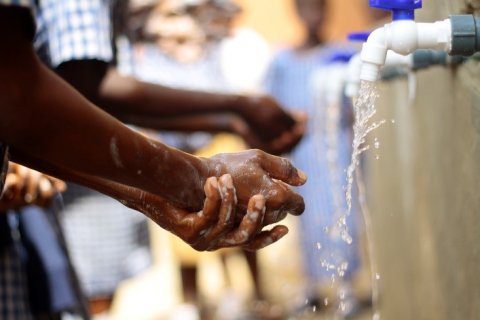
Hand washing is the single most effective way to reduce the spread of infections and contamination.
Although common knowledge, it has taken a global pandemic to reinforce a practice as simple as washing one’s hands with soap under running water, to curb the spread of a deadly disease.
Today as the world moves on and adjusts to life with a virus that has seemingly become part of us, it is more so pivotal to ingrain the message and practice of hand hygiene into all. Together, we must ensure that healthy handwashing habits are built to mitigate the risks and effects of the spread of pathogens.
It is for this reason that every year on October 15, Global Handwashing Day is celebrated as a day dedicated to advocating for handwashing with soap as an easy, effective, and affordable way to prevent diseases and save lives.
This year the theme for the day is Unite for Universal Hand Hygiene. A global call to action, regardless of role, age, gender, religion, race, or political affiliation to address the matter of hand hygiene with the urgency it requires.
We may remember that when COVID-19 emerged some two years ago, one of the most critical activities used for preventing infection was hand washing. A practice with benefits that have been known to curb the spread of infectious diseases since its discovery by Ignaz Semmelweis in 1847.
Relating to benefits, the Centers for Disease Control and Prevention (CDC) has revealed that handwashing with soap could protect about 1 out of every 3 young children who get sick with diarrhea and almost 1 out of 5 young children with respiratory infections like pneumonia.
Similarly, due to its immense socio-economic benefits, one of the targets under the Sustainable Development Goal (SDG) 6, is for the global community to achieve access to hygiene for all by 2030.
According to UNICEF, approximately half a million people die each year from diarrhea or acute respiratory infections, causing significant financial costs resulting from sickness and death that could be avoided with proper hygiene, precisely hand hygiene. Essentially, hand hygiene is one of the most important elements of overall hygiene, begging the question of why there is limited access to the basic act of cleaning hands when it can save lives and reduce illness which is essential to the socio-economic well-being of a country.
Therein lies a unique opportunity to position hand hygiene as an important long-term safety and public policy issue and increase as well as hasten investments on facilities for good hand hygiene.
The UN states that hygiene targets by 2030 requires an increase in the pace of progress, otherwise at current rates by the year 2030, 1.9 billion people will lack basic hand hygiene facilities.
In effect, nations should tackle the issue of hand hygiene wholistically - inclusive of both the private and public sectors. Not as a temporary public health intervention when crisis looms but as an everyday practice that contributes to health and economic resilience.
The government as the leader should be responsible for public policies backed with regulation and enforcement of the availability of water and hand washing facilities in public spaces such as hospitals and schools. In addition, investments should be made in education, sensitization, and capacity building.
The citizenry, inclusive of households and individuals should adapt and maintain the best practices of hand hygiene and hold themselves accountable to standards that have been set to accelerate the progress of the policy and practice of basic hand hygiene.

The private sector must not be left out as they have the capacity to work closely with authorities to make key investments that will provide accessible and affordable facilities for all.
From the media, civil society, community and thought leaders, the private sector, the old and the young, there is a part to be played by all as we push for policies and initiatives that can be a pathway towards creating communities that have the resources to practice hand hygiene and do so habitually.
Latest Stories
-
GAFM demands retraction from GTEC over ‘unrecognised universities’ listing
4 minutes -
Saltpond residents renew call for return of Founders’ Day celebrations
8 minutes -
Consumer spending records mixed performance in 5-months of 2026, but manufacturing activities improved – BoG
10 minutes -
Passenger arrivals at airport increased by 3.7% in 5 months of 2026
15 minutes -
NSMQ 2026: St. Augustine’s College reach third straight semifinal after seeing off Aburi Girls, St. John’s Grammar
18 minutes -
Re: Mahama backs crackdown on airport workers begging visitors for tips
19 minutes -
Photos: 6th Akwasidae Festival in the U celebrates Asante heritage and Ghanaian unity
20 minutes -
Ghana, India explore armwrestling collaboration as Golden Arms prepare for World Armwrestling Championship in New Delhi
28 minutes -
What Is Wrong With Us: We sign off on value for money before we have even defined it
40 minutes -
2026 U20 WWC: Black Princesses final squad for tournament revealed
41 minutes -
ECG liabilities hit GH¢82.31bn as SIGA flags persistent financial risks
43 minutes -
Why Dr Bawumia’s latest church-building gesture has shamed the bigots who are building walls of division
47 minutes -
Kenya airport staff strike delays thousands of passengers
54 minutes -
Youth Forum “Africa’s Freedom Is In Our Hands” in Accra to examine debt, colonial extraction and Africa’s future
58 minutes -
Jada Yankey bags six individual medals at 2026 Africa Aquatics Zone II Championships
59 minutes