

Audio By Carbonatix
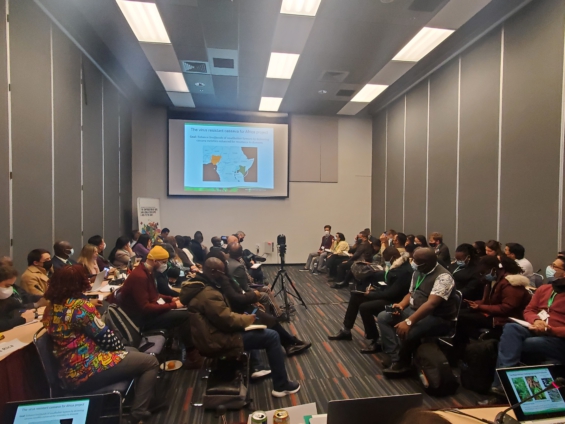
Countries in the Global South have been showcasing how genetically modified organisms (GMOs) are transforming their agriculture at the United Nations (UN) Biodiversity Conference in Montreal, Canada.
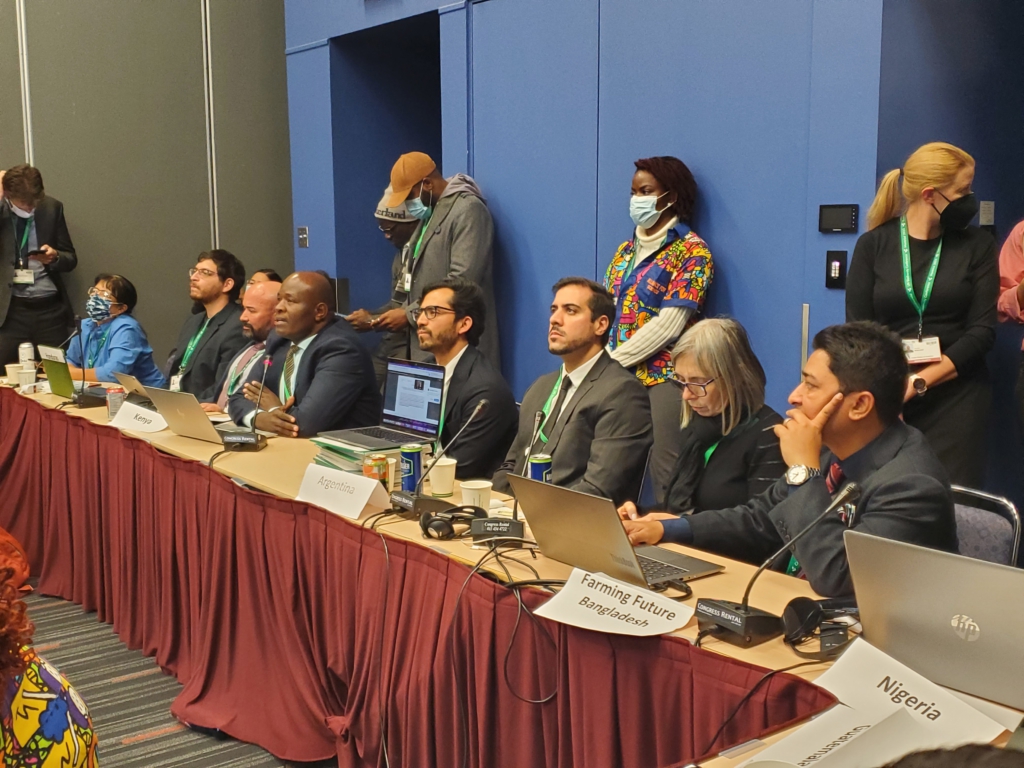
At a side–event organised by some Global South countries and the Alliance for Science, government representatives highlighted their countries’ achievements in approving locally developed GMO products to address challenges in the agricultural sector and enhance sustainable food production.
Argentina, Brazil, Colombia, Uruguay, Kenya, Paraguay, and Nigeria which are all parties to the UN Convention on Biodiversity, co-hosted the event.
The discussion was under the theme: “The contribution of locally developed safe living modified organisms (LMOs) or GMOs to the Sustainable Development Goals (SDGs)”.
Head of Planning, Research, and Statistics at Nigeria’s National Biosafety Management Agency Scholastica Bello said Nigeria approved genetically modified (GM) cowpea or beans which is resistant to some pests in 2019, making it the first country in the world to approve GM cowpea for cultivation by farmers.
She said GMO technology is helping her country meet SDG Goals 1 on no poverty, 2 on zero hunger, 3 on good health and well-being, 8 on decent work and economic growth, 9 on industry, innovation, and infrastructure, 12 on responsible consumption and production, and 13 on climate action.
She said the new variety is improving food security through better performance and improved yield and productivity.
It is also helping ensure environmentally friendly agricultural practices by reducing the number of pesticide sprays used by cowpea farmers from between six and 10 times to just two in a cropping season.
“The commercialisation of the GM cowpea in Nigeria has demonstrated the capacity of the Nigerian biosafety system in ensuring the safe application of the technology and harnessing its potential in addressing agricultural-related issues affecting our indigenous crops…
"Since the commercialisation of the GM cowpea, no issue of ill health, toxicity, allergenicity, carcinogenicity, or other forms of poison from its consumption has been reported,” Mrs Bello said.
The chief executive officer of Kenya’s National Biosafety Authority Dr Roy Mugiira also told the event his country 2021 approved the production of GM cassava which is resistant to the Cassava Brown Streak Disease (CBSD) that destroys most cassava cultivars in East and Central Africa.
He disclosed that when public comments were solicited on whether to approve the variety, 93.6% of comments supported approval whilst 4% opposed and 2.4% were neutral.
He is confident the variety will “increase cassava productivity from reducing losses due to CSBD, as well as increase income and improve livelihoods of farmers.”
“Based on regulatory safety data, it was concluded that the GM cassava is as safe as the conventional cassava varieties,” Dr Mugiira added.
Dalia Lewi who is the National Director of Bioeconomy in Argentina explained her country has approved GM drought-resistant soybean and wheat, among several other crops, which are helping the country improve food insecurity.
“Biotechnology has been adopted as a tool to produce more with less: we call that sustainable intensification. Having our own technology developed in our countries to present local solutions for local productivity problems is one of the things we are most proud of,” she said.
Madam Lewi said biotechnology is one of the tools that can be used along with several others to help countries meet demands in the Paris Agreement to reduce environmental destruction, as well as fulfil commitments in the SDGs.
She said GMOs will contribute to improving productivity in a sustainable way, reduce the number of inputs for production, guarantee food security in the world, contribute to the resilience of productive systems and conserve biological diversity.
Gutemberg Sousa of Brazil’s National Biosafety Authority also told the side event the country has approved 112 GMO plants over the years including genetically modified bean, which is resistant to the golden mosaic virus. The country has as well approved 3 GM animals including salmon.
CEO of Farming Future Bangladesh Arif Hossain said in Bangladesh, farmers are benefiting from growing GM eggplant which is the second most important vegetable in the country.
Farmers planting the GM variety are seeing a 51% reduction in the applications of pesticides, a 39% reduction in the quantity of pesticides applied every season, a 41% reduction in the toxicity of pesticides applied as measured using the Pesticide Use Toxicity Score, and a 47% reduction in the cost of pesticides.
The GM eggplant farmers are also enjoying 42% higher net yields, a 27% increase in gross revenue per hectare, a 10% reduction in the likelihood of reporting symptoms consistent with pesticide poisoning, and a 31% reduction in the cost of growing the crop.
Global Policy Lead at the Alliance for Science Pablo Orozco told the audience there is a need for the United Nations Convention on Biological Diversity to recognise biotechnology as a key tool that can help contribute to protecting biodiversity.
“Many locally developed LMOs have helped address national and regional environmental and agricultural challenges in the Global South. Bio-developments in Latin America, Africa, and Southeast Asia have effectively contributed to the achievement of the SDGs,” he said.
Latest Stories
-
300 entrepreneurs in Bono East battle for MTN-Innohub SME Support as programme enters 4th year
7 minutes -
Lawyer sues AG, GRA boss over passenger baggage exemption rules
9 minutes -
Ashanti Region crowned 2026 MTN Elite U-19 Champions after epic seven-goal final
43 minutes -
Gomoa chiefs give IGP, National Security one week to close New Winneba North Police Station
45 minutes -
Pilgrims Affairs Office approves 42 Hajj agents for 2027 pilgrims
45 minutes -
Building Trust in Digital Entertainment: What users should Look for in an online gambling site
52 minutes -
Former Deputy CEO of SIF declares Nandom NPP bid, pledges to rebuild party unity
1 hour -
Jefferson Sackey to launch PURPOSE: A Memoir of Fearless Journalism, Diplomacy and Growth
1 hour -
GCB Bank Head of People & Culture shares workforce planning strategies at Mining HR Conference
1 hour -
Rising cost of political campaigns threatens inclusive participation – CDD-Ghana
1 hour -
Parents laud convenience, affordability at Joy FM Back-to-School Fair
1 hour -
End partisan recruitment into security agencies – Asiamah Amoako
1 hour -
Mahama Ayariga seeks Chief Imam’s prayers, guidance in his new ministerial role
2 hours -
Photos: Joy FM Back-to-School Discount Fair opens with busy first day
2 hours -
Overloaded tricycle kills one at Assin Gangan
2 hours