

Audio By Carbonatix
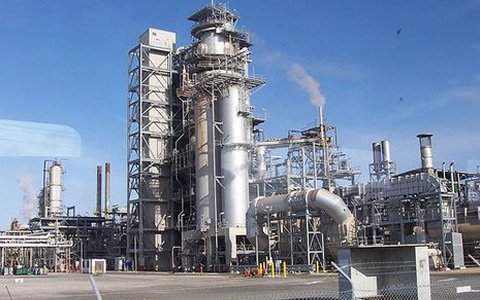
We live in a world charged with the industrialization of energy. Ghana became an exporter of oil with the development of the Jubilee Field in 2010, but prior to that, Tema Oil Refinery (henceforth, TOR) commenced operations in 1963 - then referred to as Ghanaian Italian Petroleum (GHAIP) Limited.
After Government of Ghana (GoG) officially bought all shares of TOR in the 1970s, it started out as a tolling facility until 1996 when it shifted its business strategy to enable TOR acquire crude solely and market refined products to generate revenue.
The significant contributions of oil refineries to a country’s economic growth, particularly one that exports crude oil like Ghana, cannot be overstated.
A look at today’s news where the current government intends to settle for a 22-million-dollar lease of TOR to a private corporation for 6 years is only a benign gesture which belittles the vision of Dr. Kwame Nkrumah in his 1961 agreement with ENI Group.
Situations such as this begs the questions; how did we get here? and more importantly, what is a viable permanent solution to the challenges TOR faces today?

The problems of TOR are very evident – (i) its current business strategy to rely on credits and loans to finance its operations has exposed the company to oil price risks; (ii) the infrastructure of the TOR has been underutilized leading to a higher deterioration rates of expensive machinery; (iii) the debt structure of the company is mainly denominated in foreign currency, thus is highly susceptible to the depreciation of the Ghanaian cedi; (iv) losses in trading due to the change in business strategy; and (iv) poor management of contracts.
In my expert opinion, the following steps should be initiated for the success of TOR:
1. Partial Privatization: The ownership structure of TOR should aim to involve multiple stakeholders, including private investors (both foreign and domestic), while maintaining a significant government stake. Government should retain a controlling interest to ensure strategic oversight and protect national interests. The remaining shares can be offered to private investors through an initial public offering (IPO) or other mechanisms. Private investors can bring in operational expertise and management capabilities that will help optimize TOR’s efficiency and performance. Investors should therefore be thoroughly selected based on their expertise and experience within the oil and gas industry so they can add value and provide innovative solutions going forward.
2. Capital Injection: The proceeds from the sale of shares to private investors can provide TOR with much-needed capital for modernization, infrastructure upgrades, and technological advancements. This influx of funds will help TOR improve its operational efficiency, expand its production capacity, and meet international standards.
3. Corporate Governance: Together with privatization, strong corporate governance practices should be implemented. This includes establishing an independent board of directors with representatives from both government and private investors. The board should be responsible for overseeing TOR’s strategic direction, ensuring transparency through regular reporting, auditing, and safeguarding the interests of all stakeholders. This will help to reduce the influence of politics within the affairs of TOR.
4. Social Impact and Local Participation: In the process of privatization, consideration should be given to social impact and local participation. This can include initiatives such as community development programs, job creation, and local supplier engagement. By involving local communities and stakeholders, TOR can contribute to regional development and create a positive socio-economic impact.
The success of TOR relies on the collective efforts and collaboration of various stakeholders. Evidently political influence has failed us so far, it will be in the best interest that government implement the proposed solutions so the nation can maximize the benefits Tema Oil Refinery can offer.
******************************
The author, Fawan Issah, is an energy analyst.
Latest Stories
-
Photos: Muntaka Mohammed at Government Accountability Series
3 minutes -
MMDCEs urged to actively monitor Big Push projects
13 minutes -
Seven leadership lessons I learnt from reading ‘Rebuilding Confidence, Restoring Strength’
14 minutes -
Widespread soil acidity threatening farming and food security in Ghana – CSIR-SRI warns
16 minutes -
Election violence: One suspect discharged, 25 facing trial – Muntaka
19 minutes -
Extortion allegation serious; evidence must back claim – Edem Senanu
23 minutes -
Is Wontumi’s priority NPP chairmanship when in prison? – Kwasi Kwarteng asks campaign team
26 minutes -
OSP’s review of extortion allegation should not take more than a day – Edem Senanu
26 minutes -
NSMQ 2026: Islamic SHS, Kumasi pull off late heist to send Tamale Islamic Science SHS crashing out
28 minutes -
Investors received GH¢37bn in dividends, nearly GH¢800m in bond coupons – GSE MD
28 minutes -
NSMQ 2026: Saviour SHS lead counts for nothing as Chemu SHTS snatch victory in tiebreaker
32 minutes -
Amelley Djosu: PR is not propaganda; Ghana’s music industry needs a professional reset
38 minutes -
Mrs Samira Amegashie
54 minutes -
Black Star International Film Festival announces 2026 official selection, with films from 11 countries
1 hour -
Freedom worth fighting for: Ukraine marks 35 years of independence
1 hour