

Audio By Carbonatix
Ghana has over 2.3 million people living with various mental health conditions, yet mental health care remains a challenge, with a 98% treatment gap. Since 2022, the country has been implementing the Director General’s Special Initiative for Mental Health (DG-SIMH) in four regions to address the gaps and strengthen the standard of mental health and well-being.
The five-year initiative supported by the Government of Norway and USAID seeks to get 100 million more people to access quality and affordable mental health services in 12 countries around the world, including Ghana.
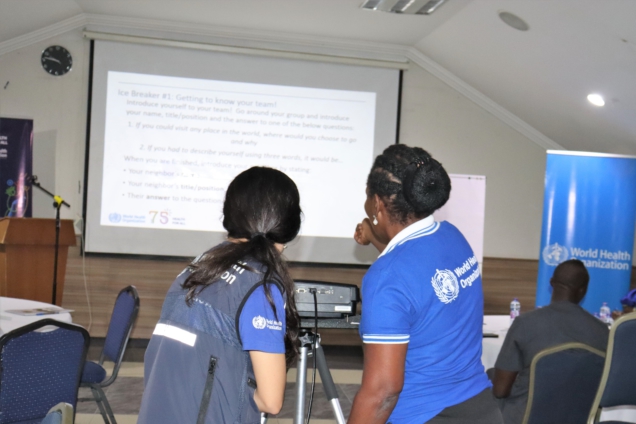
Now, the World Health Organization (WHO) is enhancing the capacity of the implementing regions and partners to ensure the sustainability of the initiative and other inventions even after the implementation period.
“Through the WHO Special Initiative for Mental Health, Ghana has stepped up efforts to improve mental health care. So now we are working to ensure that the significant effort being made is sustained beyond the lifespan of the initiative,” says the Noncommunicable Diseases & Risk Factors Officer at WHO Ghana, Dr Joana Ansong, during a sustainability planning and business case development workshop for the implementing partners in Kumasi.
On her part, the Deputy Director for Mental Health at the Ghana Health Service, Dr Amma Boadu lauded the foresight of WHO in seeking to enhance capacity for sustainable programming and pledged the service’s commitment to leverage the new skills sustain health programmes at all levels.
The workshop was aimed at building the foundational knowledge and expertise of the regions to effectively pursue, secure, and manage strategic partnerships for sustainable and impactful health programs.
“This capacity will help us to address gaps in our efforts to sustain mental health programmes and other health interventions, especially at the subnational level where resources are very constrained,” noted Dr Boadu.
Participants described the workshop as timely and insightful as they empowered with the requisite technical competence to build strong business cases for sustainable health interventions.
“This is the first time we are participating in this kind of workshop. We are ready to leverage the skills to not only mental health programmes but all other health interventions,” says Mr Edward Owusu, the Savannah Regional Mental Health Coordinator.
The four-day workshop saw participants taking through partnerships, resource mobilization and advocacy to strengthen their capacity to sustain their health programmes.
Latest Stories
-
KMA seeks funding to restart stalled Kumasi Central Market Phase II project
1 minute -
Government unveils new guidelines to improve regulation of non-profit organisations
6 minutes -
Annoh-Dompreh cautions against partisan application of law in political speech cases
13 minutes -
Oti Peace Council sensitises Assembly Members in Jasikan, Kadjebi on conflict prevention
24 minutes -
Nawara petitions Ghana Police over alleged armed raid, gold seizure and destruction of mining equipment
26 minutes -
Ahafo Ano South West DCE Abubakar Sedik dies after brief illness
32 minutes -
Ghana must draw lessons from Nkrumah’s Seven-Year Development Plan — Kwesi Pratt
33 minutes -
Oil hits over 1-week low on hopes of boost to diplomacy in Iran war
2 hours -
They take GH¢100, sometimes GH¢200 – Okada riders allege police extortion in Accra
2 hours -
NACOC: We’ve found no presidential escort among suspects in €225m France cocaine case
3 hours -
Don’t turn students away over trunks and chop boxes – GES
3 hours -
Italian Apple store employees strike on iPhone 18 Pro launch day
3 hours -
Apple’s Tim Cook sees Australia’s social media curbs as ‘world-leading’, PM says
3 hours -
Amazon raises minimum hourly pay by $1 to $20 for US operations workers
3 hours -
Insurance cost has largely remained stable – NPA boss on transport fare pressure
3 hours