

Audio By Carbonatix
The Pro Vice-Chancellor of the Kwame Nkrumah University of Science and Technology (KNUST), Prof. Ellis Owusu-Dabo is stressing the importance of Primary Health Care financing in the attainment of Universal Health Coverage.
He believes it helps in “improving effective service coverage and financial protection” in the health sector.
“Indeed, improved health systems financing is crucial for countries to make progress towards universal health coverage (UHC). Primary Health Care Financing is a core function of health systems that can enable progress towards universal health coverage.
“Thousands of people do not access services due to the cost. Many others receive poor quality services even when they pay out-of-pocket. Carefully designed and implemented health financing policies can help to address these issues. But, are we walking the talk? Are we still talking? Who is to act on these policies?” he said.
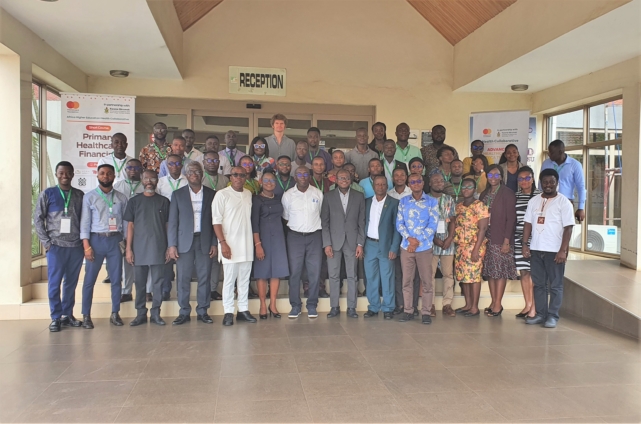
He was speaking at the opening of the primary health care financing workshop in Kumasi.
Primary Health Care is an essential aspect of all high-performing health systems and is an essential foundation of universal health coverage.
Prof. Owusu-Dabo however observes that the less privileged are unable to access optimum healthcare.
“Primary Health Care does not meet the needs of the people including both users and providers who should be at its centre.
“A vicious cycle has undermined PHC: under-funded services are unreliable, of poor quality, and not accountable to users. Therefore, many people bypass primary health-care facilities to seek out higher-level specialist care. This action deprives PHC of funding, and the lack of resources further exacerbates the problems that have driven patients elsewhere,” he bemoaned.
The Primary Health Care financing short course is therefore equipping 40 health personnel with skills to elevate the sector.
The workshop is spearheaded by the Health Employment pillar of the Mastercard Foundation Africa Higher Education Health Collaborative led by Dr. Kofi Akohene Mensah.
In the past five weeks, Mastercard Foundation Higher Education Health Collaborative has trained over 80 persons in Health Impact Assessment, Healthcare Industry and Regulatory Affairs.
The Africa Higher Education Health Collaborative in partnership with the Mastercard Foundation seeks to advance healthcare in Africa through three pillars: Health Employment, Health Entrepreneurship and Health Ecosystem.
The Health Entrepreneurship pillar aims to develop an entrepreneurial mindset and culture that supports entrepreneurs to create meaningful innovations and employment opportunities in the health sector.
The Health Ecosystem pillar also aims to train and prepare a new generation of talented professionals with the broad sets of skills required to drive equitable and inclusive growth.
Latest Stories
-
Jason Arday: 10 things you may not know about British-born Ghanaian former Cambridge professor found dead at 41
45 minutes -
KNUST partners with government to manufacture locally-made agricultural machines and smart traffic lights
51 minutes -
Government to add constitutional referendum to 2027 District Assembly elections
2 hours -
Government disburses GH¢23.1 billion to clear road contractors’ arrears – Roads Minister
2 hours -
NPP Ashanti elections: 1,020 delegates to choose 11 regional executives
3 hours -
Galamsey: ‘Challenge is prosecution, not arrest’ — Lands Minister
4 hours -
MTN to build 80 new sites across the five regions of the north as part of a $1.1bn investment
5 hours -
The Polygamist’s creator says women see themselves reflected in her Netflix hit
6 hours -
UEW Hospital suspends OPD services over GAUA strike
6 hours -
Muzic Mensah selected for Boomplay’s inaugural ‘NEXT WAVE’ Programme
7 hours -
Prime Insight to tackle legal vacation controversy and $1million AKSA bribery case
7 hours -
Ghanaian evacuee from South Africa dies on arrival in Accra
8 hours -
Suicide and the fight to stay alive
8 hours -
POS Foundation raises alarm over student cohabitation, sexual harassment on university campuses
9 hours -
Nandom NPP primary heats up as four candidates enter 2028 race
9 hours