

Audio By Carbonatix
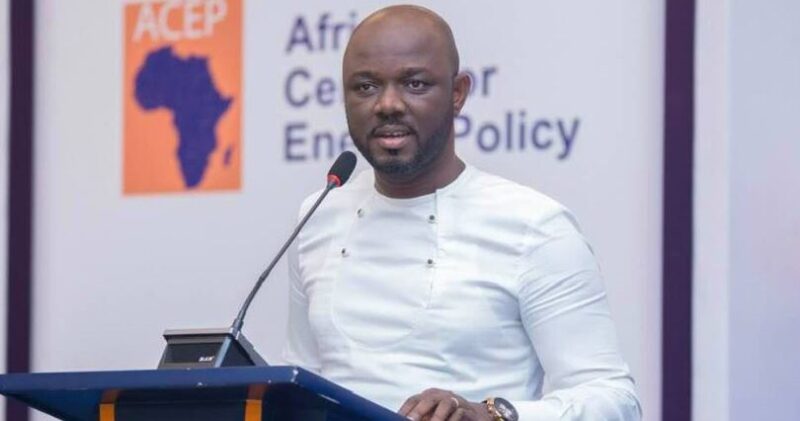
Executive Director of the Africa Centre for Energy Policy (ACEP), Benjamin Boakye, says Ghana’s energy sector is facing direr financial challenges than it was a decade ago.
According to him, very little has been done to tackle the power sector problems following a 2014 diagnosis which named financial, managerial and technical challenges as the root cause of the country’s energy problems.
“The financial challenges of the energy sector today are even deeper than we’ve ever experienced except that today the generating plants are here and therefore when ENI and Ghana Gas puts gas in the pipeline the power will be generated,” he said on JoyFM’s Super Morning Show.
He noted that the energy sector on its own has not been able to achieve self-sustainability.
According to him, government has had to continue its support of the energy sector despite the increase in power generation.
“But ultimately the state through the ministry of finance will have to pay for it because the sector itself cannot pay for power that is generated, gas that has been consumed and produce power out of it. We cannot distribute and raise money to be able to pay the value chain.
“So we have a power system that today is doing about 30% or 35% revenue requirement. To put it simply, what it means is that if you generate power of 1 million dollars, the power sector can pay for about 300,000. Ghana government has to go and look for almost 700,000 to come and top up for us to keep the light on,” he explained.
He was speaking in relation to concerns earlier raised by the Energy Minister, Dr. Matthew Opoku Prempeh about an imminent impact on electricity supply due to a shortage of gas for production.
According to him, the issue is a result of excessive dependence on gas plants, which differs from the past reliance on liquid fuel to support energy generation.
Dr. Prempeh explained that the country is currently grappling with a double predicament, where a complete shift towards a gas-based system has left the power infrastructure vulnerable, and any interruption in the gas supply will lead to a shutdown of all power-generating systems, resulting in a complete blackout across the country.
Meanwhile, Deputy Energy Minister, Andrew Egyapa Mercer says despite the challenges facing the sector, the government will continue to invest in the energy space.
This he said will prevent any major disruption in the power supply chain.
He added that while the government is battling some problematic contractual frameworks signed by the Mahama administration in the energy sector, the ministry has put in place measures to drive up revenue generation in that sector and ensure utmost efficiency.
Latest Stories
-
Mahama commissions Christian Tetteh Yohuno Ward Complex at Police Hospital
9 minutes -
Vice President calls for wider access to Ghana’s political party histories
10 minutes -
Republic Bank JoyNews Habitat Fair to connect prospective homeowners with exhibitors in Ho from October 16 to 18
20 minutes -
Obaasima Summit: ‘AI is not a spiritual attack’ — Rev. Dr. Ofori-Boateng urges young women to embrace technology
29 minutes -
GHS to distribute 80,000 pairs of locally-made protective footwear to health workers
36 minutes -
GoldBod boosts local jobs as 90% of gold undergoes refining in Ghana – Sammy Gyamfi
39 minutes -
The search for the politically unblemished: Are we asking the impossible of public appointees?
40 minutes -
Ghana seeks climate finance access for debt-restructuring countries
50 minutes -
Afenyo-Markin urges stronger media scrutiny of public institutions
51 minutes -
GoldBod recovers GH¢38.7m in legacy PMMC debts, targets remaining arrears
53 minutes -
62 out of every 100 commercial meters inspected missing from Ghana Water database – MD
53 minutes -
GoldBod gets BoG authorisation to sell forex, Sammy Gyamfi tells PAC
56 minutes -
Ghana Water revenue mobilisation below 50% of potential – MD
1 hour -
Ghana’s democracy must accommodate dissent and constructive criticism – Haruna Iddrisu
1 hour -
Fact check: Trump posts fake quote of Denzel Washington supposedly praising him
1 hour