

Audio By Carbonatix
It is that time of the year when the words on the lips of many is the 'Climate COP’, reference to the annual gathering of countries (Parties) and observers that constitute the ‘Conference of Parties’ to the United Nations Framework Convention on Climate Change.
The COP is the pinnacle of global climate change negotiations that discusses climate ambition and measures aimed at addressing global climate change. The 28th COP takes place in the Emirati city of Dubai having been held consistently every year since 1995 with 2020 being the exception due to COVID-19.
Since the curtain-raising COP 1 in Berlin, attended by about 2000 participants the summit has grown to become the biggest United Nations gathering with an estimated 49,704 people participating at its last confab in the Egyptian Resort City of Sharm El Sheikh last year. Its importance is matched by the global spotlight and attention of world leaders, businesses, media, and climate activists, who have participated in or followed the summits over the years.
Impact of Africa on the COP outcomes
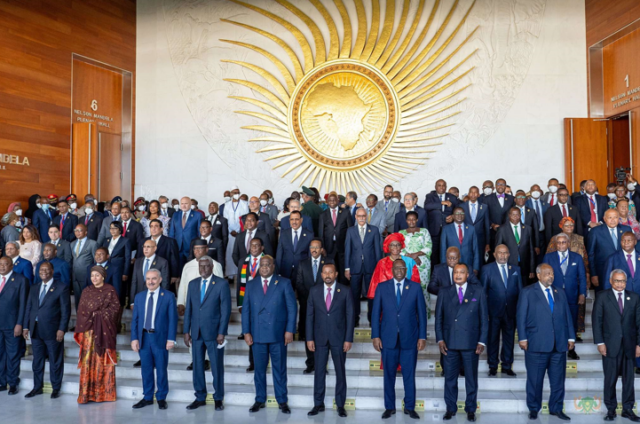
Despite the high-level participation and increased number of participants, there has been skepticism about the Summit’s relevance and influence in combatting climate change. The African Bloc has become a key player in the negotiations with a substantial increase in party and regional submissions, in particular, those that are of priority to developing nations including finance, adaptation, agriculture, energy, loss, and damage. Climate diplomacy captures more than any other, the essence of Africans speaking with one voice as espoused in the Constitutive Act of the African Union. The Union’s Founding document emphasizes the imperative to “ promote and defend African common positions on issues of interest”. This is amplified in its institutional reforms and Agenda 2063 which calls for a United African voice in global negotiations. The African Group has relied on its three-tier negotiating process led by the Committee of African Heads of State on Climate Change, Ministers of Environment, and technical negotiators who have been instrumental in shaping the climate discussions to highlight the peculiar needs of developing countries.
Climate Finance
Africa’s persistence in advocating for its priorities has moved climate finance to the front burner of the climate change negotiations. The Group has never missed an opportunity to address the financial imbalance and inequity in accessing climate finance. In a report on the “State of Climate Finance in Africa”, the Climate Policy Initiative indicates that Africa requires 2.5 trillion dollars of climate finance between 2020 and 2030, translating into an average of 250 billion dollars per year, however, in 2020 only 12% was realized. Despite difficult discussions, the African bloc has continuously advocated for climate finance and the necessity for developed countries to meet their financial commitments including meeting the 100 billion dollars per year by 2020 target reached at the highly expectant but disappointing Copenhagen Summit.
Agriculture
Agriculture, a major economic sector for many African countries contributing about 15% of the continent’s GDP has historically not been a feature of the COP processes until 2017, when the Koronivia Joint Work on Agriculture (KJWA) was adopted. The KJWA is a landmark decision that officially recognized agriculture’s role in tackling climate change and its vulnerabilities to climatic variability. Africa was instrumental in the adoption of the KJWA and its evolution with the decision on the “Sharm El-Sheikh joint work on the implementation of climate action on agriculture and food security”.
Adaptation
Adaptation to climate change has long been a priority for many African countries due to the undeniable impact climate change is having on its communities. African Heads of State and Government have reiterated that “adaptation is a priority in all actions on climate change in Africa”. The emphasis on adaptation is evidenced by the increase in climate-induced disasters affecting the continent. These include the more than 860 people who were killed in 2023 when Tropical Cyclone Freddy hit parts of Southern Africa resulting in floods and mudslides in Madagascar, Mozambique, Mauritius, Malawi, Réunion, and Zimbabwe. Africa’s most populous country, Nigeria, saw its worst flooding in a decade in 2022 claiming 600 lives.
Africa has led discussions within the COP processes recording important gains such as making adaptation a central theme within the negotiations which were hitherto disproportionately focused on mitigation. The Bloc’s fingerprint is associated with many of the adaptation-related decisions including the Adaptation Fund and the Nairobi Work Programme on Impacts, Vulnerability, and Adaptation.
Loss and Damage
Climate diplomacy has shown Africa’s growing strength in global environmental governance, in particular as a key architect of the Loss and Damage decision which is intended to provide financial assistance to poorer nations as they deal with negative impacts from unavoidable climate change risks. Africa expects that a decision on the operationalization of the Fund will be achieved at the UAE COP despite differences among the Parties.
Conclusion
Compared to other global issues that require a coordinated approach, climate diplomacy is the one area in which Africa seems to have performed beyond average despite resource and other limitations. Africa has increased its negotiating capacity and impact on global climate change discussions through increased access to evidence-based research and support from many of its regional institutions and structures. With improved coordination, increased resources, and streamlining of the key priority Africa’s influence within the climate negotiations will become even more pronounced and effective.
NB: Kwame Ababio is a Junior Research Fellow at the Climate Policy Lab, The Fletcher School, Tufts University.
Latest Stories
-
Asos hackers took more personal details than first revealed, BBC finds
2 hours -
Fort Hood shooter’s execution by firing squad will be livestreamed, Pentagon says
2 hours -
Chrysler Building to get its crown restored after being sold
2 hours -
Infantino re-election boost as Concacaf chief will not stand
2 hours -
Everton’s Sherif fined for breaching betting rules
2 hours -
Suspended fine for Xhaka over Covid-19 certificate
2 hours -
Businessman dragged to court over GH¢480,000 fraud
2 hours -
Pregnant woman and husband found dead in a room at Anloga-Kportorgboe
3 hours -
Man, 87, jailed 20 years for defiling nine-year-old girl at Ofankor
3 hours -
Maresca says ‘feeling is fantastic’ among Man City squad
3 hours -
Sam George warns FBI Director against taking sole credit for Ghana cybercrime operation
3 hours -
Foreign capital no passport to Ghana’s informal retail market – GIPA CEO
3 hours -
E&P model should be seen as a blueprint for building local mining giants – GIPA Boss
3 hours -
Govt’s decision to reduce nurse training long overdue – GRNMA
3 hours -
Ghana needs emergency health fund to respond swiftly to outbreaks – SEND Ghana
3 hours