

Audio By Carbonatix
The World Health Organization (WHO) raises concerns about Ethiopia's escalating public health needs. According to the Humanitarian Response Plan 2023, 17.4 million people across the country are affected by a prolonged El Niño-induced drought, floods, and conflicts, with the Somali, Afar, Oromia, Central Ethiopia, South Ethiopia, and Southwest areas experiencing the most significant impact. The dire circumstances have triggered a surge in disease outbreaks, including cholera, malaria, measles, and dengue fever, along with alarming levels of acute malnutrition.
The displacement of millions of people has disrupted essential health and nutrition services, which the compounding factors of conflict, insecurity, and movement restrictions have exacerbated. The drought's impact in Amhara and Tigray is particularly concerning, with over 5 million people affected by drought-like conditions leading to public health emergencies, escalating risks of negative coping strategies, malnutrition, and zoonotic outbreaks.
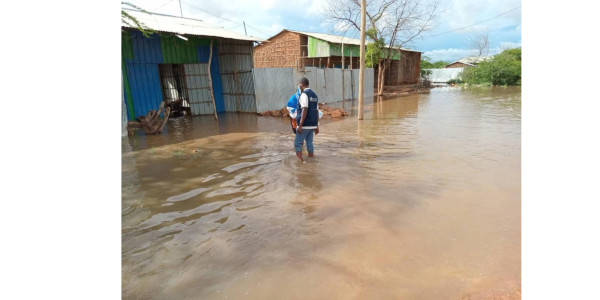
Over 1.5 million people in Ethiopia have been affected by heavy rains, floods, and landslides, according to a report from the UN Office for the Coordination of Humanitarian Affairs (OCHA). The flooding of the Omo River in the South Omo Zone has led to the displacement of nearly 94,000 people. The Somali region has been hit particularly hard, with over 1.1 million people affected by flooding, resulting in loss of lives and damage to infrastructure, including health facilities and irrigation farms. Livelihoods have been severely impacted, with thousands of livestock lost, leading to malnutrition and negative coping strategies. The regions of Oromia and Afar have also experienced flooding, with thousands of people displaced. The government and partner response capacities have been limited.
Dr Nonhlanhla Dlamini, WHO Representative a.i. in Ethiopia, stressed the urgent need for collaboration between WHO, partners, and the government to address Ethiopia's public health needs, namely the disease outbreaks, malnutrition, water scarcity, poor sanitation, noting that the floods hamper health response activities.
WHO actively supports the regional Health Cluster, Nutrition Cluster and Drought Incident Management System by deploying Mobile Health Teams (MHTs), prepositioning and distributing emergency medical supplies, and providing technical support. Despite these efforts, health response to the multiple emergencies still needs more funding. There is still a gap of USD 56 million despite ongoing resource mobilization efforts. It is crucial to ensure that targeted people are reached, and with the above background, WHO appeals to the international community to urgently support Ethiopia to address the ongoing public health needs and alleviate the suffering of millions of people.
Distributed by APO Group on behalf of World Health Organization (WHO) - Ethiopia.
Latest Stories
-
Today’s front pages: Tuesday, August 18, 2026
35 minutes -
Banks’ sustainable success will be defined less by interest margins – PwC
2 hours -
Baffoe-Bonnie was part of ‘grand conspiracy’ against Torkornoo – Afenyo-Markin
2 hours -
The GIPA Act: Resetting Ghana’s investment framework
3 hours -
GIPA secures investor leads at Invest Fest 2026
3 hours -
Ghana’s missing billions: What 16 years of Auditor-General reports show
3 hours -
Police disown viral flyer on AirPods, earphones use while driving
3 hours -
Stop using media to challenge judicial decisions – Thaddeus Sory to lawyers
3 hours -
The next generation expects more than degrees from universities
3 hours -
Ebenezer Dwomoh to stage fourth stand-up comedy special in Kumasi
3 hours -
Central Regional Minister urges traditional leaders to hold public officials accountable
3 hours -
Ada Traditional Council suspends four members for defying cancellation of 2026 Asafotufiami durbar
3 hours -
Association of Small-scale Industries, GEA strengthen artisans through mentorship, coaching
3 hours -
Two arrested over alleged galamsey activities in Tanoso
3 hours -
Ghana rises to sixth-largest gold producer globally after record 2025 output
3 hours