

Audio By Carbonatix
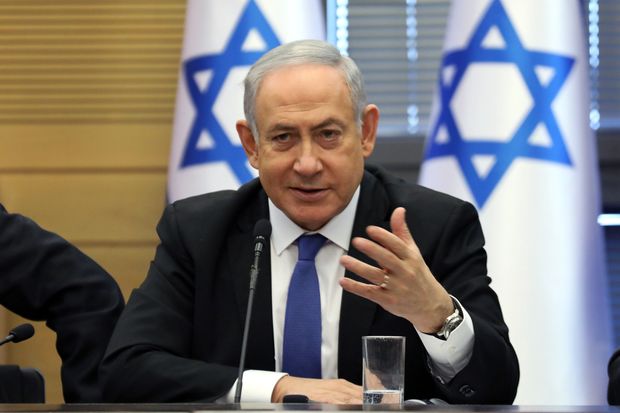
Israeli Prime Minister Benjamin Netanyahu says he has told the United States that he opposes the establishment of a Palestinian state once the conflict in Gaza comes to an end.
In a news conference, a defiant Mr Netanyahu vowed to press on with the offensive in Gaza "until complete victory": the destruction of Hamas and return of the remaining Israeli hostages, adding that it could take "many more months".
With almost 25,000 Palestinians killed in Gaza, according to the Hamas-run health ministry, and 85% of the Strip's population displaced, Israel is under intense pressure to rein in its offensive and engage in meaningful talks over a sustainable end to the war.
Israel's allies, including the US - and many of its foes - have urged a revival of the long-dormant "two-state solution", in which a future Palestinian state would sit side-by-side with an Israeli one.
The hope in many circles is that the current crisis could force the warring parties back to diplomacy, as the only viable alternative to endless cycles of violence. But from Mr Netanyahu's comments, his intention appears quite the opposite.
Speaking to reporters following Mr Netanyahu's latest comments, US National Security Council spokesman John Kirby recognised that the US and Israel "obviously" see things differently.
Earlier on Thursday, Mr Netanyahu said Israel must have security control over all land west of the River Jordan, which would include the territory of any future Palestinian state.
"This is a necessary condition, and it conflicts with the idea of (Palestinian) sovereignty. What to do? I tell this truth to our American friends, and I also stopped the attempt to impose a reality on us that would harm Israel's security," he said.
Mr Netanyahu has spent much of his political career opposing Palestinian statehood, boasting just last month that he was proud to have prevented its establishment, so his latest remarks come as no surprise.
But the very public rebuttal of Washington's diplomatic push, and determination to stay the current military course, show the chasm widening with Israel's western allies.
Since the 7 October attacks - the worst in Israel's history, when Hamas gunmen killed about 1,300 Israelis and took some 240 hostage - the US has supported its right to defend itself.
But as the death toll in Gaza has grown, and the scenes of horror there have abounded, Western governments have called for Israeli restraint.
The White House has repeatedly tried to influence Israel's military policy: urging more precision-guided weapons rather than the blanket air strikes; discouraging a ground offensive; and calling for a two-state solution, with a role for the Palestinian Authority in post-conflict Gaza.
Mr Kirby said the US has been "exceedingly clear" about what it wants Gaza to look like after the war.
"We want governance in Gaza that's representative of the aspirations of the Palestinian people, that they have a vote and a voice in what that looks like and that there's no reoccupation of Gaza," he said.
Washington's advice has frequently fallen on deaf ears or been met by outright rejection - often publicly so, during visits by the US Secretary of State Antony Blinken.
That, in turn, has hardened frustration in some American circles over the Biden administration's apparent blanket support for Israel, with strident calls to put conditions on US aid to its Middle East ally.
Israel's prime minister's comments will please his dwindling support base and the far-right ministers who prop up his government.
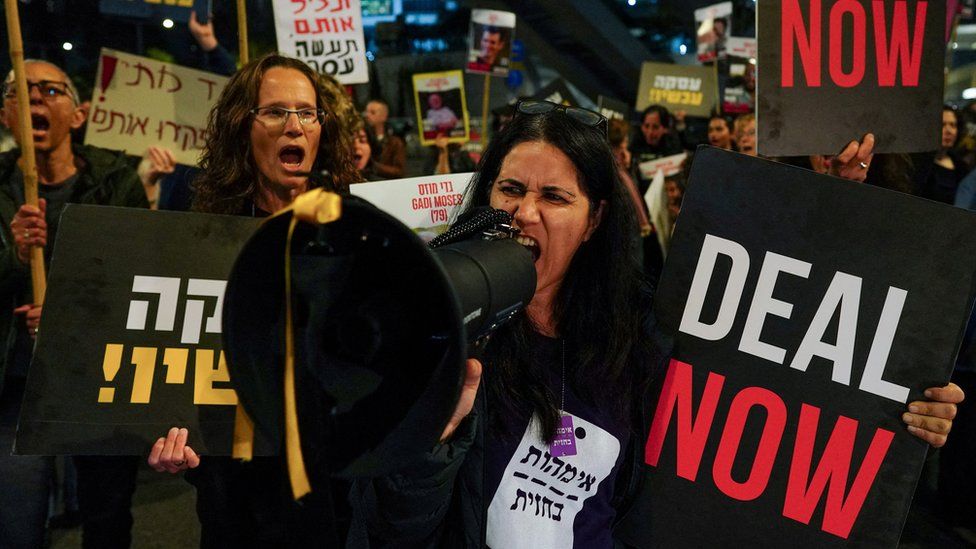
But they will dismay those at home and abroad who are increasingly horrified by the human cost of this war. Recent polls show most Israelis want him to prioritise bringing the remaining hostages home over the potentially impossible aim of destroying Hamas.
Latest Stories
-
Private security firms acting as political militias risk licence revocation, prosecution – National Security Coordinator
3 minutes -
Antoine Semenyo makes history as first Ghanaian named in PFA Team of the Year
23 minutes -
Mahama calls for responsive healthcare regulation to improve patient safety
57 minutes -
IERPP accuses GoldBod of breaching transparency law, says quarterly trading reports removed from website
1 hour -
Future of Energy Conference: Africa cannot industrialise in the dark – ECOWAS Bank President
1 hour -
Help comes to Alajo as DirectAid brings relief items to flood victims
1 hour -
“Somebody created the loss” – Haruna Mohammed backs Minority’s call for GoldBod probe
1 hour -
Hope for agroecological farmers: Scientific Research supports urine-based weed management as safer alternative to glyphosate
1 hour -
Israeli Film Festival returns to Accra with free screenings to boost cultural exchange
1 hour -
SONABEL considers opening Bagré Dam spillway on Friday amid rising water levels
1 hour -
Ghana Maritime Authority, Humanity First commission 4 boreholes in Wa to end water scarcity and keep children in class
2 hours -
In Photos: Day Two of ‘SYPALA 2026’ focuses on governance, economic freedom and youth leadership
2 hours -
Wontumi withdraws from NPP chairmanship race, urges support for Bawumia
2 hours -
UCC-IEPA, CEGRAD launches free digital skills programme to empower 1,000 women in education
2 hours -
NPP dismisses extortion allegation against Afenyo-Markin, says focus remains on GoldBod losses
3 hours