

Audio By Carbonatix
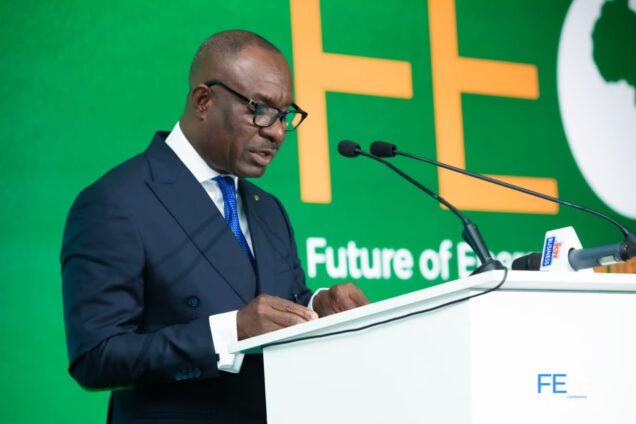
President of the ECOWAS Bank for Investment and Development (EBID), Dr George Nana Agyekum Donkor, has warned that Africa’s industrialisation ambitions will remain elusive without adequate, reliable and affordable energy.
He said Africa had for decades supplied the world with raw materials, including cocoa, gold and bauxite, while importing finished products at significantly higher costs, a situation that has constrained value addition, job creation and economic transformation on the continent.
"We have lit up other continents while over 600 million of our own people remain in darkness," he stated as the keynote speaker at the Future of Energy Conference 2026 in Accra. "Africa cannot industrialise in the dark".
Dr Donkor said achieving Africa’s industrialisation agenda would require deliberate policymaking, stronger coordination and substantial investment in energy infrastructure.
He stressed that no industrial revolution could take off without a robust and dependable energy system capable of supporting manufacturing and other productive sectors.
According to the African Development Bank (AfDB), Africa requires about $25 billion annually to achieve universal access to electricity, highlighting the scale of investment needed to close the continent’s energy deficit.
Dr Donkor said EBID, recognising energy as central to Africa’s industrialisation, had committed more than $1 billion of its resources across the energy value chain as of June 2026.
"We have invested in electricity generation, both conventional and renewable, transmission and distribution projects, while also supporting fuel procurement to keep economies running," said Dr Donkor.
He said the bank’s Growth, Resilience and Optimisation Strategy would see it commit a minimum of $2 billion to the energy sector by 2030.
Dr Donkor proposed a four-pronged approach to addressing Africa’s energy deficit and creating the foundation for industrialisation.
The approach includes strengthening national and regional grid systems, deploying large-scale renewable energy systems, exploiting domestic natural gas resources and expanding embedded generation capacity within industries.
"Effective industrialisation in Africa requires a mixed energy system consisting of reliable electricity, renewable energy, natural gas, regional power pools and distributed energy solutions. The objective is not merely to increase electricity access but to ensure that industries receive affordable, reliable and sufficient energy to drive manufacturing, value addition, employment creation and economic transformation," he said.
From minerals to industrial value chains
The Africa Mineral Development Centre (AMDC) also underscored the need for Africa to move beyond the extraction and export of raw minerals and develop industries capable of converting its vast natural resources into higher-value products.
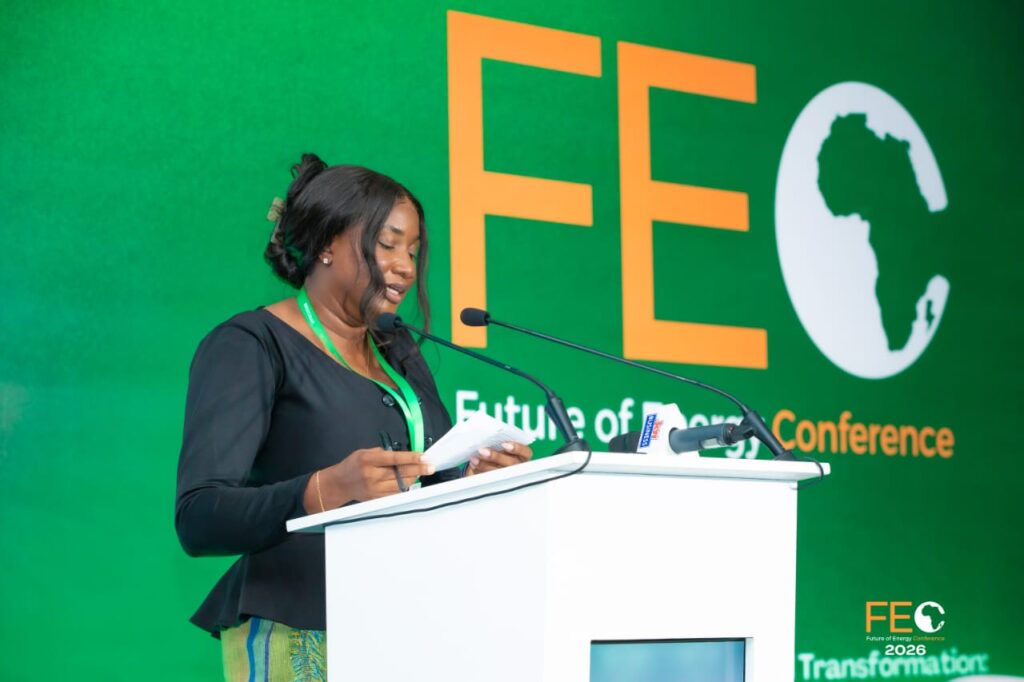
Interim Director-General of the AMDC, Claudine Sigam, said Africa already possessed many of the mineral resources required to participate meaningfully in the global energy transition.
She said the key challenge was to develop the energy, industrial capacity, skills and markets required to transform those resources into materials, competitive enterprises, jobs and sustainable prosperity.
"When the global conversation focuses on minerals, Africa must broaden into materials, value chains and markets. Minerals alone does not create industrialization. We need competitive energy to transform minerals into materials, industrial capabilities to transform materials into products, and markets capable of sustaining those industries," she said.
Ms Sigam said Africa’s energy, mineral and industrial transformation should therefore be treated as an integrated development agenda aimed at maximising value creation on the continent.
The Future of Energy Conference 2026 is being held in Accra on the theme: "Powering Africa’s Industrial Transformation: Energy Systems for Value Addition and Competitiveness".
Latest Stories
-
Make loyalty to NPP a permanent culture, not an election-season tactic – Joseph Cudjoe
8 minutes -
NPP delegates want reform without destroying party’s reputation – Joseph Cudjoe
10 minutes -
Salomey Awiti Baffoe granted GH¢100,000 bail over alleged false news publication
14 minutes -
NPP is for all social classes, not just the middle class – Mike Oquaye
20 minutes -
Freezy Mɑcbones wins WBO Africɑ Light Heɑvyweight title in Lɑgos, Nigeria
22 minutes -
John Boadu is ‘an exceptionally gifted political figure’ – Prof Mike Oquaye
39 minutes -
NDC must study NPP congress closely for strategic lessons – Mustapha Gbande
45 minutes -
NDC has built strong structures to face any electoral challenge – Mustapha Gbande
55 minutes -
John Boadu can appeal across Ghana’s social groups – Prof Mike Oquaye
1 hour -
‘Electing Kojo Bamba is backward politics’ – Mustapha Gbande
1 hour -
Government must order payment of promoted teachers’ salaries – GNAT
1 hour -
Meet Sethina Edem Sunu, the healthcare professional eyeing the NDC UK & Ireland deputy organiser role
2 hours -
The myth of ‘sophisticated customer experience’ in the digital age
2 hours -
What happened to lands reserved for sanitary sites? -WasteCare CEO calls for audit
2 hours -
Manasseh Writes: The shift in the NPP
2 hours