

Audio By Carbonatix
International Relations Expert, Dr. Ishmael Kwabla Hlovor, says African countries should stop courting Eastern influences as a magic bullet to Western influence on the continent.
According to him, the recent shift towards Russia and other Eastern countries is not the panacea to halting the overbearing influence and interference of Western powers in the political spheres of African countries.
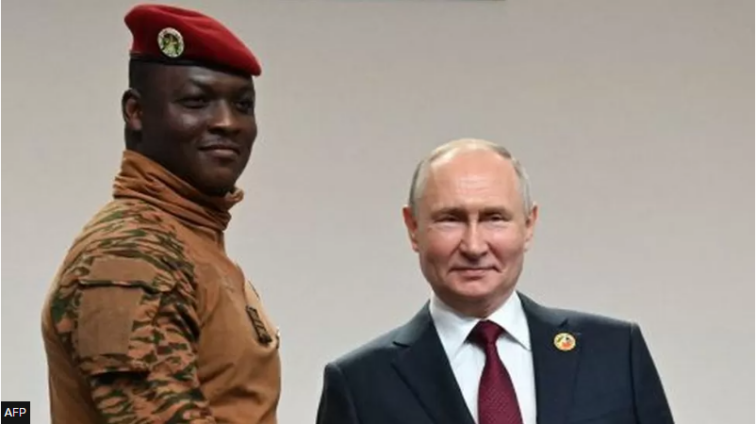
He was referring to recent happenings in the Sahel region which have seen countries including Mali, Niger and Burkina Faso severing ties with their former colonial master, France, for Russian support as they battle violent extremism within their territories.
The recent announcement by Mali, Niger and Burkina Faso about their departure from the Economic Community of West African States (ECOWAS) has also raised concerns about the eastward-facing policies of these countries and how it will affect relations in the region.
Speaking on the Joy Super Morning Show, Dr Hlovor noted that Russia and other eastern countries can gain much ground in Africa due to their lack of colonial baggage on the continent.
He noted that while anti-western sentiments have risen on the continent, these eastern countries are realizing potential for their geo-political gains.
Dr Hlovor insisted that anti-western sentiments should rather give way to pan-African sentiments instead of transferring influence to another foreign power.
“If you look at the reasons why some of these coups have happened in these three countries one of it is anti-western sentiment, the feeling that even with western troupes on their shores they have not been able to achieve much and that they’re being looted of their resources.
“It’s in the common logic of most African leaders that the solution to Western influence is easternisation where we believe that if the West is not helping us then we have to look east but that is not the solution.
“The solution to westernisation cannot be easternisation. It is rather Africanisation,” he said.
The International Relations Analyst also suggested that pulling out of the ECOWAS would offer the three countries leeway to enter into deals that originally would not have been permitted under the ECOWAS framework.
“So you’ll see that these countries are looking at it from the perspective that if they can pull out of ECOWAS then they can negotiate any form of deal they want to negotiate with the Russians.
“For instance: if you’re within ECOWAS, there are certain rules that bind you from importing certain arms so if you want to import certain arms all the other members have to know. But outside ECOWAS you’re able to do any deal that you want to do.”
He, however, noted that considering the economic stress the ECOWAS sanctions may be having on the junta-led countries, their announcement to exit the economic bloc may be a ploy to get the ECOWAS committee back on the negotiation table for some relief.
“So it may be a game that they’re playing but it may also be a diplomatic strategy to get ECOWAS to the negotiating table because before that they had been negotiating with ECOWAS but they’re not getting a solution.
“Last Thursday, it was unfortunate that a technical fault on the plane that was supposed to carry the ECOWAS delegates didn’t allow the planned meeting with Niger to happen.
“So when these delays are happening and they’re beginning to feel the pressure of the ECOWAS sanctions, if you look at some of these countries under ECOWAS sanctions, they’re virtually having problems with their economy where essential commodities like medicines are in short supply.
“So here what it is is that it may well be a strategy to get ECOWAS to the negotiating table …to get ECOWAS to act faster to get them some relief,” he said.
Meanwhile, Dr. Hlovor expressed optimism about the ECOWAS decision to engage the juntas of the three departing countries to find an amicable solution.
According to him, should the ECOWAS allow the countries to exit, it will be difficult to negotiate and collaborate with them on the challenges facing the region.
Latest Stories
-
The source of cedi appreciation matters more than the appreciation itself
6 minutes -
Ashanti cocoa farmers welcome new COCOBOD Bill, back key reforms
9 minutes -
‘GoldBod is a very big scandal awaiting us’ – Afenyo-Markin
10 minutes -
‘GoldBod is failing’ – Afenyo-Markin cites IMF report on $1.7bn losses
11 minutes -
Fire destroys ICT lab at Gushegu Midwifery Training School, threatens licensure exams
12 minutes -
Defence Ministry welcomes Kenneth Gilbert Adjei as new Defence Minister
13 minutes -
Bawumia charges NPP executives to rebuild party for 2028 victory
15 minutes -
Unite the region and deliver victory in 2028 – Dr. Bawumia to new Greater Accra NPP executives
15 minutes -
Ukrainian strikes kill six in Russia, acting governor says
16 minutes -
The goal is to win 2028 polls – Bawumia
16 minutes -
GoldBod secures 30% of large-scale gold output for Ghana’s strategic reserves
16 minutes -
FDA warns against unauthorised chemicals for ripening plantain
17 minutes -
‘If you sell gold at a loss, you’re not a good trader’ – Afenyo-Markin jabs Sammy Gyamfi
21 minutes -
Dr. Bawumia meets new Greater Accra NPP executives; charges them to bring all talents on board
24 minutes -
Before the Next Jason: When seniority becomes a weapon against young academics
37 minutes