

Audio By Carbonatix
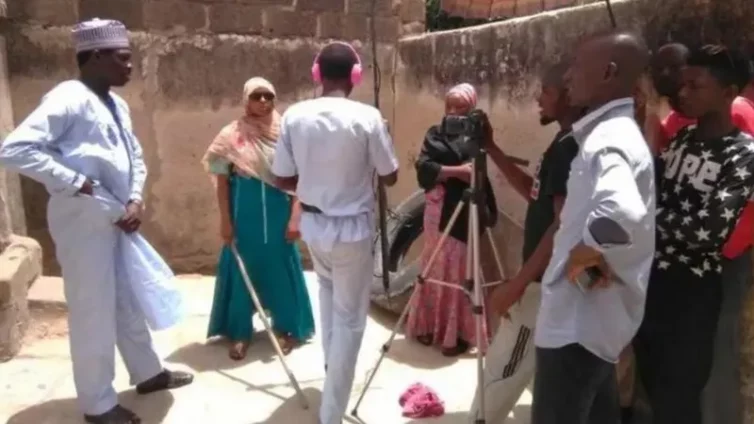
Filmmakers in northern Nigeria's Kannywood movie industry have been told they risk a jail term if they portray violence in their work or have scenes with cross-dressers in them.
Kano state's censorship unit says it wants to protect society as films play a huge role in shaping behaviour.
The bans resulted from public complaints, it says.
There is rising concern about violent crime. The authorities also say cross-dressing is not part of local culture.
Kano's authorities are under pressure to deal with an increase in robberies committed by gangs.
"Whether we like it or not Kano has a thug problem and films contribute to it by their portrayals and it is where some learn how to go about it," said the censorship unit head, Abba al-Mustapha, in a video shared on social media.
Kano is one of the 12 mostly Muslim states in northern Nigeria which implement Islamic law, or Sharia alongside secular law.
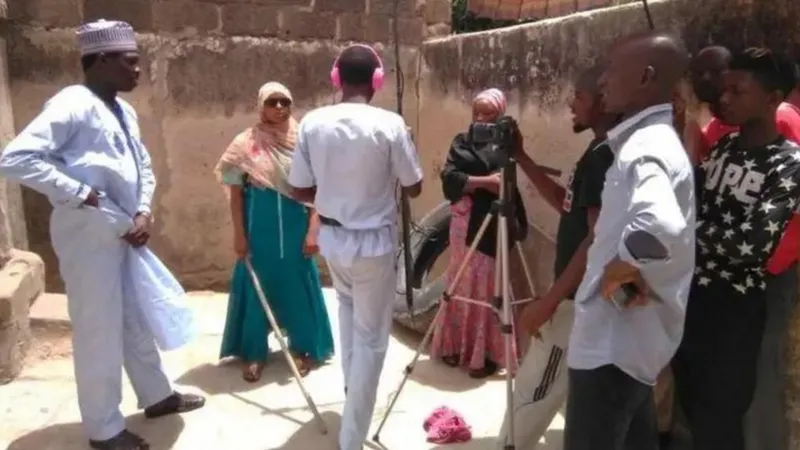
Mr Mustapha said that cross-dressing, when men wear women's clothes or vice versa, was against local practices.
Such scenes are often included in films to inject an element of comedy.
He said directors who had already finished films that contained banned scenes had one month to make changes.
However, he said that films already in circulation would not have to be withdrawn.
"We can't control what has happened in the past but we can draw a line from now and make things better which we hope to do."
Film director, Aminu Mukhtar Umar told the BBC the bans might stifle creativity and freedom of expression which is the backbone of any movie industry.
"The better way to do this would've been to bring in experts on these issues to meet with Kannywood writers so that knowledge would be gained on how to go about it."
Mr Umar had issues with the censorship unit in 2022 for his film Makaranta, which was deemed immoral.
It was a film about sex education and also tackled issues like female genital mutilation.
Kannywood, which really took off in the 1990s, is inspired by India's Bollywood films, which explains the affection for songs and dance in the majority of its films.
It is based in Kano, hence the name. Although not all films are made in the state, it is by far the main market so even those films produced elsewhere would have to comply with Kano state regulations.
Kannywood plays second fiddle to southern Nigeria's more glamorous Nollywood scene, which is better known globally.
However, it still produces hundreds of films each year, which are also popular in countries where there is a Hausa-speaking population such as Ghana, Cameroon and Niger.
In order to comply with Sharia, male and female actors are not allowed to touch each other even if they are portraying a husband and wife.
Latest Stories
-
BoG warns against weak non-interest banking products as NIFAC inaugurated
45 seconds -
Social licence to mine can be withdrawn – Ga Mantse warns mining companies
2 minutes -
X1 Energy Drink Division One Super Cup: Attram De Visser secure third place after late own goal
2 minutes -
‘A mine may close, but the community must not’ – Ga Mantse calls for sustainable mining
5 minutes -
Deploy new approach to flood management — UG Pro VC
11 minutes -
Parents can buy additional NaCCA-approved textbooks for children – Deputy NaCCA boss
14 minutes -
Youth must have a real voice in national issues beyond jobs, creative arts – EU
16 minutes -
AGTC: How women-led initiative is turning golf into jobs and tourism opportunities
21 minutes -
Exporters call for single-digit interest rates to boost Ghana’s horticulture sector
25 minutes -
Young political leaders must look beyond party lines to strengthen Ghana’s democracy – EU
30 minutes -
25 female KNUST physics students receive GH¢87,500 Whittaker Foundation suppo
33 minutes -
Berekuso-Kwabenya-Kitase road project stalls as First Sky cites unsigned contract and funding challenges
36 minutes -
Interior Ministry urges strict enforcement of Armoured Bullion Vehicle standards in Ghana
38 minutes -
GNFS rescues trapped man after Ford F-150 crashes into Kia Rio at Suhum Niifio
40 minutes -
Firefighters need stronger protection from smoke, air pollution risks – Clean Air Fund
41 minutes