

Audio By Carbonatix
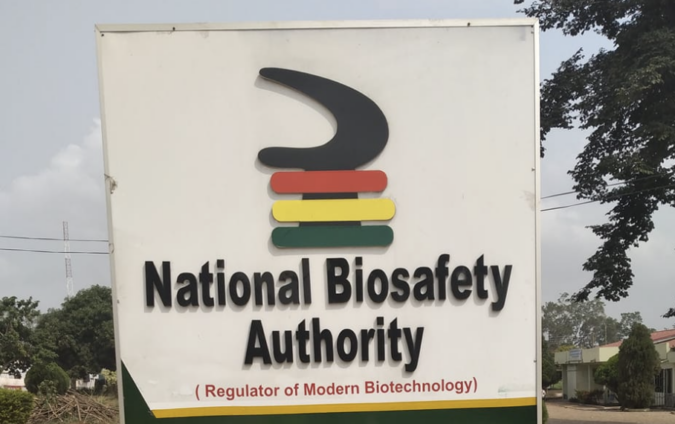
Fellow at the Genetic Engineering and Society (GES) Center of the North Carolina State University Joseph Opoku Gakpo is urging Ghana’s National Biosafety Authority (NBA) to step up its communications efforts on genetically modified organisms (GMOs).
Speaking at a webinar organised by the Africa Genetic Biocontrol Consortium on "gaps, challenges, and innovations in science communication”, he said recent media reports in which some stakeholders condemned the approval of 14 genetically engineered products in the country could have been avoided through proactive communication.
A report by the United States Department for Agriculture published last month disclosed the authority has approved 14 new GMOs including eight corn events and six soybean events.
The report drew backlash from some groups including the Peasant Farmers Association, Ghana Agricultural Workers Union, Ghana Journalists for Environment, Science, Health and Agriculture (GJESHA), and the Centre for Climate Change and Food Security (CCCFS), among others.
The Peasant Farmers Association warned its members will not accept any GMO seeds under the government’s flagship Planting for Food and Jobs programme.
The authority subsequently clarified in a statement that the approval is for the GMOs to be imported for use as feed, food, and for processing, and not for local cultivation.
Mr. Gakpo questioned why the authority did not find it necessary to inform Ghanaians about the approval early in the year, and waited until a foreign entity told the story first.
“The approval was in February. The USDA report was published on 20th March and has been making rounds on various social media platforms.
"It wasn’t until April 14 before the NBA issued a statement clarifying what it had done. How will Ghanaians feel about hearing of this approval first from a foreign partner?” he quizzed.

“The NBA should have been the first to put a statement, at least on its website, explaining what exactly it had done and not have created a situation where other institutions had to tell their story for them,” Mr Gakpo said.
“So, there wasn’t proactive communication. It was simply reactive communication. And even the reactive communication happened almost a month later. The authority needs to step up its communications efforts,” he added.
Mr. Gakpo whose research at the GES Center focuses on how communication influences the deployment of agricultural biotechnologies noted the National Biosafety Act 2011 which governs the operations of the NBA urges it to prioritise proactive communication.
“Section 4 (d) of Act 831 says one of the functions of the authority is ‘to promote public awareness, participation and education concerning the activities of the authority under this Act’” he said.
“Section 41(2) also says the Authority shall publish notices of final decisions concerning applications made under this Act in the Gazette and the electronic and print media,” he explained.
Mr. Gakpo said the law passed by parliament recognises the important role of the media in helping disseminate information on genetic technologies and the authority must do more in that regard.
“I am not saying the Biosafety Authority is shirking its responsibility to communicate. Because I have seen officials from the authorities do media interviews and other such communication activities.
"But I am only saying they need to do more. And they should particularly be proactive rather than always fighting back,” he added.
Cecilia Lubanga who is a communication specialist at the Office of the Senate in Kenya also told the webinar the field of communicating science is changing quickly and actors in the industry need to be abreast with the latest developments.
“Science communication is a rapidly evolving field, driven by advancements in technology, changes in societal attitudes, and the effective dissemination of complex scientific information to diverse audiences,” she said.
Latest Stories
-
DVLA to end third-party number plates; begins local production
1 hour -
Shatta Wale: ‘I don’t have any best-performing Mahama appointee’
1 hour -
John Dumelo joins corporate Ghana at upcoming JoySports Invitational Tournament 2026
2 hours -
Preview: JoySports Invitational Tournament 2026 promises a day of sport, fitness and big prizes
2 hours -
Shatta Wale endorses Mahama’s vision, questions appointees
2 hours -
“Gov’t owes me GH¢5m” — Shatta Wale fumes over “total disrespect”
3 hours -
NSMQ 2026: Accra Academy books quarter-final spot, sends Holy Child packing after fierce battle
3 hours -
NSMQ 2026: University Practice stages late comeback to retain seed as Presby SHS, Adeiso suffer one-point heartbreak
3 hours -
The Luckiest CEO Adutwum eyes back-to-back CEO shootout crown at JoySports Invitational
3 hours -
NSMQ 2026: Tie-break agony as Bishop Herman steals quarter-final spot from Asanteman SHS
3 hours -
Ahmadiyya elders urged to lead moral crusade in digital age, warns against rising religious tensions
4 hours -
Baptist Church equips youth to navigate AI and digital era with Biblical values
4 hours -
When giving life becomes a matter of life and death: Ghana’s maternal mortality crisis
4 hours -
SankofaFresh uses technology to cut post-harvest losses and connect farmers to markets
5 hours -
Democracy Is Not For Sale: EC Deputy Director warns against money, bribery in elections
5 hours