

Audio By Carbonatix
The Kumasi Cheshire Home is calling on benevolent individuals and organisations to extend assistance to the institution.
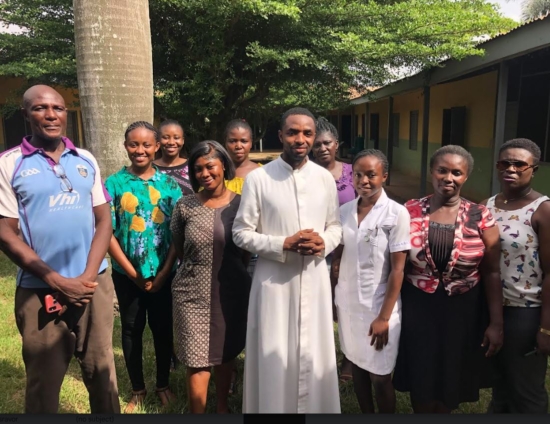
According to the administrator, Rev. Fr Theophilus Nyamekye, the home is in dire need of financial support to ensure continuous operation.
“Our main challenge has to do with finances, some of our buildings are old and they need renovations. We also have to tear down some of these buildings and put-up new ones. So, please we are pleading to all organizations both governmental and non-governmental institutions, to come to our aid,” he said.
The Leonard Cheshire Disability Home popularly called the Kumasi Cheshire is a non-profit, non-governmental organization established to support the mentally challenged individuals to become economically, psychologically and socially useful people in the society.
The Home is a partner of Leonard Cheshire Disability Global Alliance and a member of the West Africa Regional Council with Headquarters in Freetown, Sierra Leone.
Since its inception in 1986, the Kumasi Cheshire Home has positioned itself to serve the needs of patients between the ages of 18 to 55.
The over 35-year-old Kumasi Cheshire Home, banks its hope on public benevolence. The Home is battling inadequate medication due to high cost and short supply, forcing them to discharge patients back to the streets.
Mrs. Harriet Osei Owusu, the Public Health Officer at the Kumasi Cheshire Home, said, “Most of our challenges are drugs. Sometimes the government provides us with some programme drugs and it’s not always. It sometimes comes twice a year and this calls for us to buy them ourselves for our patients,” she said.
Mrs Osei Owusu also touched on the challenge with inadequate human resources. “If you take a look at our staff you see we are few. Our staff are few for our patients. We need more staff to help make our work more effective. Another challenge is with food. We are not too stable with finance and sometimes it gets difficult with food."
We sometimes depend on donations from anybody at all. The medications our patients take requires that they eat often and this poses some difficulty and relapses in recovery,” she said.
Mrs. Harriet Osei Owusu is again worried the situation could lead to the closure of the Home. “We had a cottage for rehabilitation and skills learning but our machines are have broken down. We used to teach them sandals making, wigs, and hairdressing but the tools for these training programmes are no more,” she lamented.
The rehabilitation programme takes 9 to 18 months and the maximum bed capacity is 55.
Latest Stories
-
Banks NPL ratio of 16.1% is still too high – S&P
19 minutes -
Guidelines, regulations of cryptocurrency in Ghana fall short of comprehensive oversight – IMF
53 minutes -
COCOBOD’S GH¢16.3bn SPV: Real progress toward a sustainable cocoa sector
1 hour -
Ghana lose Morocco friendly as Atlas Lions turn to Mali
3 hours -
2026/2027 GPL: Kelvin Nkrumah strike sends Medeama top of league table
3 hours -
Punish Manchester City this season, say other club chiefs
3 hours -
Emmanuel City crowned champions of maiden Global Game Scouting Tournament
3 hours -
MPship should not shield anyone from arrest – Felix Ofosu-Kwakye
4 hours -
Thomas Partey loses father Jacob Teye Partey
4 hours -
Gov’t rejects Baffour Awuah ‘kidnap’ claims, says EOCO officer was lawfully executing arrest
4 hours -
Martin Kpebu explains when EOCO can arrest Manhyia South MP after securing court warrant
4 hours -
EOCO’s reasons for seeking Manhyia South MP arrest warrant not justified – Kpebu
4 hours -
MTN Ghana warns SMEs against sharing PINs amid digital fraud risks
4 hours -
Yendi nursing students warn restricted access to skills lab could affect their training
4 hours -
Minority awaits formal notice of arrest warrant for Manhyia South MP – Annoh-Dompreh
4 hours