

Audio By Carbonatix
The co-founder of Kodu Technology and an alumnus of the Standard Chartered Women in Tech incubator programme, Mubaraka Umar Farouk, has called on the government to provide tax breaks for local manufacturers of sanitary products.
Madam Mubaraka whose business aims to provide affordable sanitary pads to girls facing period poverty was highlighting the challenges her business faced which made it difficult to keep prices low and sustain operations.
“Ghanaian sanitary product manufacturers are being taxed at the same rate as foreign manufacturers. This makes it difficult to beat down production costs as the goal is to provide affordable sanitary pads for girls experiencing period poverty," Mubaraka said.
“The only way to sustain the business and continue providing affordable sanitary pads is if the government considers local manufacturers when making policies and considers the taxes they already pay.”
Mubaraka also addressed the cultural barriers she faces as a woman entrepreneur in northern Ghana, where societal norms sometimes prohibit interactions.
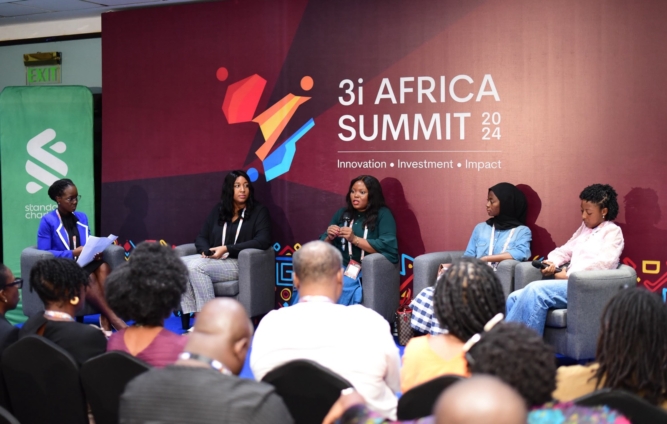
Mubaraka made this call as a panellist during the Standard Chartered Women in Tech Conference held at the Accra Conference Centre as part of the ongoing 3i Summit.
Other speakers at the session included Audrey S Darko, founder of Sabon Sake who called for more participatory policymaking processes, with youth innovators involved in drafting policies that impact them. She also advocated for tax incentives, subsidies, grants, and increased access to public data to aid business forecasting.
Laura Pepera, founder of Virtutor Online, emphasized the need for an educational system that fosters critical thinking and personal growth, moving beyond passive learning and encouraging students to voice their opinions and develop soft skills essential for success.
Anarporka Adazabra of Farmio Limited, lamented the lack of subsidies for farmers and companies reliant on imported kits, despite the government's recognition of agriculture as the nation's backbone.
As voices like Mubaraka highlight the hurdles women entrepreneurs face, the call for supportive policies from government resonates strongly. By addressing tax incentives, participatory policymaking, and fostering critical thinking in education, policymakers can unlock the potential of women-led businesses.
Platforms like the Standard Chartered Women in Tech incubator programme are vital for amplifying these perspectives and paving the way for a more enabling environment where women can thrive as entrepreneurs and innovators.
Latest Stories
-
Wontumi Conviction: 2 star witnesses placed under police protection amid death threats
5 minutes -
Srem-Sai reveals surge in death threats after Wontumi conviction
13 minutes -
GCB, Ecobank, 4 others are top tier banks in Ghana – PwC Banking Survey
21 minutes -
Today’s front pages: Tuesday, August 18, 2026
1 hour -
Banks’ sustainable success will be defined less by interest margins – PwC
2 hours -
CJ Baffor-Bonnie was part of ‘grand conspiracy to remove Torkornoo – Afenyo-Markin alleges
2 hours -
The GIPA Act: Resetting Ghana’s investment framework
3 hours -
GIPA secures investor leads at Invest Fest 2026
3 hours -
Ghana’s missing billions: What 16 years of Auditor-General reports show
3 hours -
Police disown viral flyer on AirPods, earphones use while driving
3 hours -
Stop using media to challenge judicial decisions – Thaddeus Sory to lawyers
3 hours -
The next generation expects more than degrees from universities
3 hours -
Ebenezer Dwomoh to stage fourth stand-up comedy special in Kumasi
3 hours -
Central Regional Minister urges traditional leaders to hold public officials accountable
3 hours -
Ada Traditional Council suspends four members for defying cancellation of 2026 Asafotufiami durbar
4 hours