

Audio By Carbonatix
On May 25, 1963, 32 African countries signed the Charter of the Organisation of Africa Unity (OAU), now the Africa Union, in Addis Ababa.
This was a collective African commitment to ending the colonialism initiated in the ‘first scramble’ for Africa.
While the OAU charter was being signed, Africa was experiencing a 'second scramble' during the Cold War, making it a ground for a hot ideological battle between the United States and the Soviet Union.
Today, it is said that there is a 'third scramble' involving emerging powers, most notably China, and other powers from the Eastern and Western sides of world politics.
Russia has returned to Africa, and China has dramatically arrived. China's need for raw materials to support its industrial growth drives its involvement. It is investing billions in infrastructure projects, mining, and military bases across the continent.
Africa’s traditional partners, like the US, UK, and France, continue to seek access to Africa's resources through trade agreements, development aid, private sector investments, and counterterrorism.
Anyone who studies the global distribution of resources would understand why all these countries want a bite of Africa and its countries.
Yet, this third scramble is equally dangerous. It is clothed in political handshakes and backed by laws and agreements that are neither equal nor universal.
Those who claim to offer better alternative deals appear to be giving dangerous dashes and mixed signals to the continent.
While several questions about the third scramble remain unanswered, they should not be difficult to address.
African countries must internalise that foreign countries are not in Africa to help Africa. Even in 'win-win' agreements, foreign countries expect their win to come first.
Secondly, since some form of global development partnership is inevitable, African countries must return to Dr Kwame Nkrumah, the first president of Ghana, who said during the Cold War that "We face neither East nor West; we face forward."
The sole interest of Africa should be the needs of its citizens. Foreign countries come with their interests; African countries must define theirs.
In 2024, several African countries, including Nkrumah’s Ghana, are going to the polls. African citizens must pressure their leaders to articulate their position on this 'third scramble' in the campaigns for their votes.
Given the East-West 'Cold War' and instability in its immediate neighbourhood, Ghanaian politicians should articulate a policy that clarifies their position regarding foreign interests in the country and the sub-region.
Ghana can leverage its abundant geopolitical capital as a relatively stable democracy with abundant resources for sustainable development.
In any case, where does the country stand? In an election year, Ghanaians, as do other Africans, deserve to know the foreign policy posture of their government and leaders.
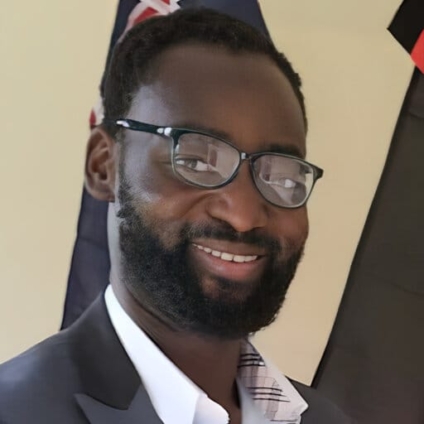
Muhammad Dan Suleiman is an Assistant Professor of International Relations at King Fahd University (KFUPM), Saudi Arabia, and a research associate at Curtin University, Australia. He taught International Relations and Political Science at the School of Social Sciences at the University of Western Australia between 2017 and 2021 and served as a lecturer and research associate at Curtin before joining KFUPM in January 2024. Muhammad’s work on African politics, security and jihadist conflicts in West Africa has been published in African Security, Terrorism and Political Violence, Critical Studies on Terrorism, and Peace and Conflict Studies. He has produced expert analyses on West Africa for organisations such as the International Centre for Dialogue Initiatives, Foreign Brief, the Australian Institute of International Affairs, and the Australian Strategic Policy Institute; and he has provided media commentaries on security in West Africa. He has PhD in International Relations from the University of Western Australia, and is a fellow of OHCHR United Nations Program for People of African Descent.
Latest Stories
-
UPSA uncovers mass results manipulation involving 178 students, over 500 results compromised
15 minutes -
ECG announces planned power outages in parts of Tema from Sept. 29 to October 1
36 minutes -
Sylvester Mensah urges Latenu FM to promote trade, export opportunities in Ga
49 minutes -
Ga language under threat of decline as children shy away from speaking it – Sylvester Mensah
54 minutes -
‘Let every Ga child you raise know the Ga language and story’ – Sylvester Mensah
1 hour -
‘We are not deterred’ – Ablakwa responds to backlash over South Africa evacuation
1 hour -
NCA announces major voice and data disruption across Northern Ghana due to fibre cuts
2 hours -
Photos: Housing solutions take centre stage at Day 2 of the 3rd Republic Bank-JoyNews Habitat Fair
2 hours -
Ghana Air Force passes out 293 recruits after six months of intensive training
3 hours -
EOCO vrs Baffour Awuah: EOCO should have secured warrant before arrest attempt at court – Inusah Fuseini
3 hours -
Triple fibre cuts disrupt telecom services across Northern, Oti regions – Sam George
3 hours -
Politicisation could undermine parliamentary probe into cocaine seizures – Dr Osae-Kwapong
3 hours -
EOCO chases MP: Can Section 41 cure lacuna in EOCO Act? – Inusah Fuseini asks
3 hours -
GNFS, GWL inspect fire hydrants in Ministries enclave; 23 found faulty
3 hours -
Gov’t directs release of 50,000 bags of grain to ECOWAS
3 hours