

Audio By Carbonatix
Daniela Klette lived quietly. She walked her dog and gave maths tuition to her neighbours’ children.
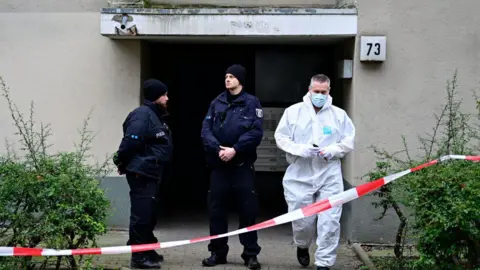
But when she was arrested in late February, the police found tens of thousands of euros in cash in her Berlin flat and five weapons, among them a Kalashnikov assault rifle and a replica rocket launcher.
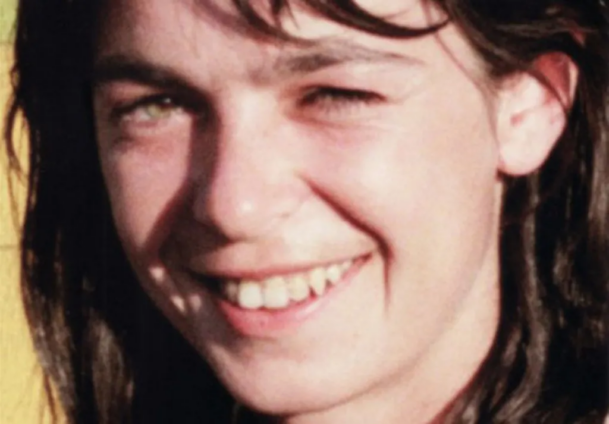
Klette, 65, had been on the run for more than 30 years. She was wanted for crimes connected to the left-wing militant Red Army Faction (RAF), which was active in Germany from the 1970s to the 1990s.
Known in its early days as the Baader Meinhof group, the gang pursued their political aims through the kidnap or murder of senior members of the business and industrial communities.
The RAF’s notoriety had led to a podcast team in Berlin trying to track Klette down using a facial recognition tool.
The podcast ran shortly before Christmas, only weeks before the arrest. But police deny a connection. They say they had a tip-off from a member of the public.
Getty Images
The RAF’s crimes are not forgotten in Germany, even if a generation has passed since they were committed.
They continue to exercise the imaginations of film and television producers, who have been making high-budget drama and documentary series that recall the assassinations of the 1980s and 90s.
“The RAF is deeply rooted in the collective memory, at least in western Germany,” says Petra Terhoeven, an expert in the history of political violence at Göttingen University.
Later this year, for example, German television will run a new four-part drama about Alfred Herrhausen, the head of Deutsche Bank, who was murdered shortly after the opening of the Berlin Wall in 1989. A sophisticated roadside bomb destroyed his armoured Mercedes as he was being driven to work.
In 2020 the first Netflix original series for the German market, A Perfect Crime, examined the assassination of Detlev Rohwedder. He was the head of the Treuhandanstalt, the organisation established after German reunification to privatise all state-owned industry in the former East Germany.
Rohwedder was killed by a shot from a sniper’s rifle through an upstairs window at his home in Düsseldorf in the spring of 1991.
In neither case have the perpetrators been caught.
The Netflix series was made by the Beetz Brothers production company. Recalling its origins, co-director Georg Tschurtschenthaler says the brief was to find a project that the whole country would talk about. “It had to be big and relevant,” he says. “It had to create some noise.”
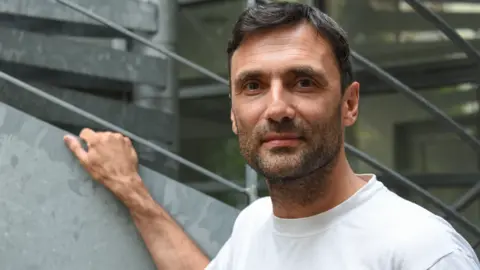
A Perfect Crime, while acknowledging the letter found at the crime scene in which the RAF claimed responsibility for Rohwedder’s murder, presents a number of different scenarios as to who may have killed him. For Tschurtschenthaler the background to the murder is what matters – the rapid closure of much of East German industry and the loss of millions of jobs.
“It’s a dark period that resonates until today,” he says.
Petra Terhoeven, the historian, warns of the dangers of a trivialisation of the crimes committed by the RAF. She detects too great a focus on the perpetrators, too little consideration for the victims.
The victim who has received perhaps most attention is Alfred Herrhausen, a charismatic and influential banker and a personal friend of then-Chancellor Helmut Kohl. A new documentary will accompany the four-part television drama later this year. Herrhausen has also been portrayed in fiction, by the writer Tanja Langer.
“When I was writing my novel it was important for me to create an homage to this person,” she says of her book. The novel, an account of a relationship between a young woman and an older man, a banker, is written from personal experience. Langer and Herrhausen had a close friendship for several years until his death.
Even though the RAF claimed responsibility for Herrhausen’s murder, Tanja Langer thinks the truth may not be as simple. She did several years’ research for her novel and spent a lot of time in the archive of the former East German secret police, the Stasi.
“In the end my conclusion was that even if the RAF carried out the murder, maybe there were others that were also part of it,” she says.

It’s that uncertainty, in part, that fuels the continued interest. There are still many unsolved murders from the 1980s and it’s possible that Daniela Klette, now behind bars, knows something about them.
Not long before she was arrested, a podcast company in Berlin, Undone, set out to find her. They had been contacted by a listener who said he’d been at a party where a woman had claimed to be Klette.
“It was a crazy story,” says Patrick Stegemann, who worked on the series.
Undone brought in an AI expert who deployed facial recognition software to search the internet for pictures that matched one of Klette on an old “Wanted” poster. It came up with a match for a woman living as “Claudia” not far from where the podcasters operate out of an old industrial premises in Berlin. But when they went to look for her, she was nowhere to be found.
Two months later, when Daniela Klette, was arrested, it became clear that they had identified the right woman. Patrick Stegemann remembers hearing the news of the arrest. “It was a wild mixture of feelings,” he says.
Prosecutors are currently going through dozens of boxes of evidence and are yet to bring charges against Klette.
Petra Terhoeven is sceptical she will offer any help.
“The majority of former members of the RAF don't speak about the past,” she says. “It’s like a political sect, it’s a kind of cartel of silence. And so probably she will remain silent.”
Latest Stories
-
Africa’s Road to LA28 begins as Ghana’s Paralympic committee steps up preparations
13 minutes -
Foods you must eat if you have irregular periods
18 minutes -
Fire engulfs storeroom at Apaaso, Kintampo
18 minutes -
Gas tanker accident triggers leak at Fiaso
18 minutes -
BCI urges women to prioritise breast health to reduce cancer cases , deaths in Ghana
18 minutes -
Christians must emulate St Augustine’s virtues — Bishop Kobina Louis
56 minutes -
Trassaco, Action Chapel, Caprice and others to experience 8-hour power outage
1 hour -
US deports relative of Afghans who aided military to Africa
1 hour -
Iceland on track to reject EU referendum as counting nears end
1 hour -
Ex-White House teleprompter operator ordered to pay $172,000 for Trump speech bets
1 hour -
At least 37 dead and hundreds evacuated after strike on Kyiv weapons depot
1 hour -
US military families ride ‘roller coaster of emotions’ over six months of Iran war
2 hours -
One dead, several injured, in Swiss shooting incident, police say
2 hours -
Philip Nai: Ghana’s creative industry needs structure, not just talent
2 hours -
Manhunt after woman, 22, killed and five injured in Swiss shooting
2 hours