

Audio By Carbonatix
Iceland has voted against resuming membership talks with the European Union, public broadcaster RUV has reported, with just one constituency's votes left to count.
It reported that 52.5% of the 188,496 votes so far counted had rejected the government's proposal, while 47.5% had said yes. Some 9,500 votes separated them.
Prime Minister Kristrún Frostadóttir's centre-left government promised to hold a referendum by 2027, but brought it forward because of international tensions, including US President Donald Trump's threats against Greenland.
However, debate in this island nation of almost 400,000 people centred more on its fishing industry rather than security concerns.
Already part of the EU's single market and Schengen border-free zone, EU membership would bring Iceland into the customs union and eventually the euro.
Iceland began its application to join the EU in 2009 in the wake of the 2008 financial crisis and the collapse of Iceland's banking system.
Its application was already well advanced when a eurosceptic government came to power in 2013 and put talks on hold. Fishing rights was the biggest obstacle then - as it remains today.
Fish and marine industries account for almost 40% of Iceland's exports and many No voters feared they would cede some control of their lucrative fishing grounds under the EU's common fisheries policy.
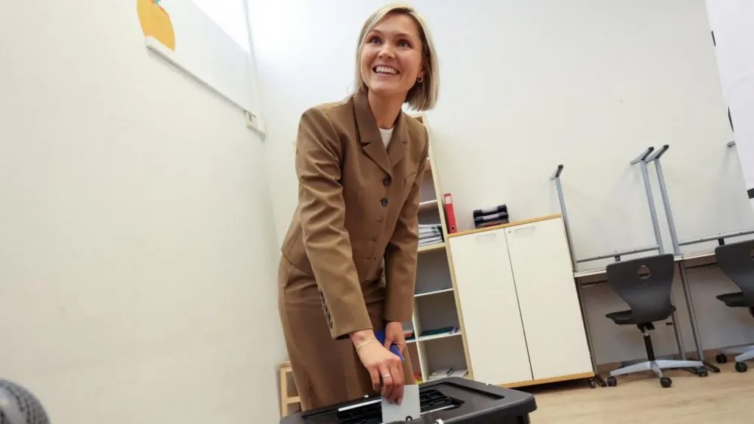
The referendum campaign has fuelled debate about Iceland's place in the world, Frostadottir said after casting her ballot in the capital on Saturday.
"This is a great day, we've been waiting for this for years to be able to have a vote," Frostadottir said, adding that her government would continue its work regardless of the outcome.
The question on the ballot was: "Should Iceland resume accession negotiations with the European Union?"
A Yes vote would not be a final decision on joining the EU, but a move towards an accession agreement, which would then have to be approved by a second referendum.
Equally, the No vote would not rule out the chance of Iceland resuming talks in the future.
While economic issues dominated the referendum campaigns, security concerns also featured.
Iceland is a founder member of Nato but it has no military and relies on its allies for defence.
The country has backed Ukraine during Russia's full-scale invasion and officials have been alarmed by Russia's increased maritime manoeuvres near the island.
Trump's expressed interest in taking over Greenland has also raised concerns.
Latest Stories
-
Power restoration fault suspected in Kumasi Central Market fire
2 hours -
The 7-foot giant of Ngleshie Amanfro: Seven-foot Ghanaian Ephraim Saawa dreams of joining the national basketball team
3 hours -
Government promises support for Kumasi Central Market fire victims
3 hours -
Vibes The Movie: Big Ghun’s Ghanaian film earns five nominations at 2026 REFFA
4 hours -
MamaCare CEO warns unresolved conflicts among health workers could undermine maternal and neonatal care
4 hours -
Health professionals urged to translate medical knowledge into practice to save mothers
4 hours -
Conflicts among care providers linked to maternal, neonatal deaths – Expert
6 hours -
GIS marks 10th TIME conference, champions improved teaching practices
6 hours -
BRICS Or Balance? What Ghana’s bid really means
6 hours -
GPRTU wants full TRAFFITECH-GH implementation to start in 2027
7 hours -
Mahama announces plans to import electric wheelchairs for PWDs
7 hours -
KGL U17 Colts 2026: Western beat Prempeh Elite Academy to set up final final with Greater Accra Region
7 hours -
Late Solanke strike salvages 10-man Spurs draw at Man United
7 hours -
Gender Ministry to monitor welfare of Nana Akua Addo’s children amid domestic violence case
7 hours -
Benedict Okyere Yeboah: Ghana’s football problem goes beyond sacking a coach
7 hours