

Audio By Carbonatix
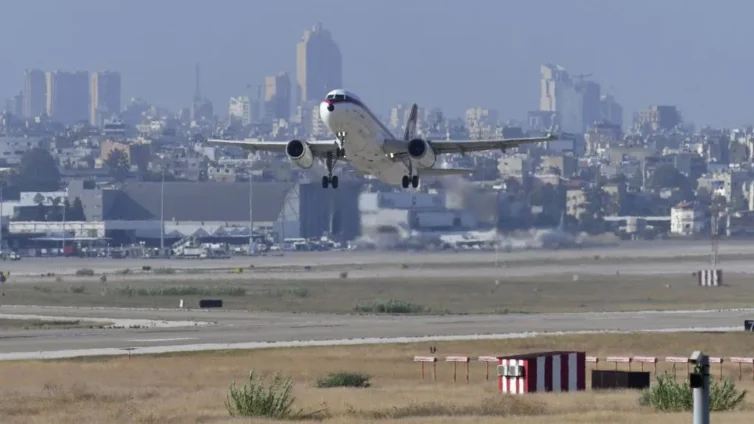
The US embassy in Beirut has urged its citizens to leave Lebanon on “any ticket available”, amid soaring tensions in the Middle East.
The advisory follows a similar warning from UK Foreign Secretary David Lammy, who said the regional situation “could deteriorate rapidly”.
Iran has vowed “severe” retaliation against Israel, which it blames for the death of Hamas chief Ismail Haniyeh in Tehran on Wednesday. His assassination came hours after Israel killed Hezbollah commander Fuad Shukr in Beirut.
It is feared that Lebanon-based Hezbollah, an Iran-backed group, could play a heavy role in any such retaliation, which in turn could spark a serious Israeli response.
Hezbollah launched dozens of rockets at the town of Beit Hillel in northern Israel at around 00:25 local time on Sunday (22:25 BST Saturday) .
Footage posted on social media showed Israel's Iron Dome air defence system intercepting the rockets.
There have been no reports of casualties.
Jordan's Foreign Ministry has also issued advice to its citizens, telling those in Lebanon to leave immediately and warning others not to travel there.
Canada has warned its nationals to avoid travel to Israel, on top of existing advice against going to Lebanon, because the "situation can deteriorate further without warning" in the region.
The US embassy stated on Saturday that those who choose to stay in Lebanon should “prepare contingency plans” and be prepared to “shelter in place for an extended period of time”.
It said that several airlines have suspended and cancelled flights, and many have sold out, but “commercial transportation options to leave Lebanon remain available".
The Pentagon said it was deploying additional warships and fighter jets to the region to help defend Israel from possible attacks by Iran and its proxies.
The UK said it was sending extra military personnel, consular staff and border force officials to help with any evacuations - but urged UK citizens to leave Lebanon “while commercial flights are running".
Two British military ships are already in the region and the Royal Air Force has put transport helicopters on standby.
Mr Lammy said it was “in no-one’s interest for this conflict to spread across the region”.
Meanwhile in Gaza, at least 17 people in a school sheltering displaced persons were killed by an Israeli strike, the Hamas-run authorities said on Saturday.
The Israeli military says the Hamama school in Gaza City's Sheikh Radwan neighbourhood was being used as a command centre for militants. Hamas has denied it operates from civilian facilities.
Israeli ministers were sent home this weekend with satellite phones in case of an attack on the country's communication infrastructure.
In April, Iran launched an air attack on Israel using 170 drones, 30 cruise missiles and at least 110 ballistic missiles.
That was in retaliation for the Israeli bombing of an Iranian consulate in Damascus, Syria.
Many fear Iran’s retaliation on this occasion could take a similar form.
In a phone call with EU Foreign Policy Chief Josep Borrell on Friday, Iran's Acting Foreign Minister Ali Baqeri Kani said Iran would "undoubtedly use its inherent and legitimate right" to "punish" Israel.
On Friday, an announcer on Iran's state TV warned "the world would witness extraordinary scenes".
Israeli Prime Minister Benjamin Netanyahu has warned Israelis that "challenging days lie ahead… We have heard threats from all sides. We are prepared for any scenario".
Tensions between Israel and Iran initially escalated with the killing of 12 children and teenagers in a strike on the Israeli-occupied Golan Heights.
Israel accused Hezbollah and vowed “severe” retaliation, though Hezbollah denied it was involved.
Days later, senior Hezbollah commander Fuad Shukr was killed in a targeted Israeli air strike in Beirut. Four others, including two children, were also killed.
Hours after that, Hamas chief Ismail Haniyeh was assassinated in Iran, Hamas's main backer. He was visiting to attend the inauguration of Iran's new president, Masoud Pezeshkian.
At a funeral ceremony for Haniyeh in Tehran on Thursday, Iran's Supreme Leader, Ayatollah Ali Khamenei, led the prayers. He had earlier vowed that Israel would suffer a “harsh punishment” for the killing.
Credit: The BBC
Latest Stories
-
Vice President urges Methodist Church to add digital skills to women’s training programmes
56 minutes -
Forestry Commission arrests 12 illegal miners in Atewa Forest
1 hour -
NPP National Treasurer aspirant involved in accident during campaign
1 hour -
Treat coastal communities as partners in sea turtle conservation – Dr Agyekumhene
1 hour -
The Chief Justice is not a Touring Minister: Baffoe-Bonnie’s SOE visits are unconstitutional officiousness
2 hours -
Enforcing environmental laws carries political cost, while offenders go unpunished – Frimpong-Boateng
2 hours -
Galamsey fight collapsed after safeguards introduced in 2018 were abandoned – Prof Frimpong-Boateng
2 hours -
Jail officials who approve projects in wetlands and forest reserves – Prof Frimpong-Boateng
2 hours -
Ghana needs $21bn to restore lands damaged by illegal mining – Frimpong-Boateng
2 hours -
Law student killed in hit-and-run on Tema Motorway; family offers GH¢50,000 bounty
3 hours -
Gas explosion near Larteh school contained after fire outbreak
3 hours -
Nigerian-British businessman dies after penis enlargement procedure in Thailand
3 hours -
CHEAP JUSTICE? – Occasional Kwatriot Kwesi Yankah writes
3 hours -
WASSCE 2026: English performance decline requires urgent action – EduWatch
3 hours -
Old Tafo MCE pledges action as residents raise alarm over faulty drainage systems
4 hours