

Audio By Carbonatix
China has announced a probe of Canadian canola imports, escalating a trade fight between the two countries.
The move, which could lead to tariffs on a key Canadian export, came a week after Canada said it would impose new border taxes on Chinese-made electric vehicles, steel and aluminium.
Beijing also said it would file a complaint with the World Trade Organization over the EV tariffs, which it criticised as "discriminatory" and "unilateral".
Canada's minister of agriculture said plans for the canola investigation were "deeply concerning" and the government was closely monitoring the situation.
The latest tit-for-tat comes as a rising number of governments, including the US and European Union, erect barriers against Chinese-made electric cars.
In announcing the EV tariffs last week, Canadian Prime Minister Justin Trudeau said countries such as China had "chosen to give themselves an unfair advantage in the global marketplace".
Western countries allege that Chinese firms are benefiting from subsidies and other government help, allowing for "dumping", which is when product is sold below cost, making it difficult for other firms to compete.
China cited similar dumping complaints in its probe of Canadian canola oil, noting that imports had jumped 170% since 2023, while prices had "continuously fallen".
"China's position is clear-cut. The country will take all measures necessary to safeguard the legitimate rights and interests of Chinese companies," a spokesperson for the Chinese Ministry of Commerce said in announcing the measures.
China has also launched investigations of European pork and dairy products. It recently declined to impose tariffs on French cognac, despite alleged dumping.
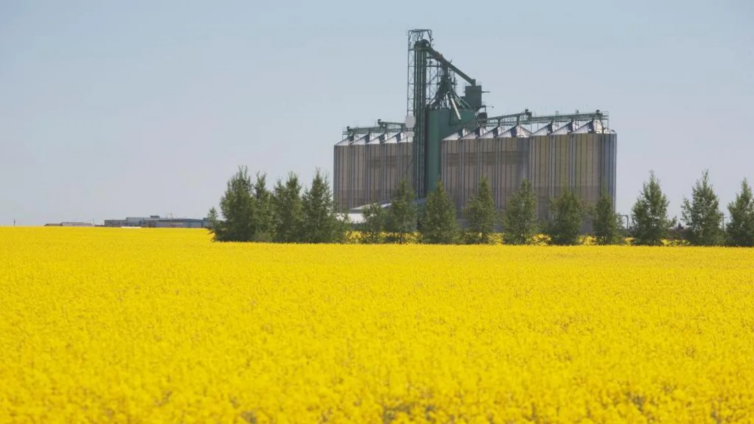
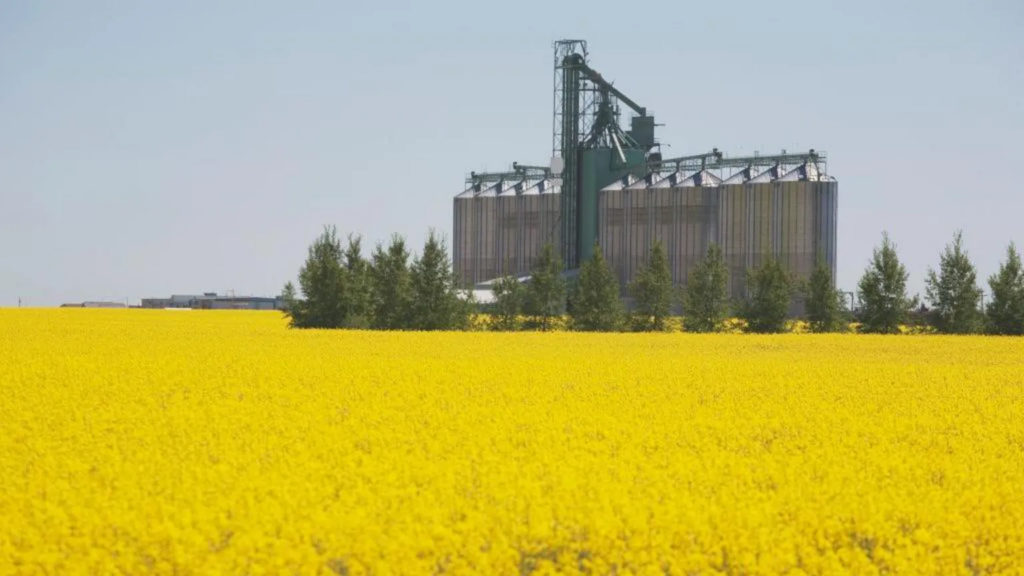
Canola, also known as rapeseed, is a major agricultural product in Canada, accounting for roughly one-quarter of all farm crop receipts, according to the Canola Council, an industry group.
Canada exports more than 90% of its canola, which is sold as raw seed, oil, or meal and is used for cooking, animal feed and some forms of energy, according to the council.
China's imports of Canadian canola were worth roughly $C5bn ($3.7bn;£2.8bn) last year, making the country the second biggest market after the US.
It has been the target in previous trade disputes.
Beijing blocked exports from two major Canadian grain companies for three years citing pest concerns, following the 2018 arrest in Vancouver of Chinese businesswoman Meng Wanzhou, chief financial officer of the tech firm Huawei.
Canada's agriculture minister, Lawrence MacAulay, said Canadian farmers "depend on, and play by, a rules-based global trading order that provides reliable market access".
Calling Beijing's announcement "deeply concerning", he said Ottawa is monitoring developments closely.
"We will continue to defend and support the sector every step of the way,” he said.
Latest Stories
-
Credit Risk Management Directive: BoG to begin implementation for banks, others from July 1, 2027
4 minutes -
Ghana Enterprise Brands Awards 2026: Leading brands, business trailblazers to shine on November 20
20 minutes -
T-bills auction: Demand improves as government exceeds target by about 76%; interest rates soften
26 minutes -
Ziope undertakes initiative to build a technologically inclined community, commissions self-help ICT lab
51 minutes -
ECG announces power outage in parts of Tema, Central Region due to network fault, maintenance
1 hour -
When the Gospel Becomes a Weapon: The church, blackmail and the abuse of faith
2 hours -
JoyNews’ Jacqueline Ansomah Yeboah selected for UK Media Excellence for Emerging Technology Fellowship
2 hours -
Mental Health Alliance urges government to operationalise Mental Health Fund
2 hours -
Ghana–Holy See agreement heads to Parliament after Cabinet approval
2 hours -
Luv FM Corporate Games 2026: Kumasi Central Prisons, Amanfiman Bank win big amid fun
3 hours -
WAFU B U17: Ghana top Group A after win over Togo
3 hours -
Ho Central Mosque reopens amid unresolved leadership dispute that led to closure
4 hours -
Minority caucus questions GH¢16.4m in Ablakwa’s SA evacuation spending, demands independent audit
4 hours -
Gender Ministry meets Nana Akua Addo’s husband over domestic violence after hospital discharge
5 hours -
UG Vice-Chancellor urges swift operationalisation of National Research Fund
6 hours