

Audio By Carbonatix
Government is preparing legislation to regulate electric vehicle charging stations as rising EV adoption creates new demands on Ghana’s electricity infrastructure.
The proposed legislation is expected to require operators to obtain approval from the Energy Commission before establishing charging stations, to ensure that local electricity networks have sufficient capacity to support them.
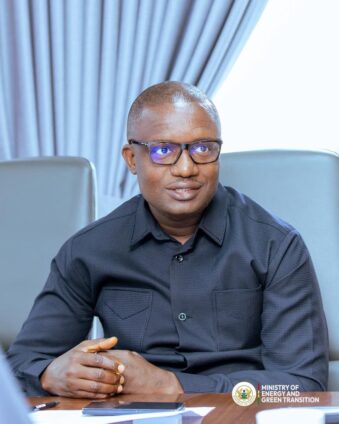
Dr Abdulai Jinapor, Minister of Energy and Green Transition, announced the measure at the Future of Energy Conference (FEC) 2026 in Accra.
He said the regulation had become necessary because of the rapid emergence of EV charging stations and the high electricity demand associated with fast-charging technology.
“People seeing that opportunity have started setting up EV charging stations,” he said, adding that with new technology, “in five to 10 minutes, you are able to charge your EV vehicle. That will consume a lot of electricity.”
The conference was organised by the Africa Centre for Energy Policy (ACEP) on the theme: “Powering Africa’s Industrial Transformation: Energy Systems for Value Addition and Competitiveness.”
Dr Jinapor said the unregulated establishment of charging stations could place additional pressure on existing electricity infrastructure, particularly transformers, and affect power supply to other consumers.
“So, what we witness is that people set up EV charging stations and immediately the transformer gets blown,” the Minister said.
The Minister said the regulatory measure was intended to protect the reliability of electricity supply rather than restrict investment in the emerging electric mobility sector.
“We want to ensure that we have reliable supply of power, not just for your EV charging station, but for other uses, including industrial usage,” he said.
Dr Jinapor said Ghana had recorded strong uptake of electric vehicles, adding that research indicated that EV users could save about 40 per cent on fuel and related road-use costs.
He said the increasing adoption of EVs, however, presented an additional demand on the electricity system that had to be planned for alongside the requirements of industries, mines, data centres and other productive activities.
“But that provides us with a challenge,” he said. “How do you provide reliable energy to power industrialization in light of EV vehicles being deployed in the country?”
The Minister said the electricity system therefore had to be expanded and strengthened to accommodate changing patterns of energy consumption.
“Industrialization requires electricity at scale. Not just electricity but reliable electricity, predictable tariffs that industries can plan and good power quality,” he said.
Dr Jinapor said Government was pursuing broader reforms in the electricity sector to improve the reliability and affordability of power supply while strengthening infrastructure to support economic activity.
He said energy policy must ultimately support industrial competitiveness, adding that emerging technologies such as electric mobility would have to be integrated into the electricity system without compromising supply to existing consumers.
Latest Stories
-
Paramount takes over Warner Bros in $110bn Hollywood merger
7 minutes -
Human resource practitioners asked to embrace digital revolution for efficiency in service delivery
12 minutes -
AMA intensifies enforcement to reclaim BRT bus shelters from traders
16 minutes -
TGMA controversy hasn’t affected my relationship with Diana Hamilton – Piesie Esther
21 minutes -
Cliff Cheqona to take TP Masterclass to Lagos and Abuja in 2027
24 minutes -
Bond market: Turnover rises 77% to GH¢2.76bn
25 minutes -
Be lovers of the environment – Archbishop Kwofie calls for stronger fight against environmental injustice
29 minutes -
BoG declares FX compliance “non-negotiable” as it moves to tighten rules
32 minutes -
Government to prioritise creation of decent jobs – Finance Minister
38 minutes -
Ghana’s ocean is not land under water: Why the Fisheries Commission is right to demand a proper assessment of offshore gold exploration
44 minutes -
Teacher unions maintain strike as FWSC, GES negotiations yield no deal
46 minutes -
Bond market turnover rises 77% to GH¢2.76bn
49 minutes -
Photos: Mahama Ayariga engages World Bank on sustainable cities development
51 minutes -
Foreign Affairs Minister warns embassies over long queues, ‘inhumane’ conditions for visa applicants
53 minutes -
Photos: AMA steps up enforcement to clear traders from BRT shelters
54 minutes