

Audio By Carbonatix
President Bassirou Diomaye Faye of Senegal promised severe sanctions against people smugglers during his visit on Wednesday to the town of Mbour, the departure point of a boat that capsized on Sunday, killing at least 37 people.
“We will relentlessly track down and punish with the greatest severity the actors who organize these convoys of death,” Faye said.
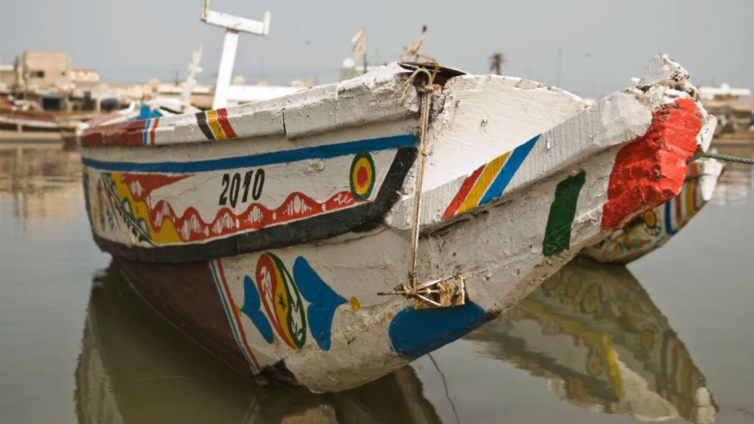
Mbour, a coastal city in Senegal nearly 80 kilometres (50 miles) south of the capital Dakar, is one of many places from which young Senegalese people embark on a treacherous journey to Europe, trying to cross the Atlantic Ocean in pirogues, artisanal fishing boats.
One of these boats heading to Europe left Mbour on Sunday afternoon before capsizing a few miles (kilometres) off the coast.
There were 89 people on board, Faye said, and at least 37 died. Only three survivors have been found so far.
“Your life is of inestimable value,” Faye told Mbour’s residents on Wednesday. “You have a central role to play in the future of our country. We are determined to offer you real and dignified opportunities, here, at home, so that this sea never again becomes a cemetery for our children.”
The French Navy is continuing to search for other bodies, and the captain and owner of the pirogue was arrested after he turned himself in on Monday.
In recent years, the number of migrants leaving West Africa through Senegal has surged with many fleeing conflict, poverty and a lack of jobs. Most head to the Canary Islands, a Spanish archipelago off the coast of West Africa, which is used as a stepping stone to continental Europe.
Last month, the Senegalese army said it had arrested 453 migrants and “members of smuggling networks” as part of a 12-day operation patrolling the coastline. More than half of those arrested were Senegalese nationals, the army said.
In July, a boat carrying 300 migrants, mostly from Gambia and Senegal, capsized off Mauritania. More than a dozen died and at least 150 others went missing.
The Atlantic route from West Africa to the Canary Islands is one of the deadliest in the world. While there is no accurate death toll because of the lack of information on departures from West Africa, the Spanish migrant rights group Walking Borders estimates the victims are in the thousands this year alone.
Migrant vessels that get lost or run into problems often vanish in the Atlantic, with some drifting across the ocean for months until they are found in the Caribbean and Latin America carrying only human remains.
Latest Stories
-
When the Gospel Becomes a Weapon: The church, blackmail and the abuse of faith
14 minutes -
JoyNews’ Jacqueline Ansomah Yeboah selected for UK Media Excellence for Emerging Technology Fellowship
31 minutes -
Mental Health Alliance urges government to operationalise Mental Health Fund
46 minutes -
Ghana–Holy See agreement heads to Parliament after Cabinet approval
50 minutes -
Luv FM Corporate Games 2026: Kumasi Central Prisons, Amanfiman Bank win big amid fun
1 hour -
WAFU B U17: Ghana top Group A after win over Togo
2 hours -
Ho Central Mosque reopens amid unresolved leadership dispute that led to closure
3 hours -
Minority caucus questions GH¢16.4m in Ablakwa’s SA evacuation spending, demands independent audit
3 hours -
Gender Ministry meets Nana Akua Addo’s husband over domestic violence after hospital discharge
4 hours -
UG Vice-Chancellor urges swift operationalisation of National Research Fund
4 hours -
Pope Leo to have surgery after lump found in lung
4 hours -
Joseph Cudjoe writes: Ghana must break free from the dangerous mindset that natural resources are the foundation for wealth
5 hours -
Children among 109 dead after boat capsizes off Djibouti, UN says
5 hours -
OmniBSIC Bank’s 11th health walk promotes fitness and business growth
5 hours -
2026 World Maritime Day: Danish Embassy organises “The Gulf of Guinea Speaks”
5 hours