

Audio By Carbonatix
A total of 33 cities, including Los Angeles, Amsterdam, and Edinburgh, have backed a call for a global Plant-Based Treaty, aiming to align the food system with the Paris Agreement and encourage the adoption of plant-based food policies at the local level.
Additional cities supporting the initiative include Tavira (Portugal), Didim (Turkey), Rainbow Lake (Canada), and several in the United Kingdom, such as Belfast, Exmouth, Haywards Heath, Lambeth, and Norwich.
In India, 16 cities have joined the movement, including Ahmedabad, Mundra, Rajkot, and Cadodara. In Africa, two cities are featured: Manduar in The Gambia and Kyotera in Uganda.
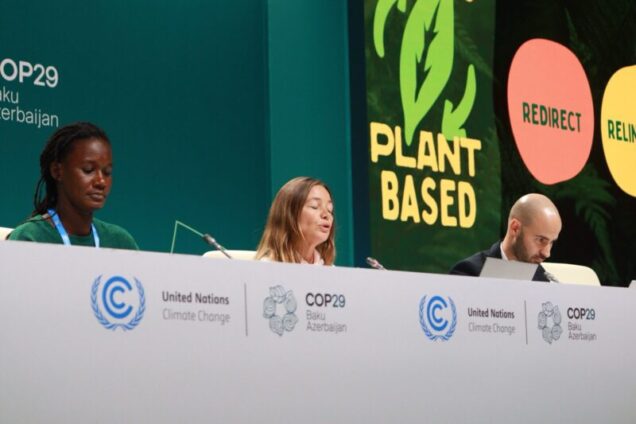
Plant-Based Treaty advocates Enric Noguera and Cindy Veltens introduced “Plant-Based Treaty in Action” to showcase how cities worldwide have begun implementing the 40 recommended proposals from the treaty.
“We need a global treaty and international cooperation to scale up plant-based solutions,” says Cindy Veltens, Plant-Based Treaty campaigner for Belgium and The Gambia.
During a press conference marking the opening of COP29, case studies from Edinburgh and Amsterdam were highlighted.
Edinburgh, which endorsed the Plant-Based Treaty in 2023, is implementing carbon labelling in schools and universities.
Meanwhile, Amsterdam, which signed the treaty in 2024, plans to partner with major employers and public institutions—including hospitals, community centres, and care facilities—to introduce Vegan Fridays and work toward a 60/40 plant-based-to-animal protein ratio by 2030.
“We urge world leaders to start negotiating a Plant-Based Treaty at COP29, and we need cities and countries to act on it and work on implementation,” says Enric Noguera, Plant-Based Treaty Europe cities campaigner.
Dr. Anita Krajnc, Global Campaign Director of the Plant-Based Treaty, emphasized that the demand at COP29 is clear: food policy is 30 years behind energy policy, and it’s time for the world to begin negotiations for a global Plant-Based Treaty.
According to Dr Krajnc, the treaty would complement the UN Paris Climate Agreement and help tackle one-third of global greenhouse gas emissions stemming from food systems.
“It will further protect our planetary boundaries by guiding the human community back to plant-based food systems,” says Dr Anita Krajnc, Global Campaign Director of the Plant-Based Treaty.
Latest Stories
-
American Airlines to bring back TV screens on US flights
10 minutes -
Carney’s final chance to convince Trump as US-Canada trade deadline looms
20 minutes -
BOSTenergies meets fuel tanker drivers over their concerns at the Kumasi depot
29 minutes -
X1 Energy Drink-backed DOL Super Cup ends with Ebusua Dwarfs crowned champions
34 minutes -
Disney and ABC sue Trump’s media regulator to stop early licence renewal
37 minutes -
Luv FM High School Debate: Prempeh dethroned as CHRISSEC and KUHIS ignite quarter-final path
39 minutes -
British couple on honeymoon killed in helicopter crash on Greek island
44 minutes -
George Opare Addo to lead National Youth Forum in Accra
45 minutes -
ECG invested GH¢710,965 in infrastructure replacement across Greater Accra – PURC
53 minutes -
Cyber Security Authority, EY resolve satisfactorily matters relating to licence fees
1 hour -
Beyond the ribbon: Why the sport of dog showing matters for every pet owner
2 hours -
Illegal mining drives Ghanaian children from classrooms into hazardous labour
2 hours -
NACOC committed to strengthening border security – DG
2 hours -
DTI students showcase innovative solutions at 2026 Capstone Projects Exhibition
2 hours -
‘We let the athletes down’ – NSA boss on Ghana’s Commonwealth Games campaign
2 hours