

Audio By Carbonatix
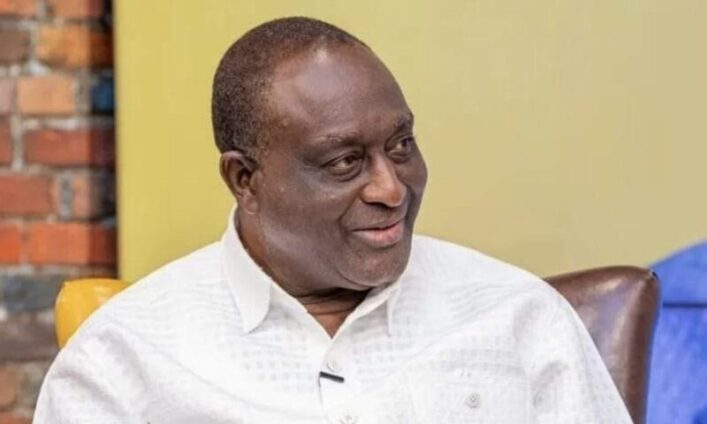
Founder and Leader of the Movement for Change, Alan Kyerematen has committed to reducing the substantial powers allocated to the President under Ghana’s Constitution, deeming them excessive.
Speaking at the Presidential encounters hosted by the Ghana Broadcasting Corporation (GBC) on 22nd November 2024, Mr Kyerematen stressed the need for urgent reform.
“Although I am running for the presidency, my intention is to amend the Constitution to curtail the powers of the President before assuming office,” he asserted.
His vision forms a central pillar of the Great Transformational Plan (GTP), which aims to introduce major governance reforms.
These include decentralizing authority, reducing presidential influence, and creating a more balanced distribution of power.
A key aspect of Mr. Kyerematen’s proposal is the establishment of a Second Chamber of Parliament.
This body would consist of representatives from traditional leaders, religious bodies, youth groups, women's organisations, the business sector, labour unions, and various other stakeholders.
It would have the authority to approve nominations for critical roles, such as the Chief Justice, the Electoral Commissioner, and heads of security agencies.
Mr Kyerematen argued that the current system, which allows the President to make these appointments, undermines the independence of these institutions.
“Expecting impartiality from bodies whose heads are appointed by the President is unrealistic,” he stated, “This setup does not align with true democratic principles and needs urgent revision.”
His anti-corruption stance is firm, with promises to consolidate existing laws and create an independent anti-corruption agency with the power to prosecute, entirely separate from the Attorney General’s Office.
To safeguard the agency's independence, Mr Kyerematen proposed that an anti-corruption Czar be appointed by the Second Chamber of Parliament, rather than the President.
“The anti-corruption Czar’s authority should stem from the Constitution, not presidential power,” he declared.
He criticized the current overlap between the Attorney General’s Office and anti-corruption agencies, noting that it jeopardizes the integrity of their work. In his view, this change is essential to ensure accountability at every level of government.
Mr Kyerematen was candid in his criticism of both the NDC and NPP, accusing them of fostering corruption by maintaining a system that fuels their political interests at the nation's expense. On the issue of illegal mining, or galamsey, he suggested that both parties had vested interests that inhibited decisive action.
“Neither the NDC nor the NPP has shown a genuine commitment to ending galamsey because they have, in one way or another, profited from it,” he charged.
He also proposed amending Article 257 of the Constitution to involve traditional authorities as co-trustees of natural resources. According to Mr Kyerematen, “It is irrational for the Minerals Commission to issue mining licences without the consultation of chiefs, who are custodians of the land.”
Additionally, he pledged to address the inequalities in compensation outlined in Article 71, which grants significant retirement benefits to a privileged group of public officials.
“It is indefensible that teachers, healthcare workers, and others who dedicate their lives to public service retire with meagre pensions, while certain officials enjoy disproportionately generous benefits. This system must be reformed,” he argued.
In conclusion, Mr Kyerematen highlighted the necessity of constitutional changes to tackle corruption and reinforce democratic governance. These reforms, paired with his anti-corruption and decentralization measures, aim to establish a more inclusive and accountable government.
He declared, “I am not seeking the presidency to consolidate power but to distribute it among the people and institutions that will uphold our democracy.” His Great Transformational Plan (GTP) is designed to address Ghana’s entrenched challenges, fostering a more equitable and transparent system of governance.
Latest Stories
-
Education Minister engages Chinese Ambassador over Damongo University project
22 seconds -
Mustapha Hamid leads NPP First Vice Chairman race with 18.3% – Global InfoAnalytics
2 minutes -
Enterprise Group appoints Jacqueline Benyi as Group COO, Francis Yirenkyi as acting MD of Enterprise Life
6 minutes -
Central Region activates security, humanitarian responses following New Winneba clash
14 minutes -
Black Queens face Côte d’Ivoire as Ghana looks ahead after WAFCON quarter-final exit
19 minutes -
NPP Western North Chairman donates Voxy vans to constituencies to boost party finances
22 minutes -
Insurance Hub 2026 set for October 21 at Wesley Towers Auditorium
25 minutes -
$30m China grant insufficient for Damongo university project – Haruna Iddrisu
31 minutes -
Food vendor recounts how she narrowly escaped New Winneba attack
35 minutes -
Military to secure James Town after waste cleanup to prevent illegal dumping, squatting
37 minutes -
Charlie Kirk murder suspect pleads not guilty as judge clears way for death penalty trial
39 minutes -
Signals Bureau case: ‘We were battle-ready’ – Atta Akyea fires at AG over absence of prosecution team
47 minutes -
NSA sets September 4 deadline for final rectification of biodata mismatches
50 minutes -
Gospel musician Bernice Offei reported missing
55 minutes -
IMF, former gold buyers uncomfortable with Ghana’s gold policy – Asiedu Nketia
58 minutes