

Audio By Carbonatix
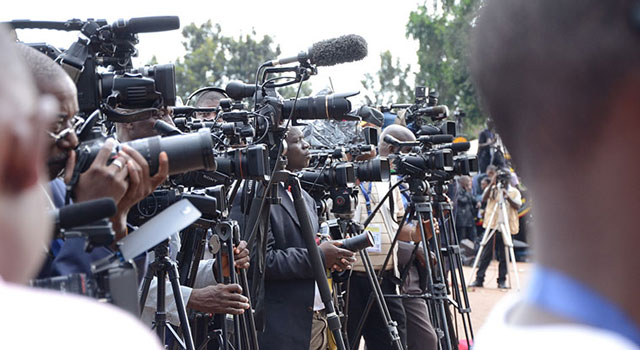
Journalists have been urged to investigate the use of stumpage fees paid to communities in timber logging areas to ensure locals benefit from the timber business.
Under the Timber Resource Management and Legality Licensing Regulations of 2017, timber contract holders are required to contribute 5 percent of stumpage fees toward the development of communities within their operational zones as part of a Social Responsibility Agreement (SRA).
Mr. Daryl Bosu, Deputy National Coordinator of A Rocha Ghana, emphasized that the media should track whether these contract holders honour their SRA commitments and determine if the funds are being used for the actual benefit of the community members.
He made the call during a presentation at a training for journalists in Accra on Forest Management, Carbon Markets, and Revenue Mobilization.
The two-day training was organized by the Media Foundation for West Africa (MFWA) as part of the “Tax for Development” project, which is funded by NORAD through OXFAM in Ghana.
The training aimed to equip journalists with the knowledge to report effectively on issues related to forest and biodiversity conservation, environmental and climate protection, and the livelihoods of local communities.
Mr. Bosu also highlighted that Ghana loses 2 percent of its 266 Forest Reserves annually, equating to approximately 2.6 million hectares of protected forest areas.
He pointed out that illegal mining remained a significant threat to the country’s forest resources, jeopardizing both biodiversity conservation and water resource protection.
“The more journalists are able to project the issues at it is, the better communities are able to understand and take action,” Mr Bosu said.
Ghana is one of the few countries in Africa to develop a comprehensive Carbon Market Framework – an initiative that seeks to unlock investments to create green businesses and provide jobs.
Mr. Daniel Lamptey, Principal Programmes Officer, Environmental Protection Agency, said the Carbon Market framework was one of the ways to mobilise funding from the private sector to implement conditional climate actions.
He appealed to the media to shed light on Ghana’s carbon office and the opportunities for the private sector to help increase participation and raise funds to undertake critical climate interventions.
Ms. Rosemond Ebi-Adwo Aryeteey, Senior Programmes Manager, MFWA said the training empowered journalists to understand the technical issues relating to carbon market and forest management to enable them support awareness creation on the topics.
“Our expectation is that with all that has been shared by the facilitators, the participants have gotten new ideas to pursue impactful stories to improve our forest management and enhance our climate actions,” she said.
Latest Stories
-
Accra-Kumasi Expressway will be Ghana’s biggest infrastructure project – Kwakye Ofosu
11 minutes -
Cape Coast pulses with colour, sound ahead of Fetu Afahye
12 minutes -
Nigerians die after inhaling toxic fumes during alleged pipeline theft, community group says
13 minutes -
CSSPS placement results to be released tonight at 10:00 pm
13 minutes -
Accra-Kumasi Expressway to be fully funded locally – Government
14 minutes -
US diesel prices hit an all-time-high
17 minutes -
Horticulture Expo: Gov’t targets stronger agric value chain to boost horticulture exports
20 minutes -
Reckless driving incidents fall by 38% across Africa – Yango report
21 minutes -
It is ‘FAKE’ – Patricia Appiagyei reacts to memo alleging rejection of GH¢70,000 money
23 minutes -
ICE agent charged with lying about shooting Venezuelan man during crackdown
24 minutes -
Police arrest landlord’s wife for allegedly biting tenant’s ear during a fight
28 minutes -
US diesel prices hit a record high, pushing up transportation costs for a long list of goods
29 minutes -
300 entrepreneurs in Bono East battle for MTN-Innohub SME Support as programme enters 4th year
44 minutes -
Lawyer sues AG, GRA boss over passenger baggage exemption rules
45 minutes -
Ashanti Region crowned 2026 MTN Elite U-19 Champions after epic seven-goal final
1 hour