

Audio By Carbonatix
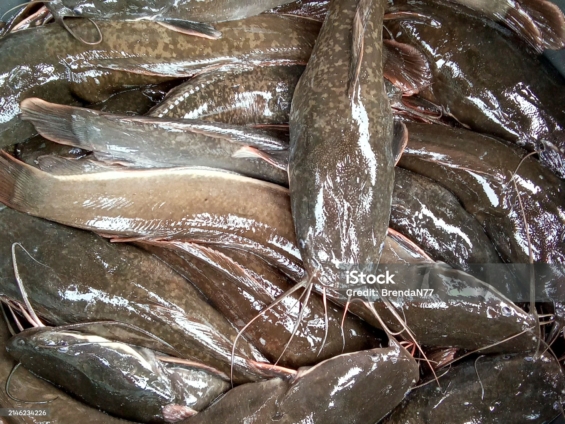
A new study by researchers at the Kwame Nkrumah University of Science and Technology has revealed that the African catfish (Clarias gariepinus) can triple its air-breathing rate when exposed to high levels of carbon dioxide in water.
The African catfish is a unique fish that possesses the ability to breathe oxygen dissolved in water as well as from the atmosphere. Its air-breathing behaviour is characterised by regular swimming to the air-water interface and directly breathing air.
The researchers observed that at 40 mg/L CO₂, the fish significantly increased its breathing frequency compared to normal conditions, showcasing its remarkable adaptability to changing aquatic environments.
The study also found that the catfish adjust their breathing based on oxygen availability and temperature fluctuations.
When oxygen levels dropped to moderate and severe lows, their air-breathing rate more than doubled, reaching 1.40 and 1.23 breaths per minute, respectively, compared to 0.47 breaths per minute under normal conditions.
Temperature changes further influenced their behaviour. The study published in the Environmental Biology of Fishes observed rising water temperatures caused a steady increase in air-breathing until reaching a critical threshold, beyond which breathing declined.
Again, fish in thermally stratified water columns also adjusted their breathing rates according to the temperature of different layers.
Why this matters for fish farmers
For fish farmers, understanding the air-breathing behaviour of Clarias gariepinus is crucial for maintaining healthy stock and optimizing production.
According to the lead scientist, Dr. Kwasi Adu Obirikorang, when oxygen levels drop, catfish rely more on air-breathing. Farmers can reduce stress and mortality by ensuring proper aeration, especially in densely stocked ponds.
Again, high levels of carbon dioxide can force catfish to breathe more frequently, which may lead to stress and energy depletion. He therefore advises regular water exchange and proper filtration can help maintain balanced gas levels.
And last, since catfish increase their air-breathing rate as temperatures rise, he wants farmers to monitor seasonal variations and avoid overheating, which could push fish beyond their thermal tolerance.
By applying these insights, fish farmers can improve growth rates, reduce stress-related losses, and create better conditions for sustainable catfish farming.
Latest Stories
-
Toobu rejects calls to recall Parliament over 3.9-tonne cocaine shipment
33 minutes -
Residents in 5 Northern Regions warned of approaching rainstorm
35 minutes -
Constituency Games still a work in progress – Sports Minister
53 minutes -
Team Ghana set for historic Karting Africa Showrun in Angola
57 minutes -
52-year-old South African arrested with suspected heroin after arriving from Accra
1 hour -
Shatta Wale challenges UPSA students to build entrepreneurial mindsets
2 hours -
Finance Minister advises African governments to strengthen regional tax cooperation
3 hours -
NPP accuses NDC of master-minding demolition of Ho regional office fence
3 hours -
Ghana plans stronger regional power trade with Nigeria
3 hours -
GRA Commissioner-General calls for stronger tax cooperation to boost regional revenue mobilisation
3 hours -
NACOC needs more personnel to tackle drug trafficking – Toobu
3 hours -
Railway workers resist KMA eviction order, demand consultation
3 hours -
Legacy Leadership Africa Institute to host boardroom women’s leadership programme
4 hours -
Ghana needs a law to sustain constitutional reforms – CDD-Ghana
7 hours -
COVID fumigation audit: Auditor-General has a lot of questions to answer – Akwatia MP
7 hours