

Audio By Carbonatix
The Chief Executive Officer (CEO) of Development Bank Ghana (DBG), Dr Randolph Nsor-Ambala, has disclosed that his organisation is rolling out GHȼ500 million this year to support Ghana’s agricultural ecosystem.
According to him, the aim is to strengthen and support Small and Medium-sized Enterprises (SMEs) within the agricultural value chain and, consequently, rejuvenate the economy by improving food security, enhancing productivity, and creating employment opportunities.
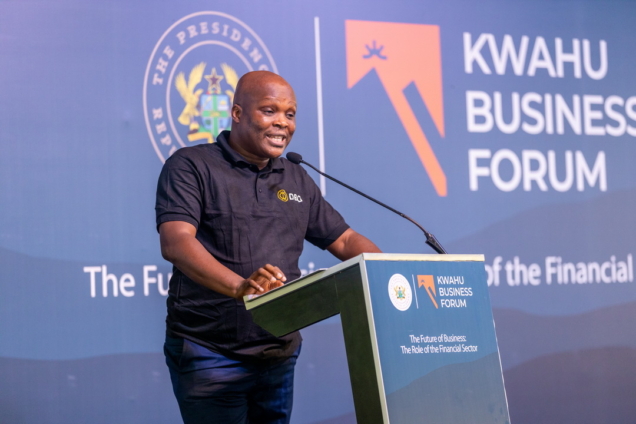
Dr Nsor-Ambala made the announcement during his speech at the Kwahu Business Forum, which took place in Mpraeso, Kwahu, over the weekend.
The Forum, themed “The Future of Business: The Role of the Financial Sector,” forms part of the government’s vision of building a more resilient and inclusive economy through SME empowerment.
President Mahama was the Forum’s most prominent guest. The event also brought together various business owners, industrialists, investors, start-ups, financial institutions, including banks, and captains of industry to engage stakeholders, discuss policy interventions, and explore strategies to enhance Ghana’s business landscape.
DBG’s approach focuses on sustainable transformation rather than isolated interventions, ensuring that capital flows to areas where it can have the greatest impact on economic development.
Over recent years, DBG has provided GHȼ1.62 billion in loans to over 650 businesses, with repayment terms of up to 15 years. These investments are projected to generate over 18,000 direct jobs nationwide. The Bank currently has active portfolios in 13 regions and aims to cover all 16 regions of Ghana this year.
In his remarks at the event, Dr Nsor-Ambala stated:
“What we exist to do is to provide a comprehensive set of support for businesses. Most people know us for affordable long-term loans, but beyond that, we do much more. As we speak, we are working with our partner financial institutions to help them better understand the agriculture sector and evaluate it properly. The default position for most financial institutions is to view any such business case as risky and dangerous to invest in.”
“Through the technical assistance programmes we provide—first to the businesses themselves and secondly to the financial institutions—we have built capacities within these institutions to understand and appropriately value the agriculture sector. Related to that, we are working with our development partners to implement mechanisms such as partial guarantees for the agriculture sector and an agric-insurance programme to further reduce the risks associated with it,” he added.
Dr Nsor-Ambala explained that DBG is rolling out GHS500 million to support SMEs in the agriculture value chain, to unlock growth potential and ensure sustainable development across all levels—from input suppliers and farmers to processors and distributors.
He noted that this support aligns with the government’s broader economic recovery agenda, which includes expanding access to affordable financing for local businesses and offering targeted support to SMEs through tailored financial solutions and technical assistance.
“DBG is about inclusive opportunity—creating jobs for our youth, building sustainable businesses, and positioning Ghana as a competitive force in African and global markets,” he reassured.
According to the CEO, the Bank’s key focus areas for support include ensuring food security by strengthening the agriculture value chain, covering farming, agribusiness, and beyond. Additionally, DBG is focused on supporting the manufacturing sector, particularly in import substitution and export. The Bank also has a dedicated value proposition for the ICT sector, and it supports human capital development through investments in health and education. Infrastructure, including transport, is also a priority.
DBG’s commitment to empowering local businesses is not only about fostering innovation and job creation but also about positioning the private sector as a key driver of the economy, contributing meaningfully to national economic transformation.
Development Bank Ghana is a wholesale financial institution established by the Government of Ghana. Since its inception three years ago, DBG has facilitated significant disbursements through Participating Financial Institutions (PFIs), unlocking projects and value chains to empower businesses across agribusiness, manufacturing, ICT, and high-value services.
The Bank remains dedicated to bridging the MSME financing gap to ensure that Ghanaian businesses gain access to long-term, competitively priced capital—fostering resilience, innovation, and sustainable growth. DBG has received funding from the World Bank, European Investment Bank, Kreditanstalt Für Wiederaufbau (KfW), and the African Development Bank.
Latest Stories
-
New four-year Treasury Bond opens for bids September 1
11 minutes -
Ketu South residents to demonstrate against ECG on 1st September
20 minutes -
Fallen live electricity cable kills over 10 cattle in Krachu East
53 minutes -
‘Powder Guy’ denies $32,000 visa fraud charges
2 hours -
Ghanaian youth demand 40% of climate adaptation budget for four northern regions
2 hours -
Wengam cautions African pastors against materialism, complacency
3 hours -
Nine of the best TV shows to watch this September
3 hours -
Lionel Messi scores 4 goals as Inter Miami net 7 in record win
4 hours -
‘No alcohol on duty’ — Bagbin warns parliamentary security officers
5 hours -
Canada installs large Lake Ontario sign in latest jab at US
5 hours -
Sand-winning destroys over 50 acres of farmland at Tsumkpo
6 hours -
Akufo-Addo praises Dagbon for upholding Peace Accord
7 hours -
Ghana High Commission to UK steps in as stranded musician Barosky considers returning home
7 hours -
Norway’s new king remembers ‘my dear father’ in first speech
8 hours -
5 Fiscal Council members cleared
8 hours