


Audio By Carbonatix
The DigiVibe training programme has been launched, aimed at bridging gender gaps in digital skills, industry exposure, and gender representation in tech.
The initiative will in two years train 1,000 women, engage 45 companies, and place over 400 graduates in tech roles and national service positions to bridge gender gaps in the tech industry.
Female graduates will receive training, mentorship, and job placements through a consortium of business associations, educational institutions, and tech partners.
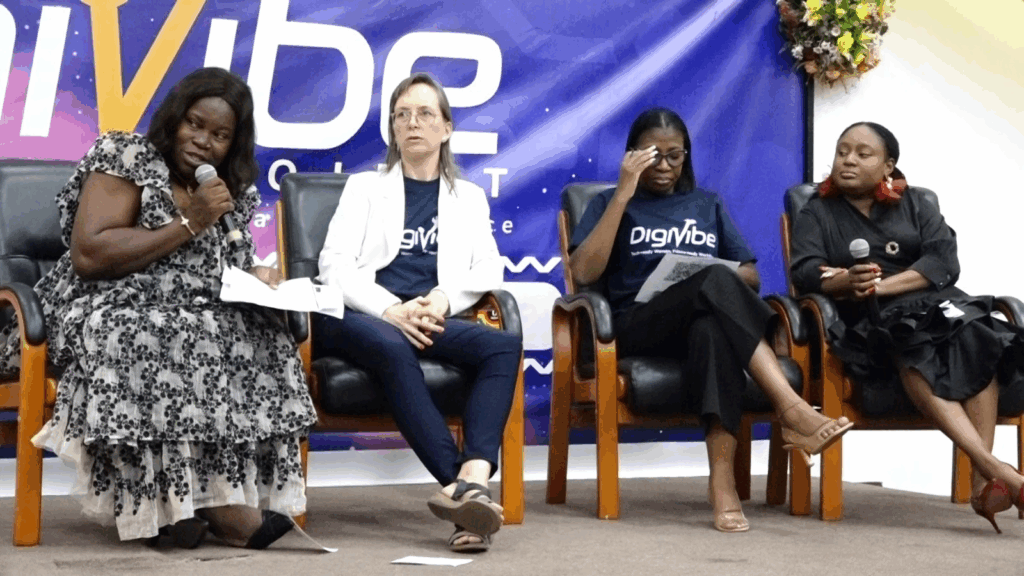
The IT and tech industry in Ghana faces significant divides, with urban areas benefiting from digital infrastructure and access to tech hubs, while rural regions struggle with limited access.
The sector is also male-dominated, with a few women holding a fraction of tech roles due to systemic barriers.
The DigiVibe initiative by Ghanaian business associations, Oxford Africa Women Leadership Institute and WERise Network, aims to address three critical divides.
These include the digital gap, exposure gap and gender gap to promote and to empower underrepresented women in tech, especially in leadership roles, including female graduates through female-focused programmes.
Project Lead of AFOS Foundation, Hanna Schlingmann says the initiative will help build a future-ready workforce for Ghana.
“Over the next two years, DigiVibe aims to create awareness for at least 4000 students about digital upskilling opportunities, train over 1,000 women in ICT and soft skills, engage over 45 companies in mentorship and placements, turn 270 graduates into junior consultants, place more than 400 women in tech-related jobs and fitting national service positions. These numbers aren’t just statistics. They represent lives transformed, careers launched, and businesses empowered—all working together to build a future-ready workforce,” she said.
DigiVibe is built on four key pillars to ensure success, skills development, thus upskilling opportunities for young female professionals.
There will be consultancy services where graduates are trained as junior consultants to support businesses, mentoring which will provide structured guidance for career growth, and job placement, thus connecting skilled female graduates to decent employment and National Service opportunities.
Founder and CEO of Women's Haven Africa, Adwoa Fosua Owusu Ofori, is encouraging young females to eschew tech misconceptions and aspire to take advantage of opportunities in the industry.

“It’s important that young women are encouraged to believe in themselves. Many don’t believe tech is for the. The first thing is for them to believe in themselves that they can build up to be tech ready,” she said.
WERise Network Senior Project Coordinator, Eunice Adjei, explained that stakeholders have been engaged to facilitate the progress of the project.

“We are linking young women who would be trained and given employability skills through our programme, to institutions that aspire to put together an integrated and tech-based structure that helps their business grow. This time we have gone beyond public institutions and engaged private entities as well,” she said
DigiVibe has developed two flagship upskilling initiatives and a mentorship programme. These are: Career essentials initiative, an AI-driven virtual training programme designed to train at least 1,000 female students and graduates.
SheConsults initiative, a programme that pairs tech-savvy female graduates with businesses to develop affordable digital solutions, creating a win-win for both sides. Additionally, DigiVibe’s mentoring programme will support 800 female graduates during their first year of employment, ensuring a smooth transition into professional life.
The Director of KNUST E-Learning Centre, Prof Eric Appau Asante, indicated that KNUST is committed to supporting the efforts and implementation of the DigiVibe project.

“KNUST is indeed glad to support. The E-Learning centre is ready to provide expertise, infrastructure and environment that enables people to learn virtually and apply them in physical space as well,” he said.
DigiVibe is backed by a consortium of partners, namely AFOS Foundation for Entrepreneurial Development Cooperation (AFOS), WERise Network, Oxford Africa Women Leadership Institute (OAWLI), Women’s Haven Africa Innovation Hub, Universities, among others: Kwame Nkrumah University of Science and Technology (KNUST), Accra Technical University (ATU), University of Cape Coast (UCC) and the National Service Authority.
The initiative is funded by the German Ministry of International Cooperation and Development (BMZ) through Sequa and the German Special Initiative Decent Work for a Just Transition.
Latest Stories
-
Young political leaders must look beyond party lines to strengthen Ghana’s democracy – EU
3 minutes -
25 female KNUST physics students receive GH¢87,500 Whittaker Foundation suppo
5 minutes -
Berekuso-Kwabenya-Kitase road project stalls as First Sky cites unsigned contract and funding challenges
8 minutes -
Interior Ministry urges strict enforcement of Armoured Bullion Vehicle standards in Ghana
10 minutes -
GNFS rescues trapped man after Ford F-150 crashes into Kia Rio at Suhum Niifio
12 minutes -
Firefighters need stronger protection from smoke, air pollution risks – Clean Air Fund
13 minutes -
Constitution guarantees speedy trials for all cases, not selected ones — Kpemka tells Deputy AG
13 minutes -
Hostel operators warn Rent Control action could worsen accommodation shortage at KNUST
15 minutes -
Fire Service equipment shortage persists as some appliances go 15 years without replacement
16 minutes -
Guinness Ghana DJ Awards 2026 nationwide tour kicks off in Winneba
18 minutes -
Afenyo-Markin accuses GoldBod management of ‘crass incompetence’ over alleged losses
18 minutes -
Livestream: National Mining Dialogue 2026 underway
27 minutes -
Small arms amnesty campaign boosts surrender, regularisation of weapons in Ashanti Region
35 minutes -
A reflection on the proposed university for Savannah Region
35 minutes -
‘Empower the grassroots or forget 2028’ – NPP 1st Vice Chairman aspirant
39 minutes