

Audio By Carbonatix
In Ghana’s Northern Region, a bold and inspiring enterprise is changing the way the world thinks about agricultural waste and menstrual health.
Kodu Technology, a dynamic and socially driven startup, is turning discarded banana and plantain waste into affordable, eco-friendly sanitary pads, which are restoring dignity to young women while boosting incomes for smallholder farmers.
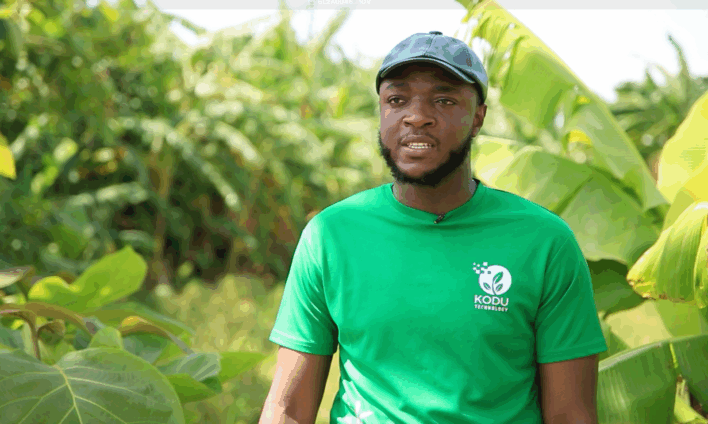
At the helm is Dr. Iddie Mohammed Faried, a visionary scientist and entrepreneur who co-founded Kodu Technology with a mission to solve multiple challenges at once: period poverty, environmental degradation, and rural poverty.
“My team and I visited Gbulahagu in the Northern Region of Ghana. We wanted to figure out what farmers do with their wasted resources. So that's when we found a young lady who is the daughter of one of our farmers.
"According to her, anytime she's in her period, she stays at home instead of being in school due to her inability to afford menstrual hygiene products,” Dr. Faried recalls.
That encounter inspired them to set up Kodu Technology. “So, my team and I came up with Kodu Pads, a sanitary pad made from banana and plantain waste, and it's fully certified by the Food and Drug Authority and the Ghana Standards Authority,” he said.
The processed banana and plantain fibres are cost-effective and offer a sustainable alternative to imported, plastic-heavy products, while making a powerful social impact.
Game-changing support
A major turning point in Kodu Technology’s growth came when it received a $50,000 catalytic grant from AGRA as the winner of the 2024 Gogettaz Agripreneur Prize Competition.
The prize is awarded to young African entrepreneurs who have launched scalable, impact-driven businesses in the agrifood sector, exposing them to mentorship and financial support to scale their ventures.
That strategic support helped the company double its production capacity, paving the way for broader distribution and deeper impact.
“AGRA has been quite helpful to us. AGRA donated $50,000 to Kodu Technology, and this has helped move our production to about 100%. And what that means is that more young women are going to benefit from our impact,” Dr. Faried said.
With expanded production, more girls now have access to safe menstrual products, and more farmers are earning income from materials that would otherwise be thrown away.
Creating hope and opportunity
The results are already visible. Teachers, midwives, and farmers alike are praising Kodu Pads for their affordability and life-changing impact.
“Kodu Pad is a very good initiative. It's eco-friendly, and it has helped a lot of girls in my community. For instance, I would say one in 10 girls in Ghana are not able to go to school due to their inability to purchase a pad.
But then, since the introduction of Kodu Pad, they have all been able to purchase one. And then the stigma around menstruation has reduced due to the low cost of Kodu Pad,” says Bawa Aisha, a local teacher.
Midwife Mahama Guma Adidjatu says Kodu Pads are affordable and offer vast health benefits for females.
“Young women and adolescents use rugs, thorn clothing, papers and all sorts of things. Which, at the end of the day, has a health risk for them because some of them come in with infections… But I think with Kodu Technology, the cost is affordable and reliable,” she says.
A business model rooted in sustainability
Beyond its social impact, Kodu Technology is revolutionising how agricultural waste is valued. Farmers who once burned or buried banana and plantain tree waste now sell them to Kodu for processing, gaining a new source of reliable income.
“We give farmers incentives for their waste,” Dr. Faried explains. “This aligns us with the UN Sustainable Development Goals One and Two on Zero Hunger and No Poverty,” he added.
Yakubu Wunbei, a young farmer in Gbulahagu, attests to the change: “My dad was much happier that they are taking our waste to manufacture something very important, and we get some money from it.
Income
Before Kodu Technology came to this community, we used to have a lot of financial constraints. With them, we've gained the financial level, and now we are even looking at me continuing my education. All from the funds we are getting from Kodu Technology,” he says.
“And to the community, we've involved a whole lot of people. Everyone is getting the idea, and farmers now want to go into banana farming. Because of what they've seen us benefit,” he adds.
With 22 active farmers in Gbulahagu and nearly 2,000 across Ghana in its database, Kodu Technology is building a robust value chain that links environmental responsibility with economic empowerment.
Looking to the future
Beyond producing sanitary pads, Kodu Technology is building a movement. A movement for climate resilience, women’s health, and circular economies.
“At Kodu Technology, we envision a world where food waste is drastically reduced, a cleaner environment, a climate and a world where every young girl can afford menstrual products,” Dr. Faried said.
With its bold vision, practical solutions, and unwavering commitment to impact, Kodu Technology is setting a new standard for what it means to build a business that truly matters.
Latest Stories
-
Black Princesses Coach Charles Sampson confident ahead of World Cup opener against Ecuador
17 minutes -
TV presenter among 12 sentenced to death in Egypt drugs case
20 minutes -
Accra Airport VIP Lounge project to be completed this year without taxpayer funds – Ablakwa
53 minutes -
NPP clears all 47 aspirants for 2026 national officers’ election
1 hour -
Domelevo backs OSP probe into GH¢70k allegation
2 hours -
CAF Confederation Cup: Dennis Korsah confident Nations FC can overturn Mali defeat
2 hours -
Chief Justice should stop commenting on some political issues – Domelevo
3 hours -
‘I don’t trust OSP’ to probe GH¢70k ‘bribe’ allegation – Kwasi Kwarteng
3 hours -
Road inspections not to witch-hunt contractors – Kwame Agbodza
3 hours -
Inter Milan mount stunning comeback to beat Napoli
4 hours -
Modric plans to play for Croatia past 41st birthday
4 hours -
Bayern fail to score for first time in 59 games
4 hours -
Bawumia preparing new cocoa policy package for farmers – Annoh-Dompreh
4 hours -
Wa-Tumu-Bolga road upgrade will unlock agriculture, trade – Agbodza
4 hours -
Ghana Maritime Authority readies oil-spill response vessel for deployment
4 hours