

Audio By Carbonatix
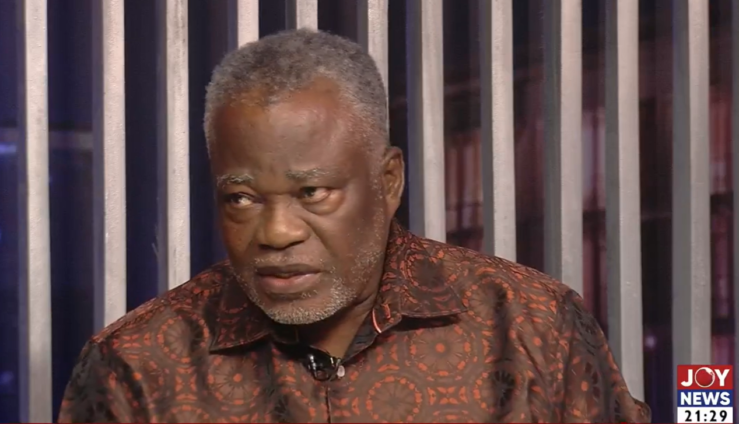
Security analyst Col. Festus Aboagye says the government’s approach to dealing with escalating violence in Bawku and surrounding areas should not be a shift from peacekeeping to peace enforcement.
Rather, the retired military officer is calling for an urgent increase in troop numbers and enhanced logistical support.
He said the idea of transitioning the military’s role in the area from peacekeeping to peace enforcement is not applicable.
“I think that the shift, or the transition from peacekeeping to peace enforcement, is not applicable, but having said that, there are options other than shifting from peacekeeping to peace enforcement in courts which could have been explored when this conflict escalated in late 2023 following the enskinment of the rival Bawku chief, especially in 2024.”
Col. Aboagye referenced the government’s deployment of 500 troops as an initial response to the surge in conflict.
But he questioned its adequacy, given the persistent violence nearly two years later.
“The government’s response was to deploy a task force of 500. It’s about 18 months hence, has this size of soldiers been sufficient? So one of the first things we want to look at is the size of the force.”
He insisted that military dominance in the conflict zone depends on numbers.
“Can we, for instance, increase it by another 500 to 1000 or 1500 to 2000 because this operation is about dominating the conflict area and dominance, first and foremost, is through personnel, boots on the ground.”
He also revealed logistical shortcomings, including troubling situations where fuel suppliers withdrew services due to government’s failure to pay.
“There have been occasions in the past when the military was using fuel coupons to draw fuel to be paid for by the government. The government was not paying the fuel suppliers, who were not charities withdrew the service.”
Col. Aboagye said the troops need more than just manpower; they need mobility and protection.
“So we need, again, to enhance the logistics. Provide a task force with more vehicles, more transport, including armoured ones and give them more fuel.”
He raised alarm over the state’s repeated failure to detect and prevent attacks.
He cited recent killings of students in Nalerigu and Bawku, describing them as examples of an intelligence gap.
“When we come to the spread of the conflict, including the attack on the convoy, there have been several instances of attacks on convoys, will suggests that there is some deficit in intelligence, because Asawase happened, the state didn’t know.
"The state got to know after the fact, Ashaiman, assuming that it is related to Bawku, was also after the fact. The Nalerigu SHS was after the fact. Bawku SHS was after the fact.”
In his assessment, the state must reinforce its intelligence-gathering capability to stay ahead of the threat. “So the other option is to enhance the intelligence resources, what we technically call ISR.”
Latest Stories
-
Hundreds throng EducationUSA College Fair in Kumasi in pursuit of abroad studies
2 seconds -
Drug bust: NACOC should be part of port inspection team – Twum-Barimah
3 minutes -
Ward appointed Liverpool’s sporting director
3 minutes -
This isn’t the first cocaine bust; NPP must stop the politicisation – NACOC deputy boss
7 minutes -
Drug bust case: Only Customs officers, MPS officials in scanning room – NACOC
1 hour -
I don’t mind being insulted; I have a crocodile skin – President Mahama
1 hour -
Samson’s Take: Verify the badge – and verify the story
2 hours -
President Mahama explains why Ghana must rethink regulation of TikTok, other new media platforms
2 hours -
Rule of law must be protected – GBA condemns EOCO action against Baffour Awuah
3 hours -
950,000 barrels of Sankofa crude head to TOR as GNPC deepens domestic refining
4 hours -
Scales of deception removed – Annoh-Dompreh attacks new cocoa price
4 hours -
Young Positivist Writes : My Experience with GCLP
5 hours -
Strong Day 1 turnout sets tone for Day 2 of Republic Bank-JoyNews Habitat Fair Clinic
5 hours -
Ghana Army warns new soldiers against social media misuse, uniform abuse
6 hours -
AMA calls for science-led action to tackle environmental health risks in Accra
6 hours