

Audio By Carbonatix
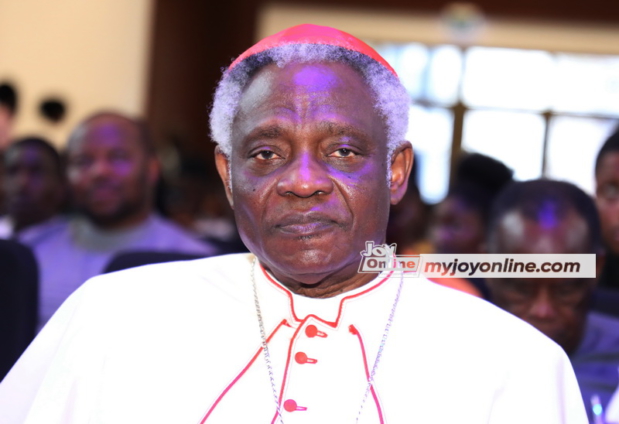
Cardinal Peter Kodwo Appiah Turkson, a prominent figure at the Vatican, has delivered a searing critique of illegal mining, locally known as "galamsey", asserting that the destruction of nature is a direct threat to human life.
His remarks, rooted in a profound theological and ecological perspective, highlight the unsustainable and self-destructive nature of the practice.
"Our bodies were made, according to the scriptures, out of the material of the earth," Cardinal Turkson, the Chancellor of the Pontifical Academy of Sciences and Social Sciences at the Vatican, stated in an interview with JoyNews' Emefa Akosua Adeti.
"We are so interconnected that that should already drive us to, if not respect, at least protect [nature]... The ideal thing would have been to respect this relationship and try to treat everything that exists in creation with some respect and dignity."
He condemned illegal miners for their brutal disregard of this sacred connection.
"You get rid of the vegetation, [causing] degradation; you get rid of the topsoil that's for agriculture only to get to this [precious metal]," he said. "You get precious metal, but in the process, destroy what feeds you and what nourishes you. So it's an activity which is not sustainable."
The Cardinal’s words resonate deeply with a crisis that has ravaged Ghana's landscapes.
The environmental and social fallout from galamsey is extensive, impacting the nation's most vital resources.
In his conclusion, Cardinal Turkson echoes the theological truth that humanity's existence is dependent on the well-being of the earth.
"God did not create Adam and Eve before he created the Garden of Eden... He created this way before he created human beings because there is the need for the wherewithal to support human existence," he said.
He pointed out that if Ghana is to have a sustainable future, it must find a way to extract its mineral wealth without destroying the very environment that sustains its people.
The choice, he suggests, is not just economic, but existential.
The human and environmental cost of Galamsey
- Water Contamination: Galamsey has led to the severe pollution of Ghana's major rivers, including the Pra, Ankobra, and Birim. Data from the Ghana Water Company indicates that turbidity levels in some areas have reached as high as 14,000 Nephelometric Turbidity Units (NTU), far exceeding the recommended standard of 2,000 NTU for treatment. This has forced the shutdown of water treatment plants, leaving communities without access to safe drinking water. A 2024 report highlighted that water production across the country had dropped to 40% from 70% in 2022, a direct consequence of polluted water sources.
- Health Hazards: The health consequences are dire. The use of toxic chemicals like mercury and cyanide in gold processing contaminates water bodies and the food chain. Studies have linked exposure to these heavy metals to neurological disorders, kidney damage, and other chronic health conditions. In some mining communities, the risk of adverse birth outcomes is twice as high compared to non-mining areas
- Economic Devastation: The economic toll extends beyond the perceived gains from gold. The destruction of fertile farmlands has decimated Ghana's crucial cocoa sector. According to the Ghana Cocoa Board (COCOBOD), an estimated 20,000 hectares of cocoa farms were lost to galamsey in 2020 alone, a figure that continues to rise. This decline is a major factor in Ghana's expected drop in global cocoa output. Furthermore, the illegal nature of the activity means a significant loss of government revenue; the Economic and Organised Crime Office (EOCO) estimated that from 2019 to 2021, Ghana lost $1.1 billion from unreported gold exports
- Social Disruption: Galamsey also fuels a host of social problems, including child labour, school dropouts, and violent conflicts over land and resources. The lure of quick money pulls young people away from education, trapping them in a cycle of poverty and unsafe labour practices.
Latest Stories
-
Nigerian Goodnews Aina crowned J30 Accra champion as Ghana’s Gwendolyn Duvor Klu retires in final
43 minutes -
WACCE urges gov’t to declare state of emergency in galamsey-prone areas
1 hour -
NACOC boss calls for practical cross-border action against drug trafficking
2 hours -
Ghana calls for stronger regional cooperation to combat drug trafficking
2 hours -
Ablakwa presents bicycles to 100 North Tongu day students
2 hours -
Ablakwa supports 2,269 North Tongu SHS students with essential items
2 hours -
Dr Bawumia expresses sympathy with farmers over their inability to sell their produce even at reduced prices
2 hours -
Constitutional review: Govt must keep discussions open – Dr Tandoh
2 hours -
GPL 2026/27: David Gyamfi hat-trick fires Ashantigold to historic first victory
2 hours -
Ericsson celebrates 150 years of global innovation, 30 years of partnership and digital transformation in Ghana
3 hours -
Ghana’s Ambassador to Serbia hosts African ambassadors’ September meeting in Belgrade
3 hours -
Ghana closer to terrorism threat than ever before – WACCE
3 hours -
Gov’t must focus on quality everywhere, not categorisation of public schools – Ben Boakye
4 hours -
Tanko Computer backs comprehensive review of 1992 Constitution
4 hours -
2026 SHS placement crisis was caused by changes to established model – Former Dept. GES Director
4 hours