

Audio By Carbonatix
In Sang, a community in the Mion District of the Northern Region, young women are finding new opportunities to build dignified livelihoods through the Harnessing Agricultural Productivity and Prosperity for Youth (HAPPY) Program.
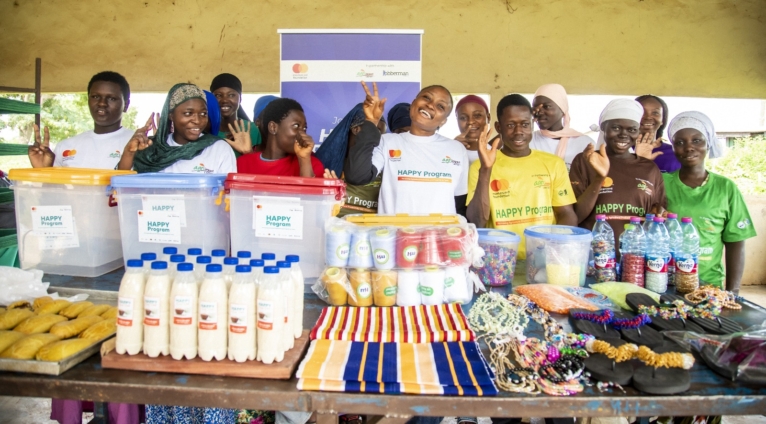
The initiative, a partnership between the Mastercard Foundation and Agri-Impact Limited and implemented by an eight-member consortium including Jobberman Ghana, is equipping young women already engaged in agriculture with additional skills in bead-making, sandal design, bakery, weaving, and soya drink processing.
These skills help them earn income during the off-season or outside of farming activities.
With support from the Mion District Assembly, a common user facility has been provided to serve as a resource hub where training takes place and businesses can grow.
According to Asiwome Biekro, Program Manager for the HAPPY Program at Jobberman Ghana, his firm's core mandate is to facilitate formal job placements for young people within the program’s targeted value chains: soybean, rice, poultry, and tomato.
He noted that while Jobberman continues to connect young people to formal employment in these value chains, it also provides off-farm skills training for women in farming communities to sustain livelihoods year-round.
“We have various categories of young people that we impact—high tech, low tech, and no tech. Most of what we do is at the high-tech level, where we facilitate formal jobs,” he explained. “But coming into the northern part of Ghana and other regions that are not necessarily heavy on formal jobs, we also need to empower young women. So our participants here are part of what we are doing at Jobberman.”
He said the model is designed for sustainability.
“We have trained three cohorts already, about 120 young women in total. Beyond training, participants receive starter packs, not just equipment but also materials they need to reach the market. As they begin to sell and make profits, they contribute a little back to the resource center, which has been equipped by the program, so it can continue running,” Biekro added.
As participants become proficient, they step into the role of trainers to empower others in their communities. The goal is to enable women, many of whom are school leavers, young mothers, or dependent on family support to supplement their agricultural livelihoods and become self-reliant.
For the women themselves, the impact is deeply personal.
“When I heard about the HAPPY Program’s training, I joined because I wanted to add new skills to my small business,” said Yakubu Hawa, a young entrepreneur from Mion who already sells eggs, water, and maize drink (asana).
“Now I can weave, bake, and design beads on sandals. I also hope to provide pastries, maize drink, and other services during naming ceremonies, workshops, and other events to earn more money. In this community, we don’t have such services, so I can meet new needs and expand my income.”
For others, the training represents a lifeline to independence.
“I’ve learnt how to make beads, cakes, and meat pies,” explained Abdul Nasser Hafsa. “These skills will help me take care of my economic life.”
Similarly, Mohammed Fatima, who is currently learning weaving, described the training as a fresh start.
“The training will help me take care of myself,” she said. “It’s not difficult, and it gives me hope.”
With ongoing efforts to extend the training across ten districts in the Northern Region, the common user facility model under the HAPPY Program is fostering community ownership while ensuring that young women can strengthen their agricultural livelihoods with off-season income opportunities.
Biekro emphasized the significance of the partnership:
“We feel that without the HAPPY Program, Jobberman would not have this extent and scale of impact. So, we are really grateful to be part of this initiative of the Mastercard Foundation in partnership with Agri-Impact Limited.”
He added that the collaboration is unlocking opportunities that go far beyond training.
“The HAPPY Program has allowed us to reach young women who otherwise may not have had access to these kinds of skills or income opportunities. This is not just about economic empowerment—it is about dignity, independence, and hope for the future.”
The HAPPY Program aims to create dignified and fulfilling job opportunities for 326,000 young people aged 15 to 35—70% of whom are women and persons with disabilities—by targeting the soybean, rice, poultry, and tomato value chains.
Latest Stories
-
Withholding audit information or underreporting on COVID-19 fumigation is a serious offence – Domelevo
4 minutes -
Mahama urges banks to offer long-term financing for locally assembled cars
7 minutes -
Accra set to go ‘All Out’ as Guinness Ghana DJ Awards 2026 Pub Fest comes off on September 25
7 minutes -
Sterling admits dangerous driving after M3 crash
8 minutes -
Vehicle assemblers must meet local content threshold to enjoy VAT exemption – Mahama
12 minutes -
Health Ministry secures new US employment pathway for qualified Ghanaian nurses
17 minutes -
GRIDCo completes 4km, 161kV transmission line linking Yendi Solar to Tamale-Yendi network
18 minutes -
Government to regulate EV charging stations to protect power stability – Mahama
21 minutes -
Withheld information, poor audit could account for GH¢624m fumigation gap – Domelovo
25 minutes -
GFA to launch 2026/27 Colts Football Season
26 minutes -
Fidelity Bank donates GH¢200,000 to Ghana Medical Trust Fund for vulnerable patients
36 minutes -
Jimmy Aglah: When Hollywood ended at Kwashieman…
36 minutes -
GoldBod, EOCO team up to track illicit financial flows in gold trade
38 minutes -
Climate x Culture Summit to spotlight role of creativity in Africa’s climate action on October 22 in Accra
39 minutes -
Ghana, City of Columbus sign MoU to establish nursing partnership programme
46 minutes