

Audio By Carbonatix
A U.S. appeals court on Friday declined to block a lower court ruling that said President Donald Trump's administration could not unilaterally cut billions of dollars of foreign aid, requiring the administration to quickly move to spend funds on projects authorised by Congress.
The U.S. Court of Appeals for the District of Columbia Circuit made its ruling just days after a lower court ruled that the administration should take steps to spend roughly $11 billion on foreign aid projects before Congressional authorisation for the spending expires in September.
The appeals court did not explain its decision, saying only that the Trump administration had not "satisfied the stringent requirements" to pause the ruling pending an appeal. Circuit Judge Justin Walker, a Trump appointee, dissented and said he would have paused the lower court decision.
After being sued by aid groups that expected to compete for the funding this year, the Trump administration said it intended to spend $6.5 billion of the funds appropriated for foreign aid in 2024.
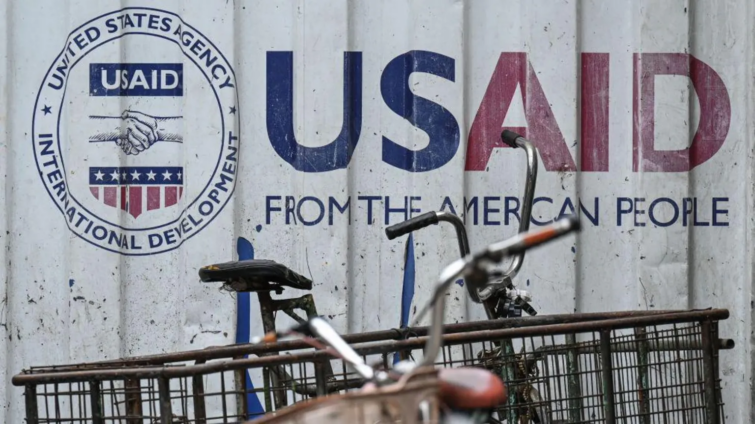
But it moved to withhold $4 billion in funding appropriated for the U.S. Agency for International Development, which the Trump administration has largely dismantled.
U.S. District Judge Amir Ali in Washington, D.C., ruled on Wednesday that the administration cannot simply choose not to spend the money, and said it remains under a duty to comply with appropriations laws unless Congress changes them.
Ali's order, if it survives throughout the appeal process, would prevent Trump from effectively bypassing Congress to cancel foreign aid funding.
While the lawsuit proceeded, Trump sought to block $4 billion in disputed funding through a "pocket rescission" that bypasses Congress.
Trump budget director Russell Vought has argued that the president can withhold funds for 45 days after requesting a rescission, which would run out the clock until the end of the fiscal year on September 30. The White House said the tactic was last used in 1977.
The money at issue was earmarked for foreign aid, United Nations peace-keeping operations, and democracy-promotion efforts overseas.
Ali ruled that merely asking Congress to rescind the $4 billion is not enough, saying that the spending should proceed unless Congress affirmatively acts to stop it.
Ali said he ruled quickly to provide higher courts time to weigh in before the funds reach their expiration dates.
The 6-3 conservative majority U.S. Supreme Court has already intervened once in the case, requiring the Trump administration to pay foreign aid organisations for work they already performed for the government.
Latest Stories
-
Association of Small-Scale Industries empowers trade executives in Bono East with a mentorship programme
4 minutes -
AMA evacuates refuse along Graphic Road, warns against indiscriminate dumping
9 minutes -
STC interdicts driver over Pokuase overtaking incident
13 minutes -
Ekumfi: How $6m EXIM participation built a $53m industrial asset — now poised for a 24-Hour Economy breakthrough
14 minutes -
4 arrested, 142 parcels of suspected Indian hemp seized as officers reject GH¢50k bribe
14 minutes -
No MMDCE can say they don’t see galamsey – Local Government Ministry
16 minutes -
Ghana, Germany explore stronger partnership in technical and vocational education
22 minutes -
AMA urges motorists and road users to comply with traffic regulations
23 minutes -
Sam George urges One Million Coders participants to complete all three levels
24 minutes -
Communications Minister announces 2,800-site telecom expansion during Volta visit
25 minutes -
Impunity fuelling sexual abuse in Ghana – Angela Dwamena-Aboagye
26 minutes -
NUGS condemns alleged sexual abuse by Obuasi SHTS headmaster, calls for prosecution
30 minutes -
President Mahama urges investors to employ trained local residents as 1,238-acre industrial park takes off
33 minutes -
Media doing its job, but politicians fuelling insults on social media – NMAG president
35 minutes -
Child protection must be the state’s responsibility, not NGOs’ burden – ARK Foundation Boss
41 minutes