

Audio By Carbonatix
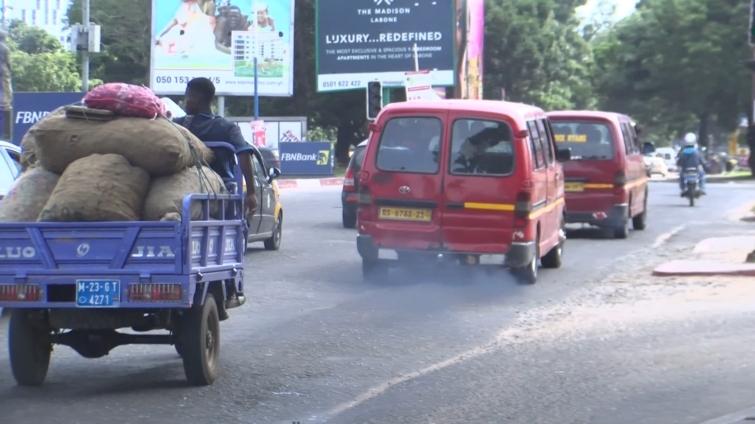
For many Ghanaians, the dangers of disease are well known. Malaria, HIV, unsafe water, and malnutrition dominate public health debates. But a new report reveals another silent killer in the air: pollution.
According to the Air Quality Life Index (AQLI) 2025 report, fine particulate pollution (PM₂.₅) is costing the average Ghanaian nearly 0.8 years of life expectancy—roughly nine months stolen from every life. This makes dirty air the country’s sixth biggest external health threat, just behind malnutrition and HIV/AIDS.
Breathing twice the danger
The data, drawn from 2023 satellite monitoring, shows that Ghana’s average PM₂.₅ level stood at 12.91 micrograms per cubic metre. That’s more than double the World Health Organisation’s guideline of 5 µg/m³ for safe air.
In simple terms, if Ghana were able to meet the WHO standard, every citizen would live a little longer. Babies born today would inherit not just a cleaner sky, but nearly a year more of life.
The invisible killer
What makes the findings even more alarming is how air pollution compares to other well-known threats. Malnutrition shortens lives by an average of 1.35 years, malaria and neglected tropical diseases by 1.21 years, and HIV/AIDS by 1.18 years. Dirty air now follows closely behind.
The World Health Organisation in 2019 said 28,000 Ghanaians die from air pollution annually. The 2024 Global State of Air report went further, estimating that over 30,000 Ghanaians die prematurely each year because of polluted air—that is about 82 people every single day. Unlike malaria or cholera, these deaths often go unnoticed. There is no sudden fever, no outbreak to contain. The danger builds slowly, one inhalation at a time.
A bigger African story
Going by satellite-derived particulate pollution estimates, Nigeria fared much worse, with an average of 22.9 µg/m³—more than four times the WHO safe limit—cutting 1.76 years from life. By contrast, Burkina Faso (8.2 µg/m³) and Côte d’Ivoire (10 µg/m³) recorded lighter losses of just 0.3 to 0.5 years, showing relatively cleaner air. Togo, however, exceeded Ghana, with 14.5 µg/m³ pollution levels translating into nearly a full year lost.
The struggle is part of a wider crisis across West and Central Africa. The region’s air pollution levels are more than four times the WHO limit, cutting lifespans by as much as five years in the most polluted areas of the region’s most polluted countries-Cameroon and the Democratic Republic of Congo. Yet, only seven out of 54 African countries have national air quality policies in place.
Ironically, while the world pours billions into fossil fuel projects—foreign aid for such projects quadrupled in just one year—funding for clean air remains scarce. In 2022, only $4.7 billion, or 1% of global development funds, went into tackling air pollution. Africa receives less than 2% of this pie.
Ghana’s monitoring gap
Like many African nations, Ghana does not yet have a national standard for PM₂.₅ pollution. Monitoring is patchy, leaving blind spots in understanding where risks are most severe. This lack of data makes it harder for policymakers to design targeted interventions.
But there is a glimmer of progress. Ghana is among a handful of countries where new air quality monitors have been installed under the Air Quality Fund, an initiative of the University of Chicago’s Energy Policy Institute. These tools are helping to shine light on an issue long ignored in health debates.
Why this matters
The AQLI warns that air pollution is the world’s greatest external threat to human life expectancy, deadlier than alcohol, unsafe water, or road accidents. In Ghana, it is steadily cutting lives short, even if its victims rarely make headlines.
The numbers tell a grim story, but they also reveal opportunity. Cleaner transport, stronger enforcement, and investment in renewable energy could reclaim months—if not years—of life for millions of Ghanaians.
For now, though, every breath still comes with a hidden cost.
Latest Stories
-
Popular Nigerian gospel singer Toluwanisings dies
9 minutes -
Spio-Garbrah proposes debt swaps to fund reparative justice in Africa and Caribbean
16 minutes -
Alban Bagbin calls for governance reforms and coordinated action to address Africa’s debt crisis
19 minutes -
AAK Academy Ghana trains 22 chocolate and confectionery companies in production techniques
21 minutes -
Adwumawura Programme trains second cohort of young entrepreneurs in Bono East
22 minutes -
Destroying Jimi River for gold could cost us our lives – Asantehene
29 minutes -
Sammy Gyamfi didn’t say BoG has ceded its forex role to us – GoldBod
1 hour -
High Court sets November 4 for ruling on Wontumi’s bail application
2 hours -
Tetteh Kwetey files nomination for NDC Greater Accra Regional Chairmanship
2 hours -
Korle Bu appeals for more doctors, nurses as A&E Centre struggles under pressure
2 hours -
AFCON 2027Q: ‘I’m optimistic Black Stars can turn things around’ – Agyemang-Badu
2 hours -
Digital innovation could widen Africa’s inequalities if people are left out – Sam Jonah
2 hours -
Galamsey is an economic, health and moral problem – Sam Jonah
2 hours -
Africa must create AI technology instead of paying to use it – Sam Jonah
2 hours -
2026 U-17 WWC: Black Maidens to face Norway, Brazil and Canada in Group C
2 hours