


Audio By Carbonatix
Some religious bodies, civil society groups, and academia are joining forces to demand the adoption of practical measures that protect the environment against human-induced air pollution and e-waste injustice in Ghana.
According to the State of Global Air 2025 report, over 32,000 deaths recorded in 2023 alone are attributable to air pollution.
Air pollution remains one of the world’s deadliest public health threats, claiming over 7 million lives every year. Ghana is not spared from the deadly grip of environmental pollution.
Air pollution is a significant risk factor for non-communicable diseases (NCDs), contributing to conditions such as ischemic heart disease, stroke, pulmonary disease, and lung cancer.
In response to the crisis, Clean Air Ghana, in collaboration with the Presbyterian Relief Services and Development, organised a community sensitization and awareness campaign in the Sokoban and Anloga communities in the Ashanti Region.
The initiative was aimed at educating residents about the dangers of environmental pollution and mobilising collective action against its causes.
A researcher at the Biomedical and Research Unit of the Water Research Institute under the Council for Scientific and Industrial Research (CSIR), Dr. Lawrencia Osae-Nyarko, highlighted critical gaps in Ghana’s air quality monitoring infrastructure.
“Ghana has a standard, which means that some considerations have been made when it comes to monitoring and even having the standards to tell us whether we are within the limit or not. However, its implementation and enforcement are always a challenge,” she said.
Dr. Osei-Nyarko noted that while some monitoring facilities exist, significant gaps remain, particularly at the community level, and called for a transition to citizen science as a practical solution.
“Ghana should be moving to citizen science when it comes to air pollution,” she urged, stressing that empowering ordinary citizens to monitor air quality and make informed decisions is essential to bridging the gap left by institutional limitations.
She also advocated for a technological shift from fuel-intensive systems, calling on stakeholders to invest in cleaner alternatives.
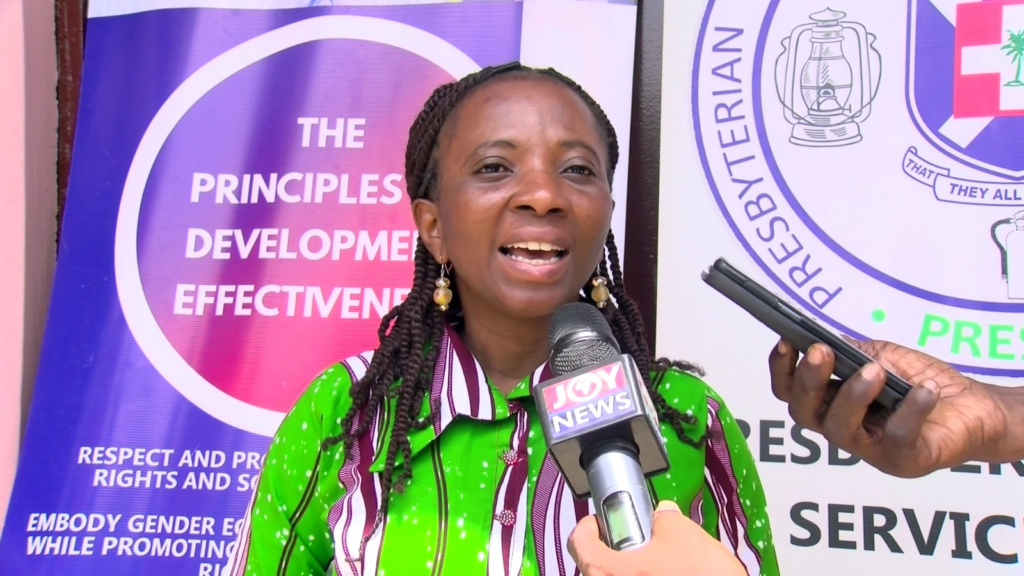
“We should be looking at technologies that use less fuel and also get more researchers on board who can come up with technologies that use other forms of fuel considered clean compared to the ones currently being used,” she said.
The researcher also drew attention to a gender disparity in air pollution exposure, citing World Health Organisation data indicating that death rates per 100,000 attributable to air pollution are higher among males than females, a pattern she linked to men’s greater engagement in outdoor and industrial activities that increase their exposure.
Dr. Osei-Nyarko concluded with a broad call to action, urging individuals, NGOs, and corporate bodies to support monitoring efforts rather than relying solely on regulatory agencies.
“We are all expecting the EPA to do much, but they are also limited; the resources they have are not only allocated to addressing air pollution but also to other related issues. So we give the call to everyone: individuals, NGOs, and corporate bodies who are willing to support in the monitoring, knowing that air pollution affects everybody,” she said.
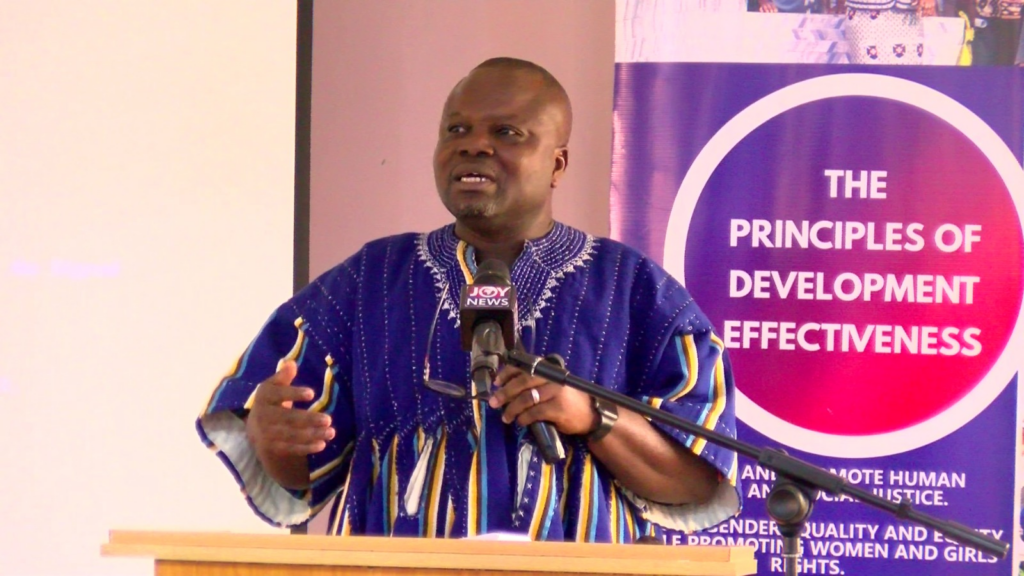
Coordinator for Presbyterian Relief Services and Development, Emmanuel Nyarko Ankamah, emphasised that the core objective of the initiative is to raise public consciousness about the environmental harm caused by pollution and to translate that awareness into behavioral change.
He also called on the government to take a more proactive role in addressing the crisis, particularly by providing the resources and incentives that communities need.
“We are working with key stakeholders, and we want the government to come in to also provide some of the essentials that these communities need to address some of these things,” he said.
This story was a collaboration with New Narratives. Funding was provided by the Clean Air Fund which had no say in the story’s content.
Latest Stories
-
The 7-foot giant of Ngleshie Amanfro: Seven-foot Ghanaian Ephraim Saawa dreams of joining the national basketball team
54 seconds -
Government promises support for Kumasi Central Market fire victims
7 minutes -
Vibes The Movie: Big Ghun’s Ghanaian film earns five nominations at 2026 REFFA
38 minutes -
MamaCare CEO warns unresolved conflicts among health workers could undermine maternal and neonatal care
1 hour -
Health professionals urged to translate medical knowledge into practice to save mothers
1 hour -
Conflicts among care providers linked to maternal, neonatal deaths – Expert
3 hours -
GIS marks 10th TIME conference, champions improved teaching practices
3 hours -
BRICS Or Balance? What Ghana’s bid really means
3 hours -
GPRTU wants full TRAFFITECH-GH implementation to start in 2027
4 hours -
Mahama announces plans to import electric wheelchairs for PWDs
4 hours -
KGL U17 Colts 2026: Western beat Prempeh Elite Academy to set up final final with Greater Accra Region
4 hours -
Late Solanke strike salvages 10-man Spurs draw at Man United
4 hours -
Gender Ministry to monitor welfare of Nana Akua Addo’s children amid domestic violence case
4 hours -
Benedict Okyere Yeboah: Ghana’s football problem goes beyond sacking a coach
4 hours -
GPL 2026/27: Darkwah Wiafe’s winner sees All Blacks beat Kotoko
4 hours