

Audio By Carbonatix
With Ghana’s natural resources under increasing threat from illegal mining, climate change, and deforestation, a new training program at the Kwame Nkrumah University of Science and Technology (KNUST) is equipping young scientists with the tools to safeguard ecosystems using remote sensing technology.
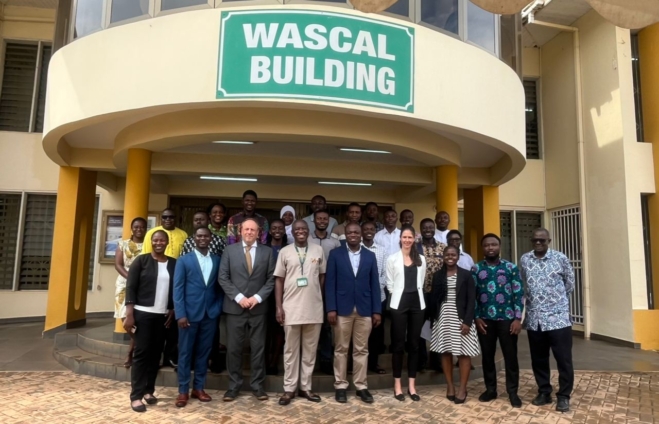
The program, themed “Remote Sensing for Biodiversity Conservation”, was organized by the Earth Observation in Africa: Capacity Development for the Preservation of Ecosystems and Their Services (EOCap4Africa) in partnership with the West African Science Service Centre on Climate Change and Adapted Land Use (WASCAL).
Out of nearly 50 applicants, 27 postgraduate KNUST students were selected to take part.
Over several days, participants will receive hands-on training in biodiversity mapping, open-source GIS tools, and case studies from Ghana and beyond.
Organizers say the goal is to build not only technical expertise but also the next generation of conservation leaders in Africa.
Remote sensing, which involves the use of satellites, drones, and aircraft to monitor the earth from above, is being touted as a powerful tool for conservation.
By tracking forest cover, monitoring water bodies, mapping wildlife habitats, and detecting illegal activities, the technology provides data critical for policymaking and sustainable land use.
EOCap4Africa’s Coordinator, Dr. Insa Otte, stressed that while technology is important, it cannot solve problems on its own.
“Technology alone does not solve problems. Data is only powerful when it is translated into action. This workshop is designed to give students and young researchers the skills to access, analyze, and apply remote sensing data for biodiversity conservation,” she said.
Dean of Civil and Geo-Engineering at KNUST, Prof. Kwaku Amaning Adjei, underscored the urgency, warning that Ghana is not insulated from the global biodiversity crisis.
“Biodiversity loss is occurring globally with negative impacts on ecosystems and human well-being, and Ghana is no exception. Remote sensing offers a powerful lens through which we can observe, understand, and protect our ecosystems,” he emphasized.
Director of WASCAL, Prof. Wilson Agyei Agyare, added that the technology bridges critical information gaps.
“With remote sensing tools, you don’t always need to be on the ground. You can acquire the data, interpret it, and inform policymakers of the damage going on,” he explained.
Organizers say the ultimate goal is not only to build technical expertise but also to prepare the next generation of conservation leaders in Africa.
As biodiversity continues to decline at alarming rates globally, experts argue that initiatives like this are vital to confront one of the nation’s most urgent environmental challenges.
Latest Stories
-
Deputy Health Minister engages KATH, Kumasi South Hospital over maternal health challenges
1 hour -
Ghana Industry Leadership Awards celebrate business excellence and innovation
1 hour -
GNFS contains vehicle fire at Suhum Opra Mini Pub
2 hours -
NACOC warns youth against cannabis myths, says it can impair memory and decision-making
2 hours -
Luv FM High School Debate: OWASS and KOSS survive fierce Day 4 battles
2 hours -
NPP’s concerns over AG’s credibility to probe AKSA energy deal baseless – NDC
2 hours -
Retired Fire Officer granted GH¢350K bail over alleged enlistment scam
2 hours -
Farmer allegedly kills wife, dies by suicide in Bono Region
2 hours -
Trial during vacation: What does order 79 actually say?
2 hours -
Ghana’s 24-Hour Economy needs a new bank
2 hours -
Energy Minister orders encroachers on GRIDCo land to vacate or face action
3 hours -
Parts of Greater Accra to experience power cuts as GRIDCo repairs damaged transmission line
3 hours -
Energy Minister warns against activities under power pylons after tanker explosion
3 hours -
Ras Kuuku rules out politics over ‘too much hatred’
3 hours -
I sold pure water, rubber bags – Ras Kuuku recalls life before fame
3 hours