

Audio By Carbonatix
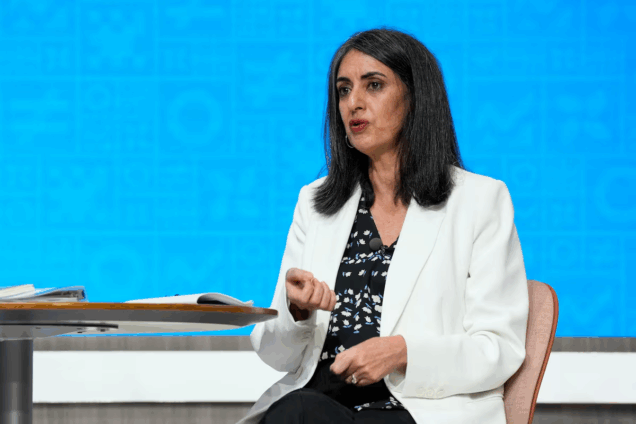
Morocco will adjust its upcoming budget to prioritise spending on health and education as well as allocate some additional funds to reduce regional inequalities, Finance Minister Nadia Fettah Alaoui told Reuters.
Youth-led protests spread across the kingdom in recent weeks, revealing deep-seated anger over poverty and public services behind a storyline of ambitious infrastructure projects and modern stadiums opening ahead of the 2030 FIFA World Cup.
"What we've heard from the youth protests is that they want a better education and health," Alaoui said earlier this week, speaking on the sidelines of the International Monetary Fund and World Bank annual meetings in Washington.
Alaoui said the government spends just under 9% of GDP on those two areas, and authorities would have to get better at communicating what they are actually doing.
But there was room in the budget to reprioritize upcoming projects, such as getting local hospitals up and running to ensure people don't have to travel long distances to get treatment.
"(We will) reallocate for short-term, quick wins, because people cannot wait for the reform to happen," she said, adding that exact details could not be provided ahead of the presentation of the budget to the parliament. The budget is usually presented and debated in parliament after late October.
It will also contain measures to support a push by King Mohammed VI to reduce regional inequalities by giving greater attention to the mountain and oasis regions, Alaoui said.
This effort would mean "probably some additional money, but much more focused on efficiency coordination and not putting at risk at all the macroeconomic balances," she said.
Asked about future plans for Morocco's foreign exchange regime, Alaoui said the ministry was first of all going to launch medium-term inflation targeting and disclose that target in late 2026 or early 2027, which she expected to be between 2%-3%.
Morocco currently publishes its inflation target only annually rather than projecting an aim further in the future.
"Floating (the currency) is another step," she said, adding that small and medium-sized enterprises in the country were not ready for that.
"They're not prepared - the big companies are prepared. The financial sector can be exposed, but we still need to keep the house in order for the smallest one and prepare them for this."
The dirham is pegged to a currency basket of 60% euro and 40% U.S. dollar, but allowed since 2018 to float in a 2.5% band on either side.
Asked about international debt sales, Alaoui said the government had no immediate plan to return to the market, though she expected Morocco would remain a regular issuer.
Latest Stories
-
BoG warns against weak non-interest banking products as NIFAC inaugurated
10 seconds -
Social licence to mine can be withdrawn – Ga Mantse warns mining companies
1 minute -
X1 Energy Drink Division One Super Cup: Attram De Visser secure third place after late own goal
1 minute -
‘A mine may close, but the community must not’ – Ga Mantse calls for sustainable mining
4 minutes -
Deploy new approach to flood management — UG Pro VC
11 minutes -
Parents can buy additional NaCCA-approved textbooks for children – Deputy NaCCA boss
14 minutes -
Youth must have a real voice in national issues beyond jobs, creative arts – EU
16 minutes -
AGTC: How women-led initiative is turning golf into jobs and tourism opportunities
21 minutes -
Exporters call for single-digit interest rates to boost Ghana’s horticulture sector
25 minutes -
Young political leaders must look beyond party lines to strengthen Ghana’s democracy – EU
30 minutes -
25 female KNUST physics students receive GH¢87,500 Whittaker Foundation suppo
32 minutes -
Berekuso-Kwabenya-Kitase road project stalls as First Sky cites unsigned contract and funding challenges
35 minutes -
Interior Ministry urges strict enforcement of Armoured Bullion Vehicle standards in Ghana
37 minutes -
GNFS rescues trapped man after Ford F-150 crashes into Kia Rio at Suhum Niifio
39 minutes -
Firefighters need stronger protection from smoke, air pollution risks – Clean Air Fund
40 minutes