

Audio By Carbonatix
A Cuban man deported by the United States to the African nation of Eswatini is on a hunger strike at a maximum-security prison having been held there for more than three months without being charged or having access to legal counsel under the Trump administration’s third-country program, his U.S.-based lawyer said Wednesday.
Roberto Mosquera del Peral was one of five men sent to the small kingdom in southern Africa in mid-July as part of the expanding U.S. deportation program to Africa, which has been criticized by rights groups and lawyers, who say deportees are being denied due process and exposed to rights abuses.
Mosquera’s lawyer, Alma David, said in a statement sent to The Associated Press that he had been on a hunger strike for a week, and there were serious concerns over his health.
“My client is arbitrarily detained, and now his life is on the line,” David said. “I urge the Eswatini Correctional Services to provide Mr. Mosquera’s family and me with an immediate update on his condition and to ensure that he is receiving adequate medical attention. I demand that Mr. Mosquera be permitted to meet with his lawyer in Eswatini.”
An Eswatini government spokesperson referred the AP, which requested comment, to a correctional services official, who didn’t immediately respond to calls and messages.
Mosquera was among a group of five men from Cuba, Jamaica, Laos, Vietnam and Yemen deported to Eswatini, an absolute monarchy ruled by a king who is accused of clamping down on human rights. The Jamaican man was repatriated to his home country last month, but the others have been kept at the prison for more than three months, while an Eswatini-based lawyer has launched a case against the government demanding they be given access to legal counsel.
Civic groups in Eswatini have also taken authorities to court to challenge the legality of holding foreign nationals in prison without charge. Eswatini said that the men would be repatriated, but have given no timeframe for any other repatriations.
U.S. authorities said they want to deport Kilmar Abrego Garcia to Eswatini under the same program.
The men sent to Eswatini were criminals convicted of serious offenses, including murder and rape, and were in the U.S. illegally, the U.S. Department of Homeland Security said. It said that Mosquera had been convicted of murder and other charges and was a gang member.
The men’s lawyers said they had all completed their criminal sentences in the U.S., and are now being held illegally in Eswatini, where they haven’t been charged with any offense.
The U.S. Department of Homeland Security has cast the third-country deportation program as a means to remove “illegal aliens” from American soil as part of U.S. President Donald Trump’s immigration crackdown, saying they have a choice to self-deport or be sent to a country like Eswatini.
The Trump administration has sent deportees to at least three other African nations — South Sudan, Rwanda and Ghana — since July under largely secretive agreements. It also has a deportation agreement with Uganda, although no deportations there have been announced.
New York-based Human Rights Watch said that it has seen documents that show that the U.S. is paying African nations millions of dollars to accept deportees. It said that the U.S. agreed to pay Eswatini $5.1 million to take up to 160 deportees and Rwanda $7.5 million to take up to 250 deportees.
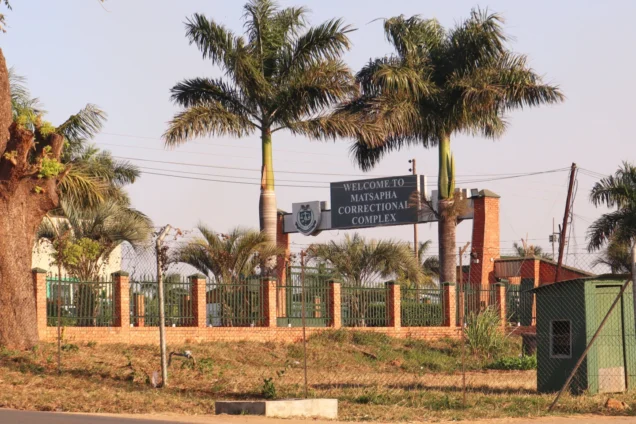
Another 10 deportees were sent to Eswatini this month and are believed to be held at the same Matsapha Correctional Complex prison outside the administrative capital, Mbabane. Lawyers said that those men are from Vietnam, Cambodia, the Philippines, Cuba, Chad, Ethiopia and Congo.
Lawyers say the four men who arrived in Eswatini on a deportation flight in July haven’t been allowed to meet with an Eswatini lawyer representing them, and phone calls to their U.S.-based attorneys are monitored by prison guards. They have expressed concern that they know little about the conditions in which their clients are being held.
“I demand that Mr. Mosquera be permitted to meet with his lawyer in Eswatini,” David said in her statement. “The fact that my client has been driven to such drastic action highlights that he and the other 13 men must be released from prison. The governments of the United States and Eswatini must take responsibility for the real human consequences of their deal.”
Nokukhanya Musi contributed to this report from Manzini, Eswatini.
Latest Stories
-
Ericsson celebrates 150 years of global innovation, 30 years of partnership and digital transformation in Ghana
9 minutes -
Ghana’s Ambassador to Serbia hosts African ambassadors’ September meeting in Belgrade
27 minutes -
Ghana closer to terrorism threat than ever before – WACCE
43 minutes -
Gov’t must focus on quality everywhere, not categorisation of public schools – Ben Boakye
57 minutes -
Tanko Computer backs comprehensive review of 1992 Constitution
1 hour -
2026 SHS placement crisis was caused by changes to established model – Former Dept. GES Director
1 hour -
GMet forecasts thunderstorms, rain across parts of Ghana tonight
1 hour -
GETFund to allocate GH¢250m to expand Category A SHS infrastructure
1 hour -
From dream homes to mortgage plans: JoyNews-Repubic Bank Habitat Fair closes Day 2 on a high
1 hour -
Afoko: Women’s inclusion key to NPP’s electoral comeback
1 hour -
2026 U-20 WWC: Black Princesses suffer another group stage exit after defeat to France
1 hour -
No policy to teach Arabic, Chinese in all public schools – Mahama
1 hour -
Students’ academic freedom central to Africa’s democratic future – Prof Appiagyei-Atua
2 hours -
Ɔdadeɛ Global Executives congratulate PRESEC on historic 9th NSMQ trophy
2 hours -
Mahama announces maize processing plant for Sissala area to tackle glut
2 hours