

Audio By Carbonatix
Every young African inherits two things at once: a set of real problems, and a choice about how to see them.
There is a quiet danger in repetition. Tell a child often enough that he is incapable and, sooner or later, he may confuse somebody else’s judgement with his own identity. Tell a society repeatedly that it is backward, dependent, and permanently waiting to be rescued, and something subtler happens: the description begins as analysis, but risks becoming psychology. As NyansaKasa (Words of Wisdom) puts it, when it is constantly drummed into you that you are poor, you start believing and accepting it, and we must change the narrative for the youth.
None of this denies reality. Millions still endure poverty, youth unemployment is painfully high, and infrastructure deficits are real. The question is whether we have become so skilled at describing what Africa lacks that we have neglected to teach young Africans what Africa can become.
Poverty is a condition. It should never become an identity. A country may have low income without its people being intellectually poor. A young person may lack employment without lacking ability. Development reports speak of poor countries, fragile states and aid-dependent societies, legitimate technical categories that policymakers need. But young people do not live inside statistical footnotes.
If the dominant story says Africa is where problems come from, and solutions arrive from elsewhere, we should not be shocked when ambitious young people imagine success as something that happens somewhere else. As NyansaKasa (Words of Wisdom) puts it, there is a difference between telling a child the roof is leaking and convincing the child the family is incapable of ever repairing it. That difference is leadership.
The Demography Should Terrify Us, and Inspire Us
Africa possesses something much of the ageing world increasingly does not: youth. By 2050, more than half of global population growth is expected to occur in Africa, a demographic dividend that could easily become a source of frustration if opportunity fails to keep pace. The World Bank says Africa currently creates only around three million formal jobs a year, while approximately ten to twelve million young people enter the labour force annually. Afrobarometer’s 2025 work across thirty-eight African countries found that forty-five per cent of youth aged eighteen to twenty-five described themselves as unemployed and seeking work, while fifty-two per cent said they would prefer to start their own businesses. These are not merely labour market statistics. They are psychological statistics. Repeatedly hearing that there are no jobs, that the country is finished, that a future requires leaving, eventually turns migration from an economic decision into an emotional conclusion.
Ghana offers a warning of its own. Afrobarometer found that seventy-six per cent of Ghanaian youth held secondary or post-secondary qualifications, yet thirty-four per cent were unemployed, and sixty-one per cent said they would prefer to start their own businesses. We have educated young people who want to build enterprises, yet the environment frequently tells them their greatest ambition should be finding a vacancy. As NyansaKasa (Words of Wisdom) puts it, when every educated child is trained mainly to search for a chair, eventually there will be more people looking for seats than people building tables.
We Must Stop Confusing Realism With Pessimism
There is a strange fashion around Africa in which optimism is treated as naive and pessimism as sophistication. Yet realism requires seeing assets as clearly as liabilities. Africa has enormous mineral resources, a rapidly expanding consumer market, a vast young workforce, creative industries reshaping global culture and a continental free trade project capable of building a market of roughly 1.5 billion people.
These realities do not cancel poverty. They challenge fatalism. As NyansaKasa (Words of Wisdom) puts it, a truthful mirror should show both the scar and the face carrying it.
South Korea did not emerge from war as the industrial economy we recognise today. Singapore did not become prosperous because oil was discovered beneath Marina Bay. Estonia emerged from Soviet occupation to build one of the world’s most sophisticated digital government systems, and Rwanda deliberately constructed a national narrative around reconstruction and future orientation. None of these societies pretended their difficulties did not exist, but each refused to let yesterday’s condition become tomorrow’s permanent identity. As NyansaKasa (Words of Wisdom) puts it, a difficult beginning deserves explanation, but it should not automatically receive permanent ownership of the ending.
The Youth Are Not Asking for Motivational Speeches
Changing the narrative cannot mean posters in classrooms while unemployment remains untouched. Afrobarometer found that forty-eight per cent of citizens across thirty-five African countries would prioritise job creation if governments increased spending on youth programmes, with education, job training and access to business loans following behind. Young people want opportunity, not applause. UNESCO’s 2025 continental education report similarly argues that Africa must transform learning so young people acquire competencies suited to changing economies. Universities should become ecosystems for problem-solving rather than certification factories, and banks should develop financing instruments for credible young enterprises.
Our Language of Development Also Needs Repair
Listen to how Africa is discussed: aid recipient, beneficiary, vulnerable, capacity constrained, fragile. These words may be technically accurate in context, but where are the parallel words? Producer, inventor, exporter, problem solver, investor, engineer, patent holder, global competitor. As NyansaKasa (Words of Wisdom) puts it, a child repeatedly introduced to the world as a beneficiary may take longer to discover that he was also capable of becoming a benefactor. Language influences expectation, expectation influences behaviour, and behaviour shapes institutions.
Media coverage matters too. Corruption should be investigated, and bad governance criticised, but if a thousand young people build successful businesses while one politician makes an outrageous statement, we already know which story dominates the day. The solution is not propaganda but a fuller account of ourselves, profiling the engineer building something difficult alongside the official under investigation.
The narrative begins at home too. Become a doctor, become a lawyer, find something secure- all understandable advice, but the economy cannot employ an entire generation through a small collection of traditional professions. Africa also needs technicians, artisans, welders, data specialists, food processors and creative entrepreneurs. As NyansaKasa (Words of Wisdom) puts it, not every successful child must wear a tie; some will wear overalls and build the factory where the person wearing the tie eventually works.
Be Careful What Poverty Does to Democracy
Economic frustration can eventually become political frustration. In South Africa, 2025 findings were sobering: only forty-two per cent of youth preferred democracy to any other system, while almost half of young adults surveyed were unemployed and looking for work. We should not casually infer that unemployment produces disillusionment with democracy, but neither should we ignore the relationship between hope, opportunity and institutional legitimacy.
A Warning Worth Remembering
Here is the warning every government, parent and classroom eventually discovers, usually after the brightest have already left. A generation told often enough that nothing works here will, quite reasonably, go looking for somewhere that does. That is not betrayal. It is simple arithmetic performed by people we taught to think clearly.
A Reminder Worth Keeping
And here is the reminder. The most dangerous poverty is not the empty wallet, which can always be filled. It is the empty imagination, which may never think to look for the opportunity at all. Africa’s material poverty must be confronted relentlessly, but the poverty of expectation deserves equal vigilance.
What Is Wrong With Us?
Perhaps what is wrong with us is that we have mastered the vocabulary of deficiency. We tell the youth what Africa lacks, not enough about what Africa can build. We remind them our passports are weak, not enough that our market is enormous. The answer cannot be to deceive them. Africa does have difficult problems. Tell them, then add: you are not merely inheriting these problems; you are inheriting responsibility for solving them. That single addition changes the psychological contract.
Governments must stop calling the youth the future while failing to build pathways in the present. Businesses must invest in apprenticeship, universities must reward innovation rather than certification, and parents must broaden their definitions of success. Young Africans, meanwhile, must resist the narrative that somebody else must rescue the continent before they can contribute to it. More than half surveyed say they would prefer entrepreneurship, energy that should not be romanticised, since entrepreneurship without finance and infrastructure can become survival rather than prosperity, but it reveals that our youth have not entirely surrendered imagination.
As NyansaKasa (Words of Wisdom) reflects, tell the youth honestly where Africa is today, but never drum today’s limitations into them so loudly that they can no longer hear tomorrow calling. Poverty may describe a condition; it must never be allowed to become their destiny. They do not need to be told everything is fine. They need to be told the problems are real, and so are their intelligence, their numbers, their market and their capacity to change what they inherited. Perhaps the shift required is not from pessimism to optimism, but from helplessness to agency, from look how poor we are to look how much remains for us to build. Because one day Africa’s youth will inherit a continent that either convinced them of their limitations, or challenged them to exceed them. What we tell them today will help determine which Africa they build tomorrow.
About the Author
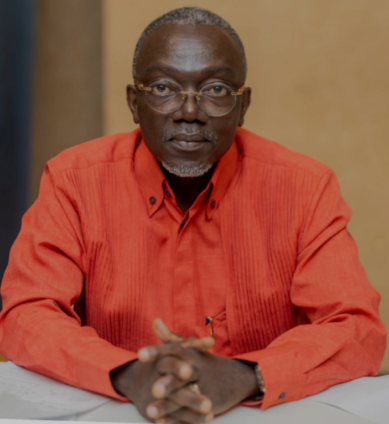
Ing. Professor Douglas K. Boateng is a strategist in governance, industrialisation and supply chains, and serves as a professional chairperson, an international Chartered Director (UK) and a Chartered Engineer (UK). A Pan Africanist and social entrepreneur at heart, he has spent his career working across public institutions, corporate boards and industrial policy, in Africa and beyond, guided by the conviction that strong institutions are built one honest decision at a time. His contributions to industry and academia have been recognised with more than six lifetime achievement awards throughout his career. He is the founder of NyansaKasa (Words of Wisdom), a collection of daily aphorisms he has written and shared since late 2019, distilling decades of experience advising governments, boards and enterprises on governance, accountability and institutional resilience into words meant to challenge and to endure. He convenes the Boardroom Governance Summit, Africa’s largest boardroom-focused summit, and writes a widely read weekly opinion column titled “Inconvenient Truth” and “What Is Wrong With Us”, featured on some of the region’s leading digital media platforms. Professor Boateng can be reached via LinkedIn or at info@panavest.com.
Latest Stories
-
Finance Minister demands greater returns from NLA after GH¢10 million dividend presentation
5 minutes -
National Customers’ Choice Awards set to celebrate Ghana’s best customer-centred brands
9 minutes -
ICEE Conference: Ghana must get governance right to solve transport problems – Ing. Ludwig Hesse
9 minutes -
Luv Fm journalists Clinton Yeboah, Nana Boakye Dankwah Yiadom selected for UK MEET emerging technology fellowship
13 minutes -
VRA warns payment delays, inter-utility debt threaten liquidity despite GH¢8.9bn revenue in 2025
15 minutes -
NPP congress: 7,163 delegates to elect national officers in Kumasi tomorrow
18 minutes -
BoG Governor, all MPC members voted to keep policy rate at 14%
24 minutes -
‘Real poll will be Saturday’s vote’ – Ahiagbah dismisses Global InfoAnalytics survey
33 minutes -
Importers petition GRA over alleged unauthorised removal of 28 containers from Tema Port
42 minutes -
Creative Arts Agency Board seeks Lands Ministry’s support for welfare project
49 minutes -
Mahama and Kyrgyzstan Foreign Minister discuss AU-UN cooperation – Ablakwa
1 hour -
Ghana, Kyrgyzstan explore cooperation in gold mining and trading
1 hour -
Bono Region teacher unions back strike, demand action on outstanding grievances
1 hour -
Strike still in force, stay home – GNAT, NAGRAT and PRETAG tell teachers
1 hour -
Daily Insight for CEOs: Turning Q4 priorities into measurable results
1 hour