

Audio By Carbonatix
The Consumer Protection Agency (CPA) has sharply criticised the Public Utilities Regulatory Commission (PURC) over its newly announced tariff adjustments, describing the decision as “unrealistic” and insensitive to the economic hardships facing Ghanaians.
The PURC this week announced an upward review of utility tariffs effective 1 January 2026, with water tariffs set to rise by 15.92% and electricity tariffs by 9.82%. But the CPA says the justification for these increases lacks merit and unfairly shifts the burden of systemic failures onto consumers.
According to the agency, the PURC’s claim that the water tariff increment is needed to enable the Ghana Water Company Limited (GWCL) to purchase additional chemicals to treat water polluted by illegal mining (galamsey) is “shocking and bizarre.” The CPA argues that consumers should not bear the cost of galamsey, which it insists is the result of regulatory lapses by the government.
The CPA also accuses the PURC of overlooking major inefficiencies within utility service providers, including the Electricity Company of Ghana’s (ECG) overspending, technical and commercial losses, and persistent operational shortcomings that continue to inflate costs. It further expressed concern about the absence of a concrete plan to recover the huge debts owed by state institutions to both ECG and GWCL—debts that significantly weaken the financial stability of the utilities.
Beyond inefficiencies, the agency notes that many Ghanaians in major cities, including Accra, Kumasi and Cape Coast, still lack access to potable water, while those who are connected experience frequent rationing.
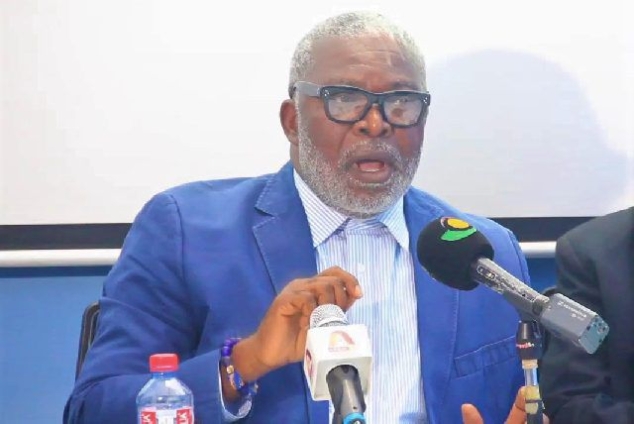
“Yet the PURC seems clueless about fixing these systemic problems but is always quick to increase tariffs,” CPA CEO Kofi Kapito lamented.
The CPA is therefore urging the PURC to withdraw the announced tariff adjustments and re-engage key stakeholders, including the Association of Ghana Industries (AGI), the Trades Union Congress (TUC), and consumer groups, to develop more sustainable solutions instead of imposing routine tariff hikes that “have never solved the challenges facing the utility providers.”
The agency outlined three key concerns that must be addressed before any tariff increase can be justified:
Unfairly passing galamsey-related costs to consumers
Failure to address inefficiencies within utility providers
Absence of a clear strategy to recover debts owed by state institutions
The CPA maintains that consumers should not be made to pay for problems they did not create, insisting that meaningful reforms—not recurring tariff hikes—are the only path to securing the future of Ghana’s utility sector.
Latest Stories
-
GSE showed strong performance in August 2026 despite recording more stock losses
24 minutes -
If CJ needs ethics law to know SOE comments were wrong, he may not be worthy of office – Arthur Kennedy
1 hour -
Stop touring state agencies and focus on the Judiciary’s problems – Arthur Kennedy to CJ
1 hour -
Apologise and don’t do it again – Arthur Kennedy to Chief Justice over SOE comments
2 hours -
Chief Justice remains committed to judicial independence, justice and equality – Judicial Service
2 hours -
Ghana concludes evacuation of citizens from South Africa; total returnees reach 1,900 – Ablakwa
2 hours -
Africa must define its own green transition path – Prof Fatima Denton
3 hours -
WASSCE 2026: English Language performance falls to 62.4% – WAEC
3 hours -
WASSCE 2026: Social Studies records sharp rebound as Maths, Science also improve
3 hours -
2026 WASSCE entry rises by 11% as 512,862 candidates sit exams
4 hours -
WASSCE 2026: English Language performance falls to 62.4% – WAEC
4 hours -
WAEC cancels 2026 WASSCE results of 8,295 candidates over examination irregularities
4 hours -
WAEC releases provisional 2026 WASSCE results for 512,862 candidates
4 hours -
CJ’s remarks on SOEs were made in good faith, not to undermine judicial independence – Judicial Service
7 hours -
Bright Future Alliance pays courtesy call on Akufo-Addo, invites him to African Leaders of Influence Lectureship Series
8 hours