

Audio By Carbonatix
A new global climate policy aimed at reducing carbon pollution could make it harder for developing countries to compete in international trade, according to Sunita Narain, a leading climate and environment expert from India.
Sunita Narain is the Director General of the Centre for Science and Environment, a research organisation based in New Delhi. She is reacting to the European Union’s Carbon Border Adjustment Mechanism, known as CBAM, which commenced on 1 January 2026.
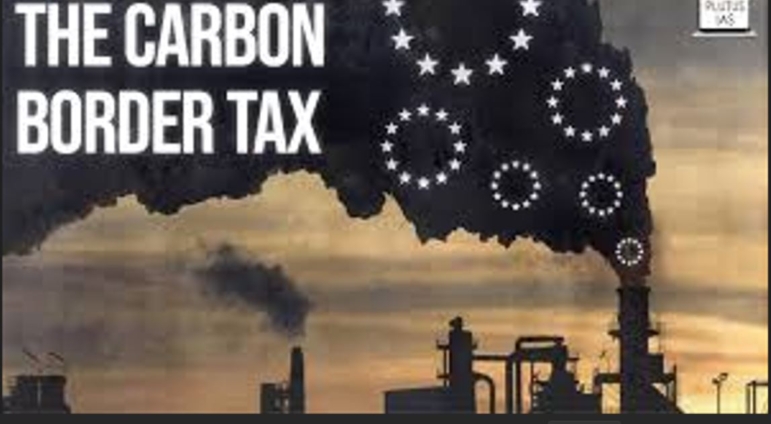
CBAM is a policy that places a carbon price on goods entering Europe. This means that products like steel, cement, aluminium, and fertiliser will face extra charges if they are produced using high levels of carbon pollution.
In simple terms, Europe is saying that if a product causes a lot of pollution during production, it should pay more money before entering the European market.
According to Narain, this policy is changing the rules of global trade. “By putting a carbon price at the border, CBAM changes how competitiveness is defined in global trade,” she said.
In the past, countries competed mainly based on price, quality, and efficiency. Now, how clean a product is during production also determines whether it can compete in the global market.
However, Narain warned that this new system places an unfair burden on poorer countries. “But what it also does is shift the decarbonisation costs to developing countries,” she said.
Decarbonisation means reducing the use of fossil fuels like coal, oil, and gas, and cutting carbon emissions. Under CBAM, developing countries are expected to clean up their industries quickly, even though they often lack money, technology, and infrastructure.
She said this continues a long-standing global pattern. “Thus extends a familiar dynamic where developing countries adapt to rules set elsewhere, under conditions that structurally disadvantage them,” Narain said.
In simple terms, she means that rich countries often create global rules, and poorer countries are forced to follow them, even when those rules make development more difficult.
Narain made it clear that reducing pollution is important and unavoidable. “Decarbonisation in industry is both necessary and unavoidable,” she said.
She acknowledged that developing countries cannot ignore climate change if they want to stay relevant in the global economy. “Developing countries will need to pursue decarbonisation to remain competitive,” she added.
However, she stressed that the transition must be fair and inclusive. “This transition cannot be driven through unilateral measures alone."
CSE’s proposed solution
To respond to CBAM, CSE has recommended that countries like India collect a carbon tax locally on exports. According to the think tank, this money should stay within the country and be used to clean up domestic industries, while still meeting Europe’s carbon pricing rules.
CSE believes this approach would help countries invest in cleaner production instead of paying penalties abroad.
Programme Manager of the Climate Change Unit at CSE, Avantika Goswami, said global climate action must be fair. “To promote truly equitable global climate action, the provision of real sectoral decarbonisation support in the form of concessional finance and technology transfer from the EU to developing country partners is crucial,” she said.
She explained that such support would help reduce pollution from manufacturing, create a level playing field, and allow countries in the Global South to invest in low-carbon growth.
Warnings from past research
CSE raised these concerns in its 2024 study titled Carbon Border Adjustment Mechanism (CBAM): The Global South's response to a changing trade regime in the era of climate change.
The study warned that CBAM fails to address historical responsibility for climate change and ignores deep inequalities in the global trading system.
Over the past 15 months, CBAM has expanded rapidly. Its scope has widened, and exporters now face stricter demands for emissions data, verification, and compliance.
New proposals to include more sectors, tighten verification rules, and prevent companies from bypassing the system are increasing costs for exporters from developing countries.
While technical requirements have increased, CSE says the political direction of CBAM is being shaped mainly by internal pressures within the EU.
Discussions on exemptions and simplifications, according to CSE, are focused more on protecting European industries than easing the burden on partner countries.
“This reflects a prioritisation of internal competitiveness,” Goswami said, adding that this has reinforced the view of CBAM as “a protectionist measure rather than a climate tool.”
In international discussions, many developing countries have warned that climate-related trade measures like CBAM could raise the overall cost of climate action, weaken global cooperation, and push climate responsibilities onto countries with lower historical emissions and weaker financial capacity.
CSE suggests additional measures to reduce the impact. These include keeping carbon tax funds within exporting countries, providing extra EU climate finance, recycling CBAM revenues back to developing nations, supporting emissions monitoring systems, and granting exemptions to least developed countries.
However, CSE warns that these steps may only offer short-term relief. In the long term, experts say real financial support must be the priority.
CSE argues that global institutions must urgently address deep inequalities in trade, finance, and industrial systems. Without this, developing countries risk being left behind as the world moves towards green industrialisation.
According to the experts, a fair transition should allow developing countries to clean up existing industries and also take part in new green industries, without sacrificing growth or development.
Latest Stories
-
Minority Leader outlines procedure for security agencies seeking to arrest MPs
4 minutes -
Baffour Awuah’s lawyers dispute EOCO claim over February invitations
6 minutes -
Pursuing Manhyia South MP through Parliament would have made arrest process more decorous – Interior Ministry spokesperson
9 minutes -
2026 Women’s Super Cup: Hasaacas, Prisons Ladies dominate first round of games
10 minutes -
After a year without Police, Kwame Danso breathes again as Station reopens
11 minutes -
GES transfers funds to SHSs for perishables and recurring items
12 minutes -
Eriksen leaves Wolfsburg by mutual consent
13 minutes -
Iran’s president tells Trump it will never ‘bend the knee’
14 minutes -
Parents of missing baby at Asafo Market arrested over false accusation against woman
31 minutes -
Ghana–Russia Center CEO launches book on youth diplomacy in Moscow
31 minutes -
Afenyo-Markin hands over as head of Ghana’s delegation to ECOWAS Parliament
32 minutes -
EOCO never personally invited me – Manhyia South MP on chaotic arrest at High Court
34 minutes -
Ghana’s public service faces risky future amid politicisation, talent exodus – Prof Akuoko
53 minutes -
EOCO must go through Speaker before seeking to arrest Baffour Awuah – Dafeamekpor
55 minutes -
GTBank supports paediatric cancer care with donation of medical equipment to Ridge Hospital
1 hour