

Audio By Carbonatix
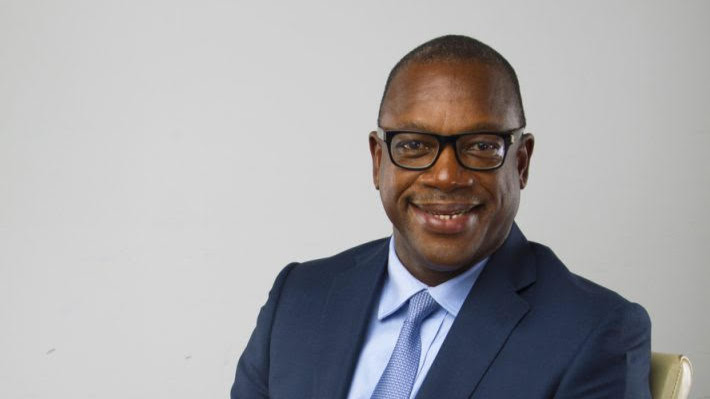
Founder of the Fidelity Group, Edward Effah, has been hailed as one of the architects of Ghana’s modern banking sector, as the country’s business community marks his birthday on January 27.
Effah, a Chartered Accountant and investment banker, is credited with building one of Ghana’s most successful indigenous financial institutions, grounded in what he has often described as “integrity, discipline and long-term thinking.”
“Strong institutions are not built on capital alone. They are built on people, systems and values that can stand the test of time,” Effah has said in previous public engagements, a philosophy that has come to define the Fidelity brand.
His finance journey began in the United Kingdom, where he trained as a Chartered Accountant and became a member of the Institute of Chartered Accountants in England and Wales. He gained early professional experience at Coopers & Lybrand as an auditor and management consultant before moving into the high-pressure world of derivatives and foreign exchange trading at Rudolf Wolff in the City of London.
Despite a promising international career, Effah returned to Ghana with a clear ambition — to prove that an indigenous financial institution could compete with global players on governance, innovation and performance.
That ambition took shape in October 1998 with the establishment of The Fidelity Group, which initially operated as a discount house. In 2006, it was licensed as a universal bank and became Fidelity Bank Ghana Limited. Today, the bank ranks among the leading players in the sector, serving millions of customers and expanding rapidly through digital banking and structured finance solutions.
Under Effah’s leadership, the Fidelity Group diversified into investment management, advisory services and capital market operations, with a strong emphasis on financial inclusion and customer-focused innovation. Industry analysts often cite Fidelity’s steady growth and corporate governance culture as benchmarks for indigenous banking in Ghana.
Beyond banking, Effah has played a significant role in corporate governance and mentorship. He has served on several boards, including as Chairman of Unilever Ghana Limited, and has been a vocal advocate for leadership development and ethical business practices.
His contribution has earned him multiple accolades over the years, including CEO of the Decade and CIMG Marketing Man of the Year, alongside national and institutional honours recognising his impact on finance and enterprise development.
Colleagues and protégés frequently describe him as reserved but resolute — a leader more focused on building systems than seeking public acclaim.
Latest Stories
-
Promotion pay row: Gov’t gives teachers September to complete salary adjustments
5 minutes -
Financial irregularities plummet by 62.9% as state tightens fiscal controls
5 minutes -
DVLA to expand mobile services to underserved communities in Ghana’s Eastern Corridor of the Northern Region
21 minutes -
GUTA urges GPHA to act swiftly to end Tema Port congestion to avert rising business costs
21 minutes -
Port congestion could undermine 24-hour economy policy – GUTA
22 minutes -
NSA opens three-day window to resolve national service biodata mismatches
32 minutes -
Abu Jinapor highlights increased gold exports after Domestic Gold Purchase Programme
36 minutes -
NPP UK branch calls for independent audit into gold purchasing operations and parliamentary probe
1 hour -
Zanetor Agyeman-Rawlings pledges decisive action on climate change, galamsey and environmental degradation
1 hour -
Bawumia was brainchild behind Domestic Gold Purchase Programme – Samuel Jinapor
1 hour -
Fuel prices set to go up from September 1, Petrol to sell at GHC 16.69 and Diesel, GHC 17.90 – COMAC
1 hour -
Our World Our People withdrawn due to curriculum duplication, not politics – Adutwum’s spokesperson
1 hour -
GANRAP is essentially a rebranding of Domestic Gold Purchase Programme – Abu Jinapor
1 hour -
I am tired of being in opposition, my goal is to win in 2028 – Boakye Agyarko
2 hours -
Ghana’s road maintenance funding gap deepens as only 37% of needs met – World Bank
2 hours