

Audio By Carbonatix
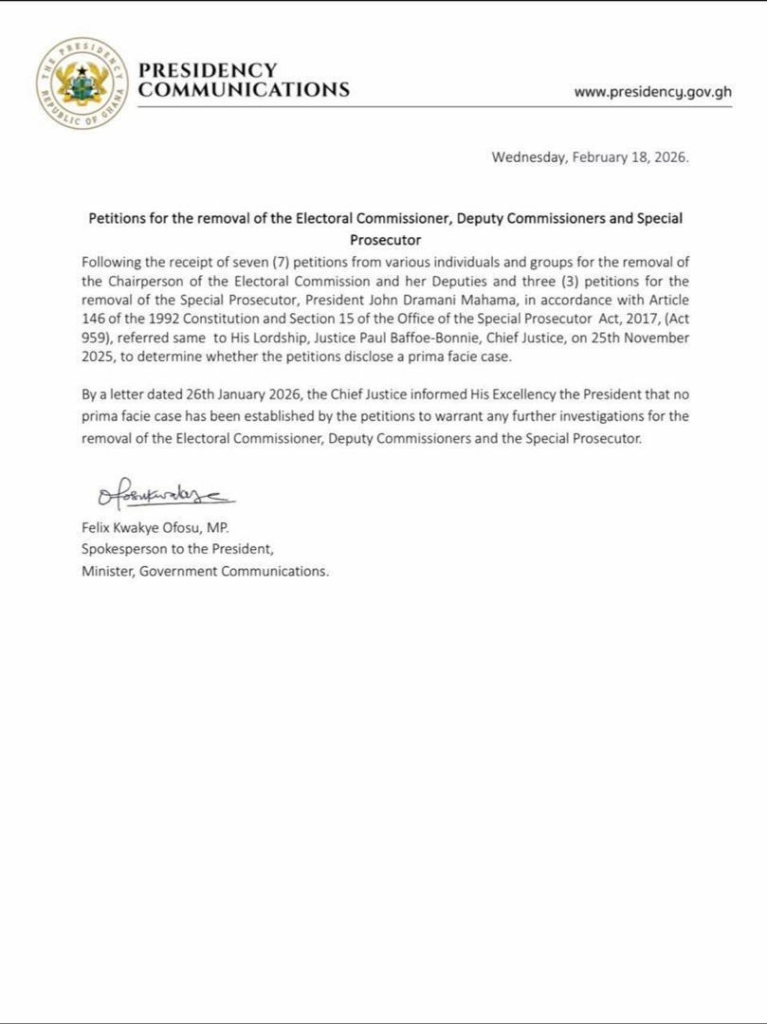
The Chief Justice, Paul Baffoe-Bonnie, has ruled that there is no prima facie evidence to justify further investigation into petitions calling for the removal of the Electoral Commissioner, her deputies, and the Special Prosecutor.
This was confirmed by the Minister of Government Communications in a statement issued on Wednesday, February 18.
The petitions were received by Jubilee House in late 2025, with the Minister of State in charge of Government Communications, Felix Kwakye Ofosu, confirming that ten separate petitions had been filed under the constitutional removal process.
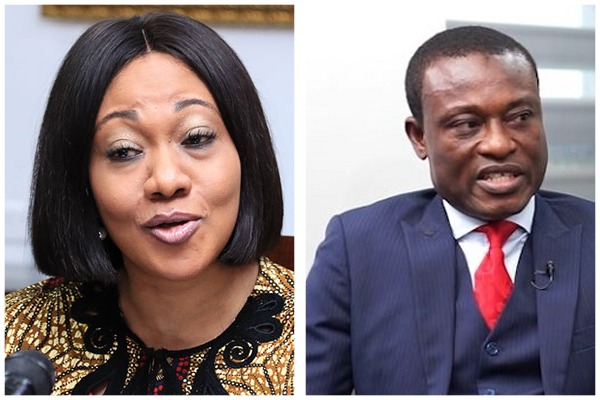
Seven of these targeted EC Chair Jean Mensa and her two deputies, Dr Bossman Eric Asare and Samuel Tettey, while three sought the removal of Special Prosecutor Kissi Agyebeng. These petitions were duly referred to Chief Justice Paul Baffoe-Bonnie for preliminary constitutional scrutiny as required under Article 146 of the 1992 Constitution.
The grounds cited by petitioners, including some lodged by an EC staff member, alleged misconduct ranging from cronyism and abuse of office to gross incompetence that, in their view, had eroded public confidence in the institutions being targeted.
The petitioner against the EC leadership, Joseph Blankson Adumadzie, outlined a series of concerns about administration and integrity, although his exact complaints remain legally confined due to constitutional confidentiality provisions.
However, after reviewing the petitions, the Chief Justice determined that no prima facie case existed to justify further investigation or the establishment of a formal inquiry committee. This constitutional threshold must be met before a five-member tribunal can be constituted to investigate allegations of stated misbehaviour, incompetence or incapacity — the only grounds on which such office-holders can be removed. Since that test was not met, the process effectively ends with the Chief Justice’s decision. (Common constitutional procedure under Article 146.
The petitions drew attention not only to the targeted officials but to broader public debate over accountability and institutional independence. Critics had argued that the processes around high-level removal petitions should be handled with care and confidentiality until formal thresholds are met, to protect institutional integrity and reputations.
Latest Stories
-
Trade Ministry commends Prisons Service for using art to drive inmate rehabilitation
11 minutes -
Books, brushes and second chances: Dr Abena Asomaning launches three titles to support prison outreach
18 minutes -
Treasury bill auction oversubscribed by 53.5% as yields fall across maturities
20 minutes -
NPP warns aspirants premature campaigning could jeopardise eligibility for primaries
26 minutes -
Ghana courts investors in Bangkok after exit from $3bn IMF bailout
31 minutes -
8 arrested over alleged internet fraud initiation assault in Bono Region
35 minutes -
BoG proposes 30-day liquidity buffer requirement for banks
42 minutes -
BoG plans reviews of banks’ cybersecurity compliance
48 minutes -
GRA cautions taxpayers against attacking tax officials
55 minutes -
Invest Ghana Summit to drive value addition, industrialisation
1 hour -
Sports Ministry denies involvement in World Cup visa scandal, calls for probe
1 hour -
Ghana earns top US ranking in fight against human trafficking
1 hour -
Education Minister commends teacher unions for suspending nationwide strike
1 hour -
‘Farmers Services Centres to be game changer for Ghana’s agriculture’ – Mahama
1 hour -
WIWIK launches new leadership development pathway for Ghanaian university students
2 hours