

Audio By Carbonatix
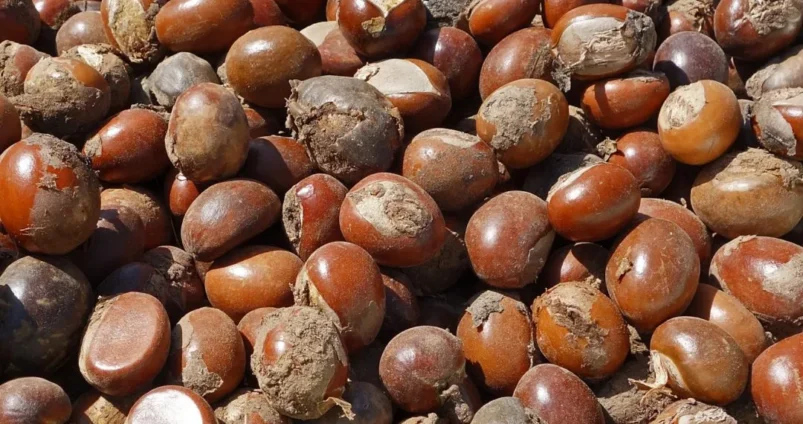
Nigeria extended a ban on shea nut exports by a year, reinforcing a drive to curb raw commodity shipments and boost local value addition.
The extension aims to “deepen processing capacity within Nigeria, enhance livelihoods in shea-producing communities, and promote the growth of Nigerian exports anchored on value-added products,” President Bola Tinubu said in a statement Thursday.
Nigeria is trying to shift the shea nut industry from exporting mostly raw produce to processing more high-value products like shea butter and its derivatives, which can fetch prices as much as 20 times higher, according to the presidency.
The initiative has been blunted by a lack of processing infrastructure, a large informal trade and enforcement challenges.
Prices of the nuts slumped by a third after Nigeria in August joined other producers in West Africa by announcing a moratorium on shipments. They traded at about 850 naira (63 US cents) a kilogram at the end of the harvest season in December, according to Lagos-based commodities exchange AFEX.
The production of shea butter in Nigeria is dominated by smallholders and women in rural villages in central Nigeria, where a growing number of attacks by extremists groups are devastating local communities.
Intermediaries who move products from smallholders to markets have also left the trade after the ban came into effect, resulting in lost contracts, the National Shea Products Association of Nigeria told a local newspaper.
Slow-growing shea trees are indigenous to west and central Africa, with Nigeria producing about 500,000 tons of the fruit annually and accounting for 40% of global supply that’s valued at $6.5 billion, according to the government.
Burkina Faso, Ghana, Mali, Ivory Coast and Togo — all of which restrict exports to promote domestic processing — are the other main producers.
Shea butter can be used as a substitute for cocoa butter and US regulators have granted approval for it to be added to baked goods and moisturizers.
Two leading global producers of plant-based oils — Dutch company Bunge Loders Croklaan BV, a unit of St. Louis-based Bunge Global SA, and Sweden’s AAK AB — manufacture the butter in West Africa, with the former operating a processing plant in Ghana since 2019.
Tinubu also approved the adoption of an export framework by the Nigerian Commodity Exchange and the withdrawal of all waivers allowing the direct shipment of raw shea nuts. Any excess supply of raw nuts will be exported exclusively through the NCX framework, he said.
Latest Stories
-
“We are one house – let’s settle this at home” – Atomaase Royal family calls for unity, rallies behind Twafohene
35 minutes -
The Missing Middle and the Overlooked Small: Why Ghana Must Serve Both the ‘S’ and ‘M’ in MSME’s
48 minutes -
Mahama returns from Angola after AU extraordinary summit
1 hour -
Ghana qualifies for quarterfinals of Africa Volleyball Nations Cup after beating Zambia
1 hour -
WAFU B WCLQ: Ampem Darkoa Ladies come from behind to beat Edo Queens
2 hours -
Photos: National Youth Authority Festival
2 hours -
Bawumia commissions St Jude’s Catholic Church he funded to completion at Weija
2 hours -
Government defends new beer exercise rates; sliding scale has not been abolished
2 hours -
Bolgatanga Assembly denies blanket ban on events beyond 8pm
2 hours -
Photos: Ghana Immigration Service removes 1,055 street beggars from Accra, Kumasi streets
3 hours -
‘He always comes to our aid’ – Fr. Campbell recounts Bawumia’s support for Church, poor
3 hours -
Remittances drop marginally year-on-year to US$3.65bn in half-year 2026
3 hours -
T-bills: Government exceeds target by 139%, interest rates tumble
3 hours -
Why Chelsea need more than a new goalkeeper to be title challengers
3 hours -
Outlook of Ghana’s external sector remains positive for second-half of 2026 – BoG
3 hours