

Audio By Carbonatix
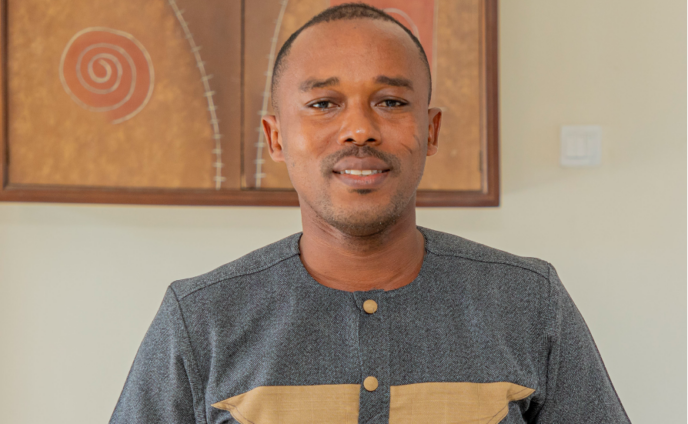
Dr Linus Kweku Labik of the Department of Physics at the Kwame Nkrumah University of Science and Technology (KNUST) has been awarded a prestigious research grant from Development in Africa with Radio Astronomy (DARA) to support his work on the processes underlying planet formation.
The achievement has generated excitement among members of APSU 2002, the 2002 year group of St Augustine’s College, Cape Coast, where Dr Labik serves as Convenor. The group has described the milestone as a reflection of excellence and a source of pride for the St Augustine’s College community.
Dr Labik’s progression into astrophysics follows a successful academic transition from Materials Science, supported by the Simons Foundation Pivot Fellowship awarded in 2024.
During the fellowship, he worked under the mentorship of Melvin Hoare at the School of Physics and Astronomy, University of Leeds, where he developed expertise in simulation and modelling techniques to study how porosity influences the early stages of planetary formation.
He later presented his research at the Simons Foundation Pivot Fellows Meeting in New York, where he engaged with an international community of researchers.
APSU 2002 has praised Dr Labik’s accomplishment as a demonstration of the values instilled at St Augustine’s College.
“Linus continues to make us proud. His dedication and pursuit of excellence exemplify the spirit of APSU 2002 and the Augustinian tradition,” a representative of the year group said. “As we celebrate his success, we are equally motivated to make a lasting impact of our own.”
The recognition comes at a significant time for APSU 2002, as the group prepares to host the 97th anniversary celebrations of St Augustine’s College in March 2027. As part of the preparations, the year group is raising funds towards a legacy project involving the construction of a 14-unit self-contained teachers’ apartment to support staff accommodation on campus.
Dr Labik expressed appreciation for the support he has received throughout his academic journey.
“I am deeply grateful for the encouragement and support from my family, KNUST colleagues, APSU 2002 and the broader APSU family. This achievement is not just mine—it reflects the strength of the community that shaped me,” he said.
Members of APSU 2002 have called on alumni and well-wishers to support both the anniversary celebrations and the legacy project, encouraging wider participation in their initiatives.
“We invite all supporters to be part of this journey, both in celebrating excellence and in building a legacy that will benefit future generations,” the group added.
The DARA grant is expected to further strengthen Dr Labik’s research in astrophysics, while APSU 2002 continues its efforts to contribute meaningfully to its alma mater through its planned development project.
Latest Stories
-
Parliament questions proliferation of unapproved containers in East Legon
43 minutes -
Promotion arrears alone cannot end teachers’ strike — PRETAG
49 minutes -
Ebi Bright alleges assault on driver in dispute with Tema Central MP
55 minutes -
GH¢35m Darkuman 24-hour market to be completed in 16 months — MCE
1 hour -
NPP risks losing Karaga seat if Amin Adam doesn’t contest – John Boadu
1 hour -
Ghana Reference Rate falls to 10.04% in October as borrowing costs ease
1 hour -
53% of NPP delegates backed alternatives to John Boadu in chairmanship race – Mussa Dankwah
1 hour -
High taxes, water shortages push up hotel operating costs — Hotels Association
1 hour -
Catholic Bishops demand tougher action on tramadol, marijuana and other drugs
1 hour -
Government positioning Banda District to become major tourism destination hub – Housing Minister
1 hour -
Deputy Education Minister appeals to striking teachers to return to classrooms
1 hour -
Government to involve corporate Ghana in street maintenance – Ayariga
2 hours -
No contractor is untouchable because of political links — Agbodza
2 hours -
Contractors to resume work on Phase Two of Kejetia Market Project
2 hours -
Government committed to resolving teachers’ concerns - Vice President
2 hours