

Audio By Carbonatix
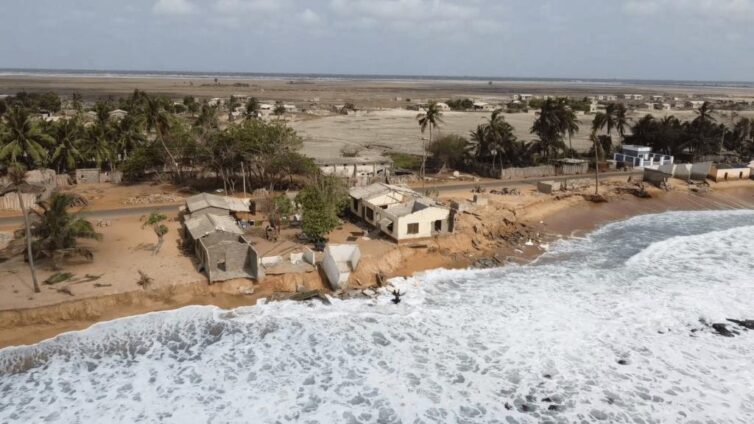
Anlo Member of Parliament, Richard Kwame Sefe, has raised concerns that a $150 million World Bank-funded project meant to protect Ghana’s Volta coastline from sea erosion is being heavily consumed by consultancy services, workshops and logistics — with no visible construction work yet underway.
Speaking on Joy FM’s Super Morning Show, the MP said the project, which falls under the West Africa Coastal Areas Management Programme (WACA), risks losing significant value before any physical sea defence infrastructure is delivered.
“The consultant has been procured. But the physical implementation of the project has been on the drawing board,” Mr Sefe said.
“Every day, every week, virtually every month, you hear that workshops are being organised, meetings have been held.”
He questioned the growing focus on administrative activities over actual construction work, arguing that affected communities continue to suffer while meetings are held away from the project sites.
The MP specifically criticised the practice of holding stakeholder meetings in Accra, citing a recent workshop location as an example of what he described as poor planning.
“What is the core relationship between Eburi and the coastal towns being ravaged by sea waves? Don’t we have any hotels around there that they could hold the meeting so that they could go to site and see things for themselves?” he asked.
Mr Sefe warned that if the current trend continues, a large portion of the $150 million facility could be spent on non-technical activities before any physical sea defence work begins.
The WACA programme is designed to strengthen climate resilience and protect vulnerable coastal communities across West Africa, including Ghana, where erosion continues to displace families in parts of the Volta Region.
Mr Sefe referenced earlier coastal protection efforts under a previous phase of the programme, noting the construction of a sea defence system in the Keta area in 1999, which involved massive sand dredging and rock placement to stabilise the shoreline.
He stressed that while planning and consultancy are important, the urgency of the situation demands immediate physical intervention to protect communities already under threat from the encroaching sea.
Latest Stories
-
Sentuo offers fuel supply reassurance as NPA sees steady output through December
8 minutes -
Ghanaian smock showcased at Lesotho Tourism Summit
34 minutes -
Four pupils to one desk: The painful plight of schools in New Juaben North
1 hour -
Ipswich launch investigation into racist abuse of Abdul Fatawu
1 hour -
Arrest of Techiman nurse is purely political persecution – ‘Ghana Jollof’
1 hour -
Isak nets winner as Liverpool edge Bournemouth
2 hours -
I dare gov’t of Ghana to extradite me; they can never do it – ‘Ghana Jollof’ speaks
2 hours -
Semenyo scores twice as Manchester City beat Sunderland 5-3 in eight-goal thriller
2 hours -
Parliament calls for government-private sector collaboration to improve waste management
2 hours -
Volta Region described as cleanest so far in Parliament’s nationwide sanitation monitoring
2 hours -
Parliament urges MMDAs to enforce sanitation bylaws to curb indiscriminate waste disposal
2 hours -
Mohammed Kudus drops out of Ghana squad for AFCON 2027 qualifiers against Côte d’Ivoire and Gambia
3 hours -
Africa World Airlines unveils first Embraer E190 as part of 10-aircraft fleet expansion
4 hours -
Civilian hospitalised after alleged machete attack by prison officers, inmates
4 hours -
Toobu rejects calls to recall Parliament over 3.9-tonne cocaine shipment
5 hours