

Audio By Carbonatix
Policy experts in Ghana are calling for a shift from cannabis prohibition to regulation, citing potential economic gains and expanding medical applications.
The proposals, presented at an industry conference in Accra, outline a structured transition towards decriminalisation, market development and public health safeguards.
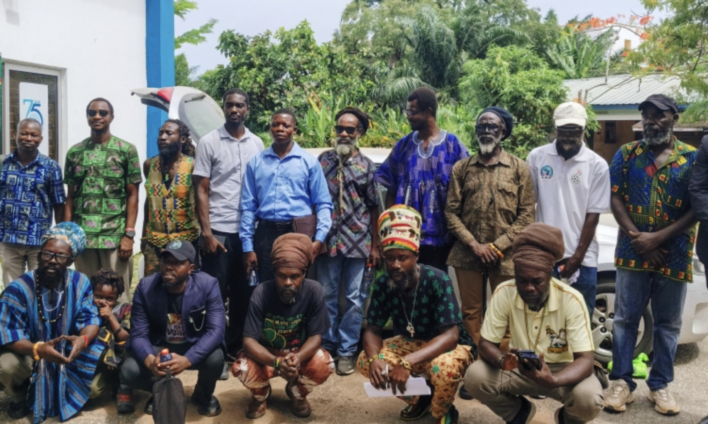
Professor Yegandi Imhotep Paul Alagidede, an advocate for the decriminalisation of cannabis prohibition and a policy expert, presented a five-point policy framework at the Fifth Rastafari Cannabis Conference.
He said the approach combined regulatory reform with safeguards to address dependency risks while enabling medical and industrial use of cannabis.
The first proposal calls for full decriminalisation, removing criminal penalties for personal use, possession, and small-scale cultivation, supported by a public health framework.
A second pathway focuses on cultural recognition, including legal protection for Rastafari sacramental use and indigenous cannabis practices.
The third recommends equity-based licensing, prioritising local farmers and cooperatives over foreign investors in the emerging cannabis industry.
A fourth pathway centres on reparative justice, including expungement of past convictions and reinvestment of enforcement savings into affected communities.
“The fifth pathway is for the State to invest in Ghanaian cannabis science and lead efforts towards a continental African framework,” Prof. Alagidede said.
He cited existing legislation, noting that Section 43 of the Narcotics Control Commission Act, 2020 (Act 1019) permits licensed cultivation of cannabis with THC content not exceeding 0.3 per cent for industrial and medicinal purposes, while maintaining a ban on recreational use.
Prof. Alagidede argued that prohibition has not achieved its intended outcomes, pointing to sustained usage rates estimated at about 21.5 per cent among people aged 15 to 64.
He said cannabis has recognised medical applications, including in the treatment of chronic pain, certain forms of epilepsy and chemotherapy-induced nausea.
Prof. Alagidede said that the cannabis value chain presented significant economic opportunities, estimating that regulated cultivation, processing and exports could generate between 2.1 billion and 15.5 billion Ghana cedis annually.
Mr Sedem Ofori, a researcher and anti-prohibition advocate, said the government should reclassify medical and industrial cannabis as an agricultural-industrial commodity.
He noted that cannabis use persists despite criminalisation, including within prisons, and argued that enforcement imposes a financial burden on the state.
Mr Ofori said the annual cost of maintaining an inmate ranged between $1,500 and $2,500, underscoring the fiscal implications of prohibition policies.
Latest Stories
-
Every year, the lawyers come out, and so does the nonsense! – Ace Ankomah writes
26 seconds -
Digital transformation without an ownership culture can digitise poor service
4 minutes -
Fishing communities demand revocation of offshore gold exploration licences over livelihood concerns
7 minutes -
How Ghanaian tycoon Manoj Lakhiani built a water and plastics empire from a $25,000 loan
8 minutes -
GoldBod recovers GH¢38.7m of GH¢55.8m outstanding receivables; remainder subject to legal action – Sammy Gyamfi
15 minutes -
GEXIM Bank donates GH¢200,000 worth of medical equipment to Korle-Bu Child Health Department
18 minutes -
Majority rejects Minority’s claims over GH¢49.7m South Africa evacuation
20 minutes -
GEXIM urges banks to support refurbishment of Korle-Bu Teaching Hospital’s Child Health Department
23 minutes -
Don’t appoint your cheerleader as referee
27 minutes -
Ghana needs stronger international cooperation to fight cybercrime – CSA
29 minutes -
CSA warns of growing cyber threats as Ghana’s digital dependence increases
36 minutes -
USTED dean warns GAUA strike could disrupt Ghana’s restored academic calendar
49 minutes -
Bechem meat processing factory 50% complete, set for March 2027 completion – Kwakye Ofosu
1 hour -
NDC can appoint whoever they want to EC, but Ghanaians will make a decision in 2028 – Titus Glover
1 hour -
GoldBod initiative has created over 1,300 public and private sector jobs – Sammy Gyamfi
1 hour