

Audio By Carbonatix
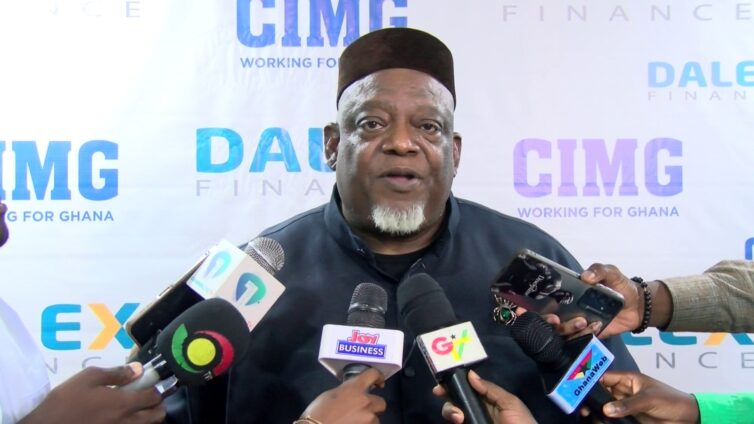
Economist and CEO of Dalex Finance, Joe Jackson, has warned about Ghana’s exchange rate challenges, arguing that widespread misunderstanding of the problem continues to keep the cedi under pressure.
Speaking at the 2026 Dean of Business School Lecture Series at the University of Professional Studies Accra, he described the cedi’s performance as a story of volatility rather than simple decline.
Between 2016 and 2024, the cedi lost nearly 71% of its value against the US dollar. Yet it staged a sharp rebound, appreciating by about 40% between 2024 and 2025.
For Mr Jackson, this swing reflects instability at the core of Ghana’s economic structure.
He challenged the popular narrative that the cedi is weak because Ghana cannot export enough. According to him, the country has consistently recorded trade surpluses in recent years. T
he real problem, he stressed, lies in what happens after export revenues are earned.
Ghana generates significant foreign exchange from gold, oil, and cocoa. However, much of that value does not remain in the economy. It exists through service imports, profit repatriation, debt servicing, and capital flight.
In 2024, Ghana recorded a trade surplus of $5.1 billion, but nearly $8 billion left the economy through these channels. The implication, he noted, is straightforward: the country earns dollars but quickly loses them.
Mr Jackson highlighted the gold sector as a striking example. Ghana exported about $11.9 billion worth of gold but retained less than half of that value domestically.
By comparison, countries such as South Africa and Botswana retain a larger share of export value despite lower volumes.
This, he argued, points to a structural weakness rather than a temporary imbalance.
To address part of the challenge, the government introduced the Ghana Gold Board.
Joe Jackson acknowledged its early impact, noting that it has helped centralise gold purchases, align local prices with international markets, and formalise small-scale mining.
Early estimates suggest the initiative could drive a 75% increase in gold export value, with artisanal mining contributing more than twice as much.
However, he warned that the policy does not tackle the biggest drains on foreign exchange. “Kudos to GOLDBOD—but the leakages remain,” he stated.
Mr Jackson further cautioned that even if Ghana manages to plug these leakages, inflation remains a major threat to currency stability.
Inflation peaked at 54% in 2022 and stayed elevated through 2024, far above levels in the United States. He explained that this gap fuels import demand, raises interest rates, and discourages holding the local currency, gradually weakening the cedi from within.
The broader message, he stressed, is that exchange rate stability requires discipline on multiple fronts.
Ghana must retain more value from its exports by strengthening local participation, building domestic supply chains, and promoting value addition. At the same time, it must rein in inflation through fiscal discipline and prudent monetary policy.
Fail on either front, and the cedi will remain exposed.
Mr Jackson summed up the challenge with a blunt assessment: “A volatile cedi is not just an economic problem—it is a discipline problem in disguise.”
Latest Stories
-
Communities affected by construction of Akosombo Dam urge government to speed up compensation process
15 minutes -
World Cup visa scandal: Sports Ministry not shielding anyone – Sports Minister’s special aide
36 minutes -
World Cup visa scandal: Over 30 people misrepresented as GTA board members to US Embassy – Vincent Assafuah alleges
37 minutes -
Fire destroys wooden structure near Yesu Mo Villa at Bush Road
38 minutes -
NDC threatens sanctions over oversized campaign posters, gives aspirants 5 days to comply
2 hours -
Star Oil paid GH¢2.7bn in taxes, levies in nine months of 2026
2 hours -
Samson’s Take: The rule of law is cheaper before the bulldozer
2 hours -
GRA blames system failure for delay in issuing receipt over passenger’s customs duty
2 hours -
Livestream: Newsfile discusses World Cup visa scandal, beach demolitions, education strikes, BRICS bid
2 hours -
NC-PTAs welcomes end of teachers’ strike, urges parents to prepare children for Monday
2 hours -
Government procures over 2,000 transformers as Ghana’s electricity access hits 89.13% – Energy Minister
3 hours -
UTAG-UG threatens strike on October 19 over unpaid allowance
3 hours -
Let The Constitution direct Chieftaincy to deliver “All Development Is Local”
4 hours -
John Jinapor outlines renewable energy, nuclear power priorities for 2027
5 hours -
Ghana explores centre of excellence for hearing, communication and cochlear implant care
6 hours