

Audio By Carbonatix
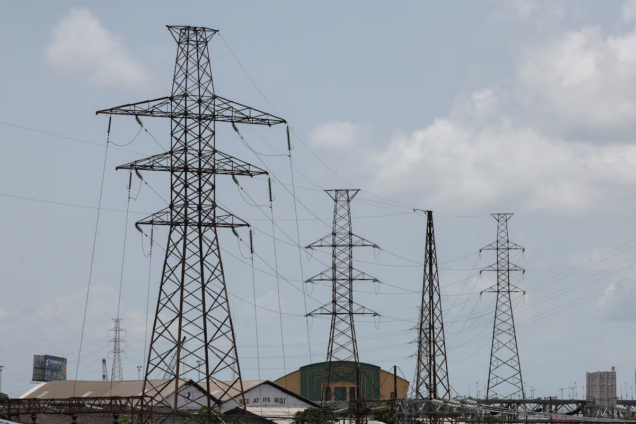
Lagos is betting that Nigeria's chronic electricity shortages can be addressed outside the national grid, scaling up state-backed power generation and distribution after securing 400 megawatts of new supply, the state's energy commissioner said.
Africa’s largest city is pressing ahead under reforms that allow sub-national governments to regulate power as Nigeria’s grid struggles.
At least 22 other states are also setting up electricity markets to reduce reliance on the centralised system in Abuja, according to data from the power regulator.
"We are seeking to move beyond a single point of failure," Lagos Commissioner for Energy and Mineral Resources Biodun Ogunleye said at a conference organised by BusinessDay newspaper on Tuesday.
Nigeria's grid delivers about 3,000 MW on a good day, far short of the estimated demand of more than 30,000 MW under government power plans, forcing businesses and households to rely on diesel generators.
Lagos activated its electricity regulatory regime in June 2025 and transferred oversight of intrastate electricity matters from the Nigerian Electricity Regulatory Commission (NERC) to the Lagos State Electricity Regulatory Commission. By the end of the year, it had assumed full regulatory control of its electricity market, becoming the first Nigerian state to do so, officials said.
In a circular last year, NERC said state regulators would oversee intrastate electricity matters, while it would retain responsibility for interstate electricity transactions, national grid operations and industry standards.
Lagos has signed power purchase agreements with Fenchurch Power, Mainland Power, and Viathan Engineering Limited to supply up to 400 MW to public facilities over three years.
"These are not business-as-usual PPAs," Ogunleye said. "They represent a fundamental shift in how Lagos procures and pays for power."
Lagos has scrapped "take-or-pay" and "deemed energy" provisions, which required payments even when power was not delivered, and will instead pay only for metered electricity supplied, officials said.
Analysts said state-level power markets could improve reliability but would not remove constraints , including gas supply, foreign exchange exposure, affordability, transmission bottlenecks and weak technical capacity.
"Capital is available, but revenue assurance is a problem," said Bola Adigun, a partner at Deloitte Nigeria.
Latest Stories
-
Ghana’s state-owned enterprises return to profit with GH¢19.8bn gain in 2025 — SIGA
8 minutes -
Fuel prices set to rise again from Sept 1; petrol could hit GH¢16.21 – COPEC
2 hours -
REGSEC restricts Akwasidae celebrations in Denkyira amid security concerns
2 hours -
Eric Adjei distributes free fertiliser to farmers in Jaman North
2 hours -
Akufo-Addo urges NPP factions to unite behind Bawumia for 2028 victory
2 hours -
NDC mourns Western Regional Elections Director Papa Assan
3 hours -
Minerals Commission warns against fake job recruitment schemes
3 hours -
10 recruits dismissed for defying phone ban – Interior Minister
3 hours -
IEAG commends GoldBod, BoG for improving forex stability
3 hours -
Bawumia donates GH¢50,000 to St Jude Catholic Church at Weija
3 hours -
Mahama calls for faster mobilisation of AU Peace Fund resources
3 hours -
Improved roads bring new vehicle options to Tumu-Bolga, Tumu-Tamale, Tumu-Wa routes
3 hours -
Cedi records 7.9% depreciation against US dollar in first half of 2026
3 hours -
GIS launches operation on anti-human trafficking and exploitative street begging
3 hours -
Awutu-Senya District Assembly organises clean-up ahead of Awubia Festival
4 hours