

Audio By Carbonatix
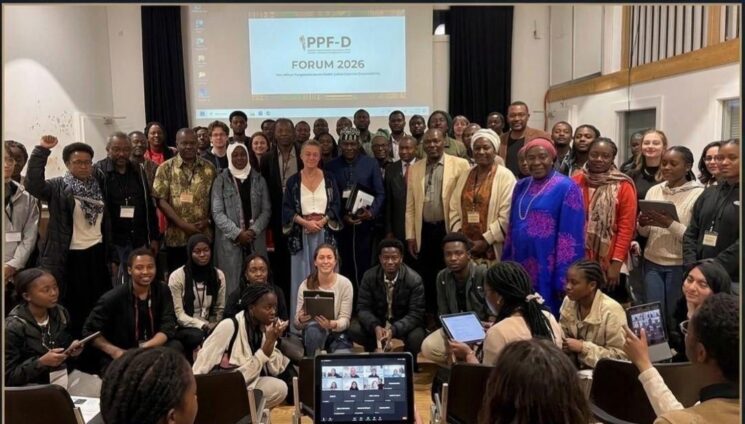
The conclusion of the Forum on Reparative Justice & Colonial Accountability in Geneva marked the birth of a formidable new arsenal for activists worldwide with the launch of the Reparations Advocacy Manual & Toolkit. This comprehensive resource provides a rigorous framework for journalists, policymakers, and youth movements to challenge the lingering structures of colonial exploitation. It offers specific guidance on navigating international law and utilizing media engagement to amplify the call for justice. The strategic alliance between the The Pan-African Progressive Front (PPF), Ligue Panafricaine–UMOJA and the Université Populaire Africaine en Suisse ensures that this movement remains grounded in academic excellence and grassroots energy.
Amzat Boukari-Yabara, President of the Ligue Panafricaine–UMOJA, told delegates that Pan-Africanism and reparative justice relate more with one side as historical truth and political power on the other.
A synchronized 12-Month Advocacy Calendar stands as the centerpiece of this operational strategy to ensure consistent pressure on international institutions. This roadmap outlines a series of parliamentary engagements and media blitzes scheduled to roll out through May 2027. By coordinating efforts across time zones and borders, the PPF-D Justice Taskforce aims to prevent the movement from losing momentum in the face of bureaucratic delay. The transition from theoretical discussion to practical delivery begins immediately with the first operational session slated for the coming weeks.
In attribution to the work ahead of the Taskforce, H.E Sam Sumana, former Vice President of the Republic of Sierra Leone wrote; "This Forum is your Forum. The Geneva Declaration we adopt today belongs to Bridgetown and Kingston and Atlanta and Brixton and Saint-Denis as much as it belongs to Freetown.
My friends, my comrades, my family. I was born in Koidu Town in 1962, two years after the Year of Africa, when seventeen African nations took down their colonial flags and put up their own. The generation that did that — the generation of Nkrumah, of Lumumba, of Nyerere, of Sékou Touré — they thought they had finished the work. They had not finished the work. They had begun the work."
As one of the most tangible outcomes, the official release of the Reparations Advocacy Manual & Toolkit, is designed to serve as a comprehensive handbook for the next generation of activists. This resource provides the technical language and media strategies necessary to challenge institutional resistance and bring the reparations debate into the mainstream. It empowers youth movements and civil society organizers with the legal precedents and historical data required to argue for systemic change at both local and international levels.
Complementing this toolkit is the 12-Month Advocacy Calendar, a synchronized global roadmap for coordinated parliamentary and media engagement. This strategic timeline ensures that the movement maintains consistent pressure on global institutions throughout the coming year, with specific milestones set for international advocacy. By aligning the activities of diaspora groups with continental leadership, the forum has created a formidable, unified schedule that prevents the campaign from losing momentum in the face of political bureaucracy.
On Strategic context and Political Vision, Kwesi Pratt Jnr emphasized that the historical crimes of the transatlantic slave trade and classical colonialism are not "events of the past" alone. He argued that the current economic underdevelopment of African nations is a direct, measurable result of centuries of resource extraction and uncompensated labor. By tracing a single, unbroken line from the 15th-century papal decrees that sanctioned enslavement to the modern-day debt traps set by international financial institutions, Pratt framed the reparations struggle as a demand for the return of stolen wealth that still fuels the prosperity of imperial metropoles.
"Reparations must mean that we have to change the institutional system which has been imposed upon us. We have to go to the level of students to pay our creditors. Those things they are saying want alternative means that hold an alternative path. And here, they really want an alternative. The system which left enslaved people close to fifteen million people. Which led to the death, the massacre, close to 50 million people, there cannot be any advantage of this system. Therefore, I submit that our very traditional system, good territory, can be used in order to promote African independence. In order to promote this current ill-situation, this current global system, which is tied to the fact that Africa remains the richest continent on Earth. The African people continue to suffer poverty, and to some extent this is an institution. Let me repeat that. The Democratic Republic of the Congo is sitting on a budget estimated at 70.3 billion dollars..."
This conclusion frames the Geneva Forum as a definitive shift from symbolic recognition to institutional enforcement. It emphasizes the strategic transmission of the Geneva Declaration to the United Nations and the African Union. The forum also secures the establishment of the PPF-D Justice Taskforce on reparations as a permanent pillar of global accountability. Final statements focus on the transition from historical grievances to the implementation of concrete reparative frameworks. The text asserts that the era of mere pleading has ended in favor of organized political power. "Together with the Pan-African Progressive Front and partners from the diaspora, we are moving from statements to action" — declared Simeone Azoska, Head of the PPF Secretariat.
The Reparations Advocacy Manual & Toolkit, the 12-Month Advocacy Calendar, and the full text of the Geneva Declaration are available for download on the website of the Pan-African Progressive Front (https://pp-front.com).
Written by Princess Yanney - Journalist, Writer & Media Analyst
Email: princessyanney9@gmail.com
Latest Stories
-
Conflicts among care providers linked to maternal, neonatal deaths – Expert
56 minutes -
GIS marks 10th TIME conference, champions improved teaching practices
1 hour -
BRICS Or Balance? What Ghana’s bid really means
1 hour -
GPRTU wants full TRAFFITECH-GH implementation to start in 2027
2 hours -
Mahama announces plans to import electric wheelchairs for PWDs
2 hours -
KGL U17 Colts 2026: Western beat Prempeh Elite Academy to set up final final with Greater Accra Region
2 hours -
Late Solanke strike salvages 10-man Spurs draw at Man United
2 hours -
Gender Ministry to monitor welfare of Nana Akua Addo’s children amid domestic violence case
2 hours -
Benedict Okyere Yeboah: Ghana’s football problem goes beyond sacking a coach
3 hours -
GPL 2026/27: Darkwah Wiafe’s winner sees All Blacks beat Kotoko
3 hours -
ITF World Tour : Patel Wins Boys’ Singles Final at J100 Accra
3 hours -
Ghana must pursue BRICS partnership if it brings economic benefits – Kpebu
3 hours -
Success and Wright Claims J100 Accra Girls’ Doubles Championship
3 hours -
ITF J100: America’s Wright wins J100 Accra Girls’ Singles Title
3 hours -
Expedition hopes to find aviator Amelia Earhart’s plane on remote island
3 hours